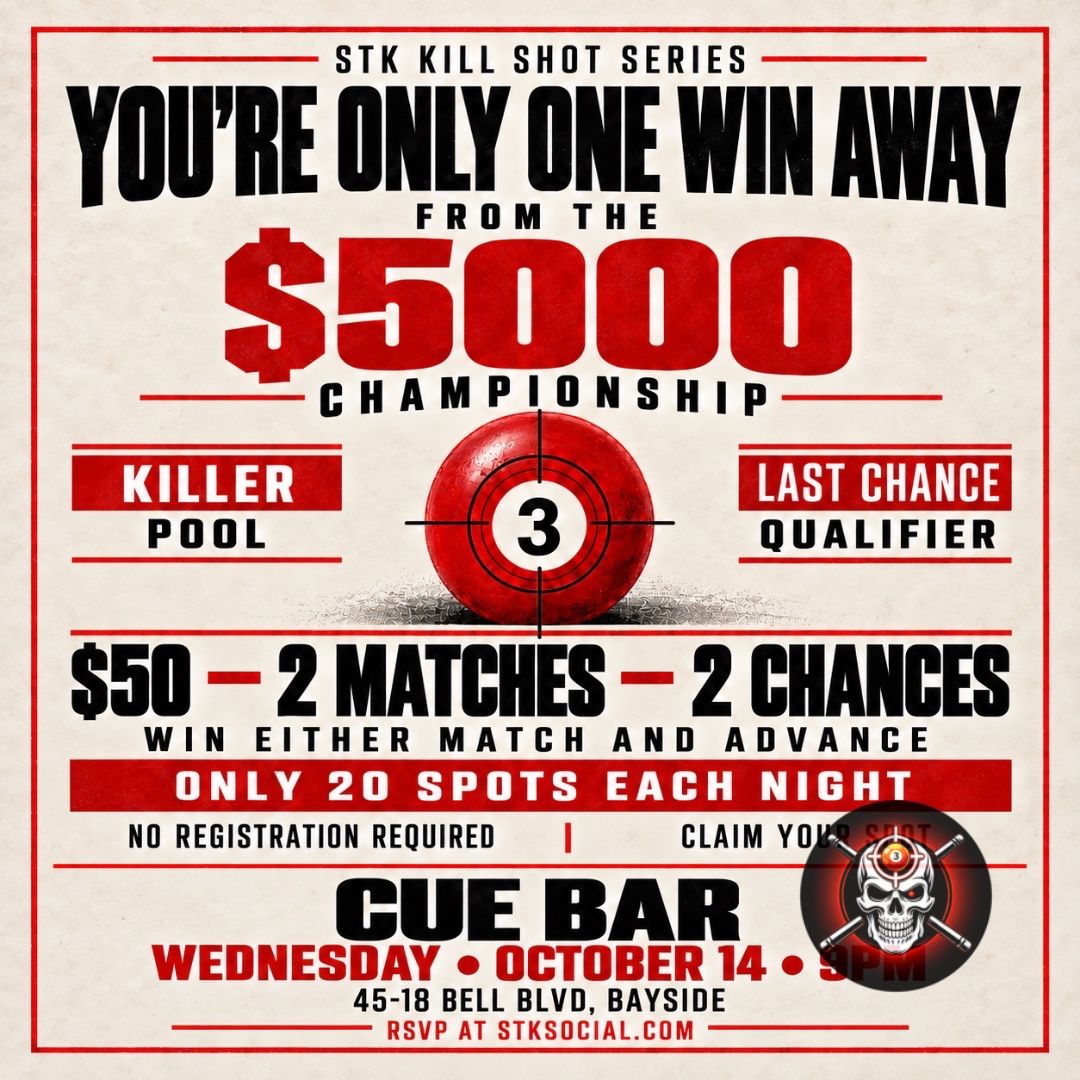
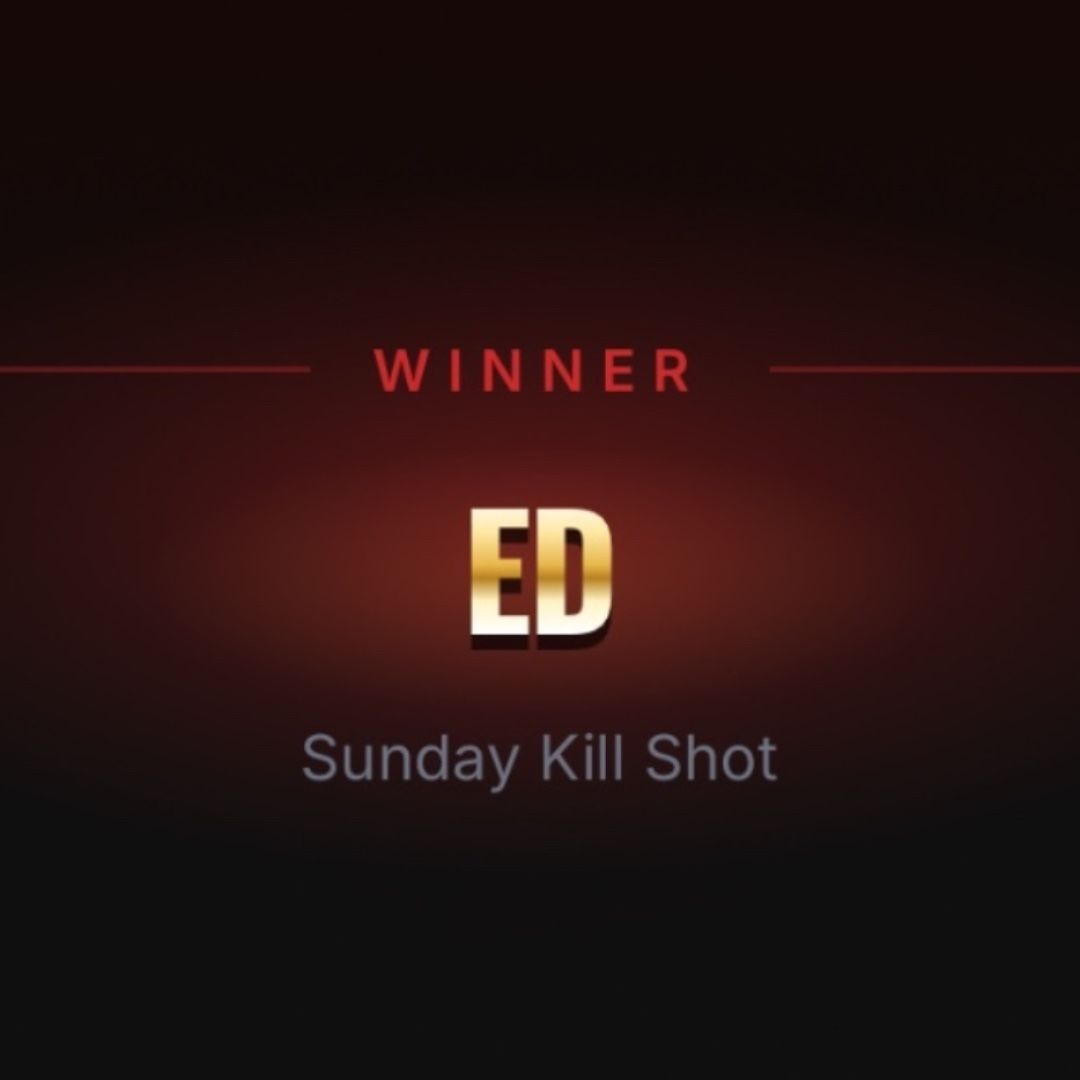
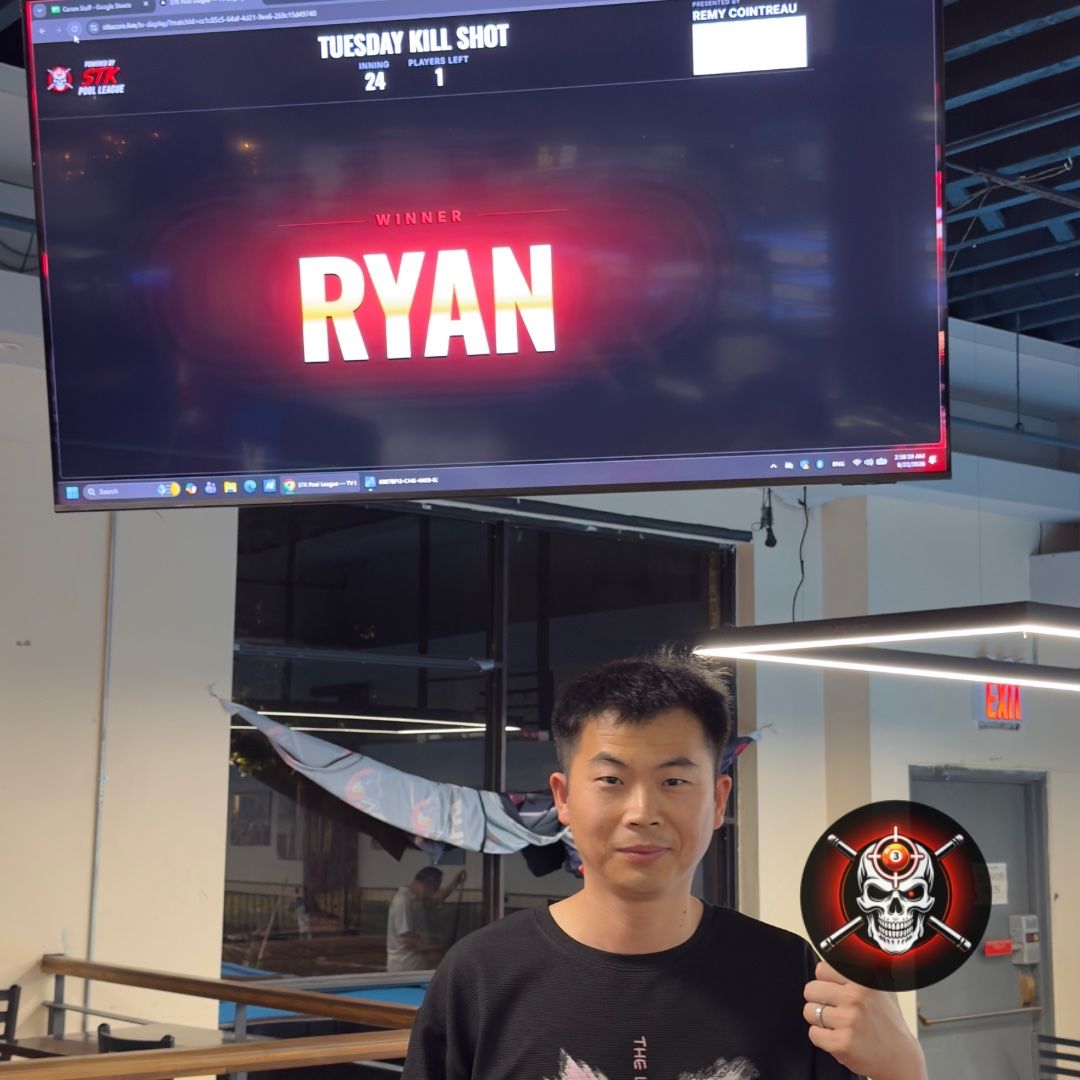
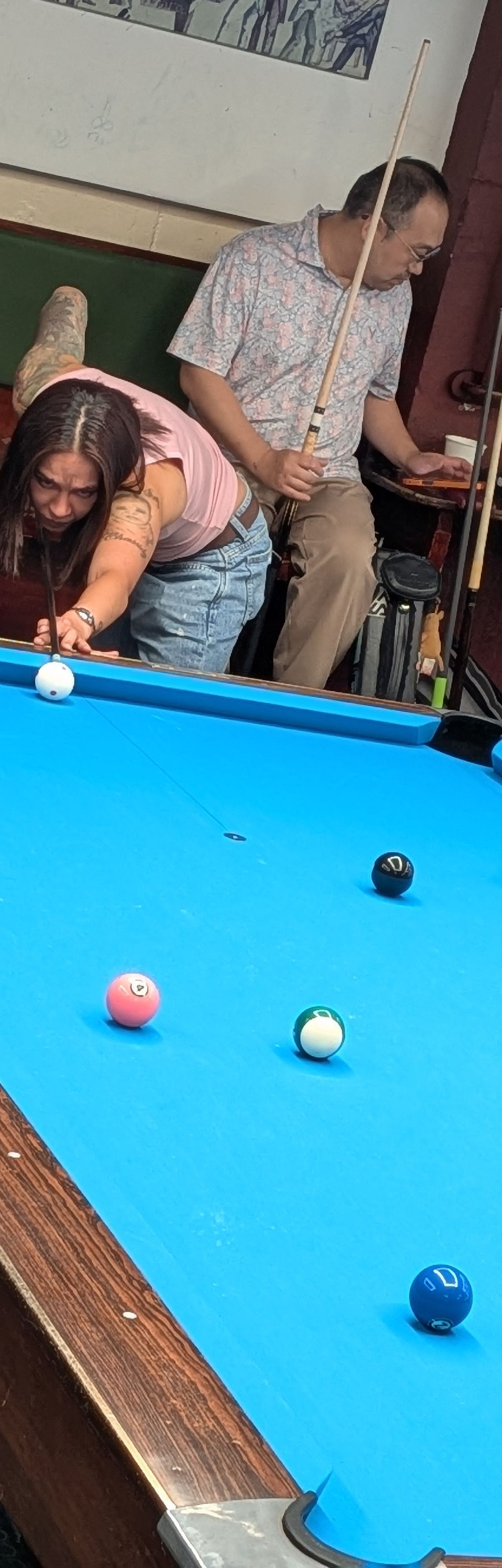
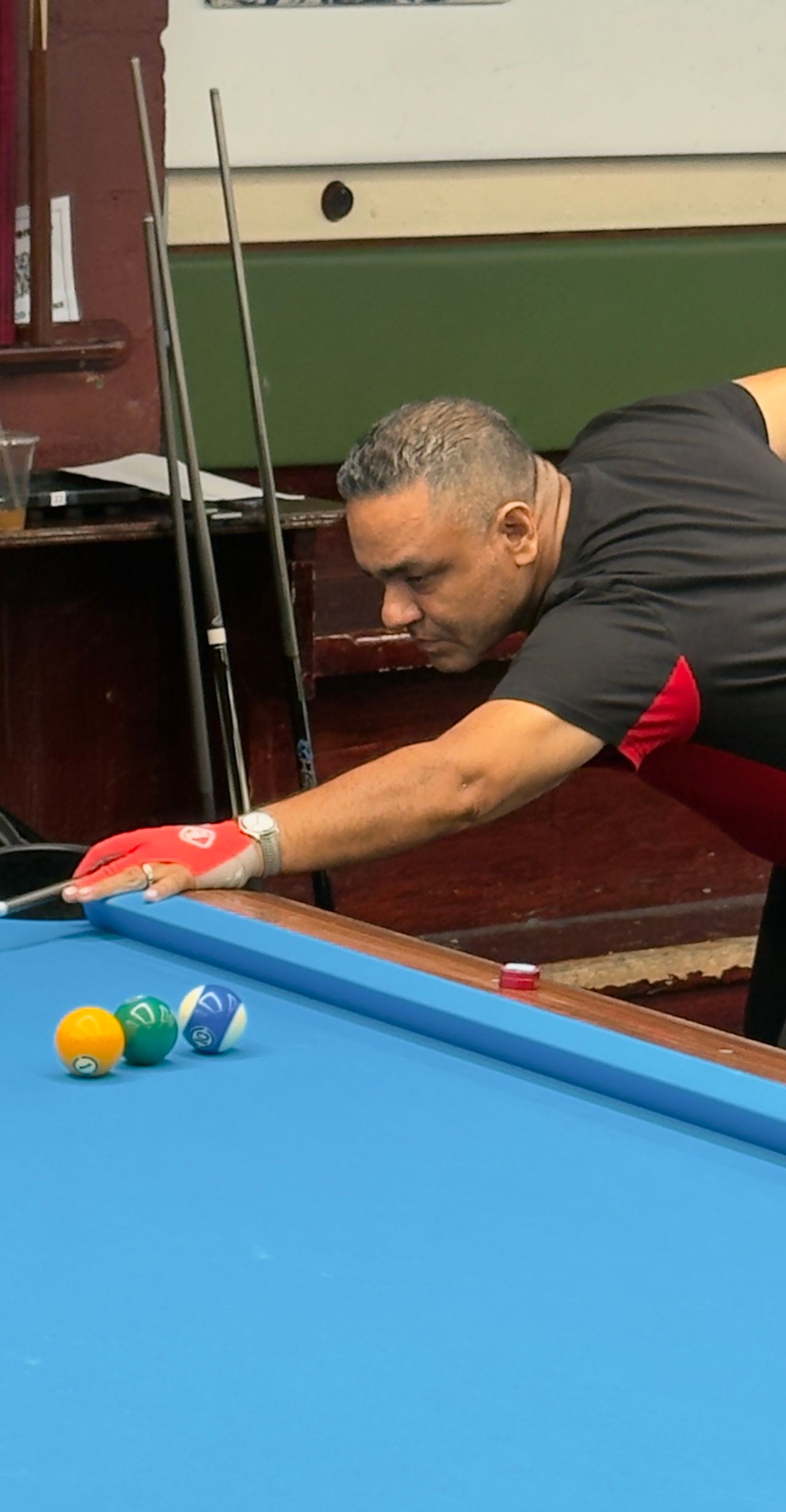
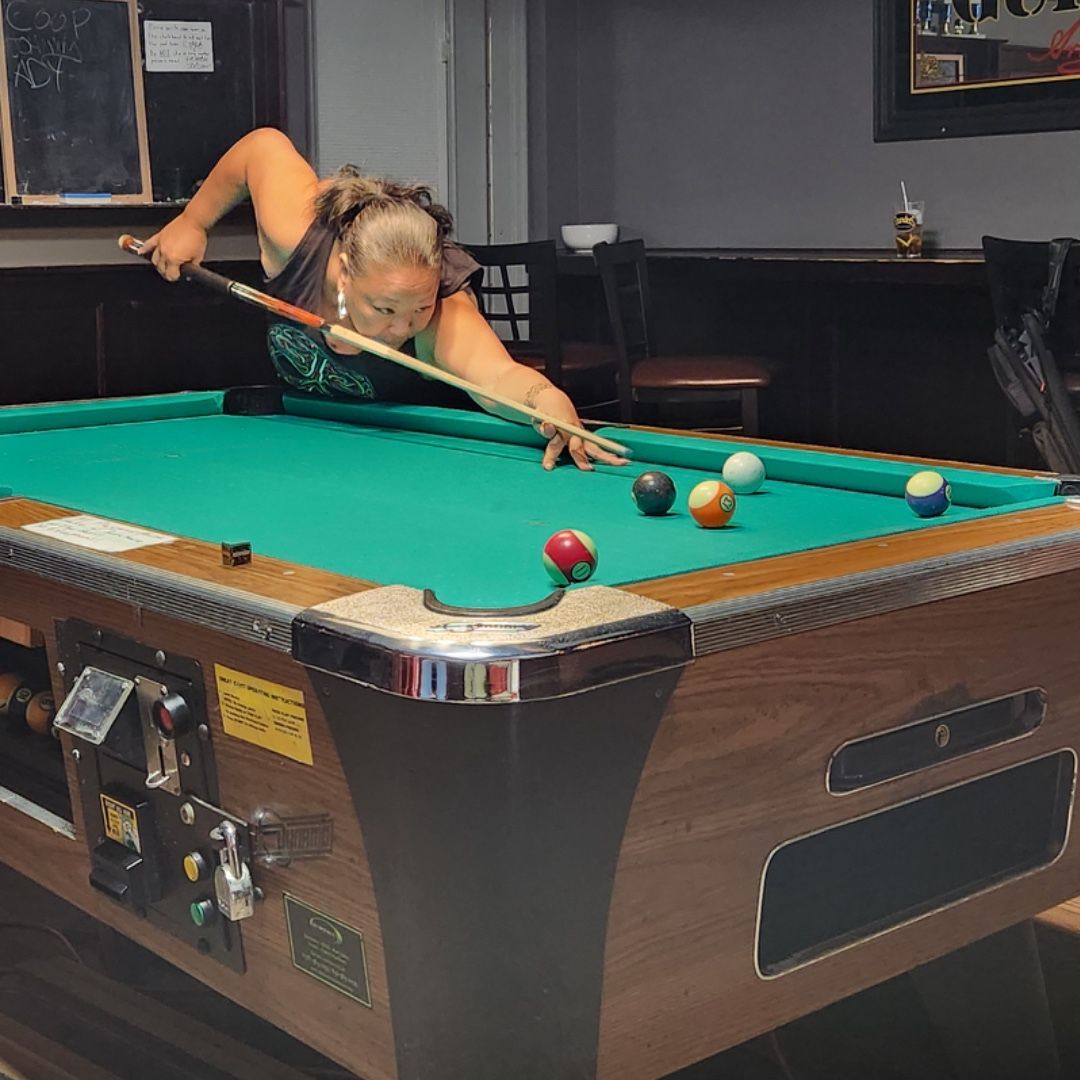
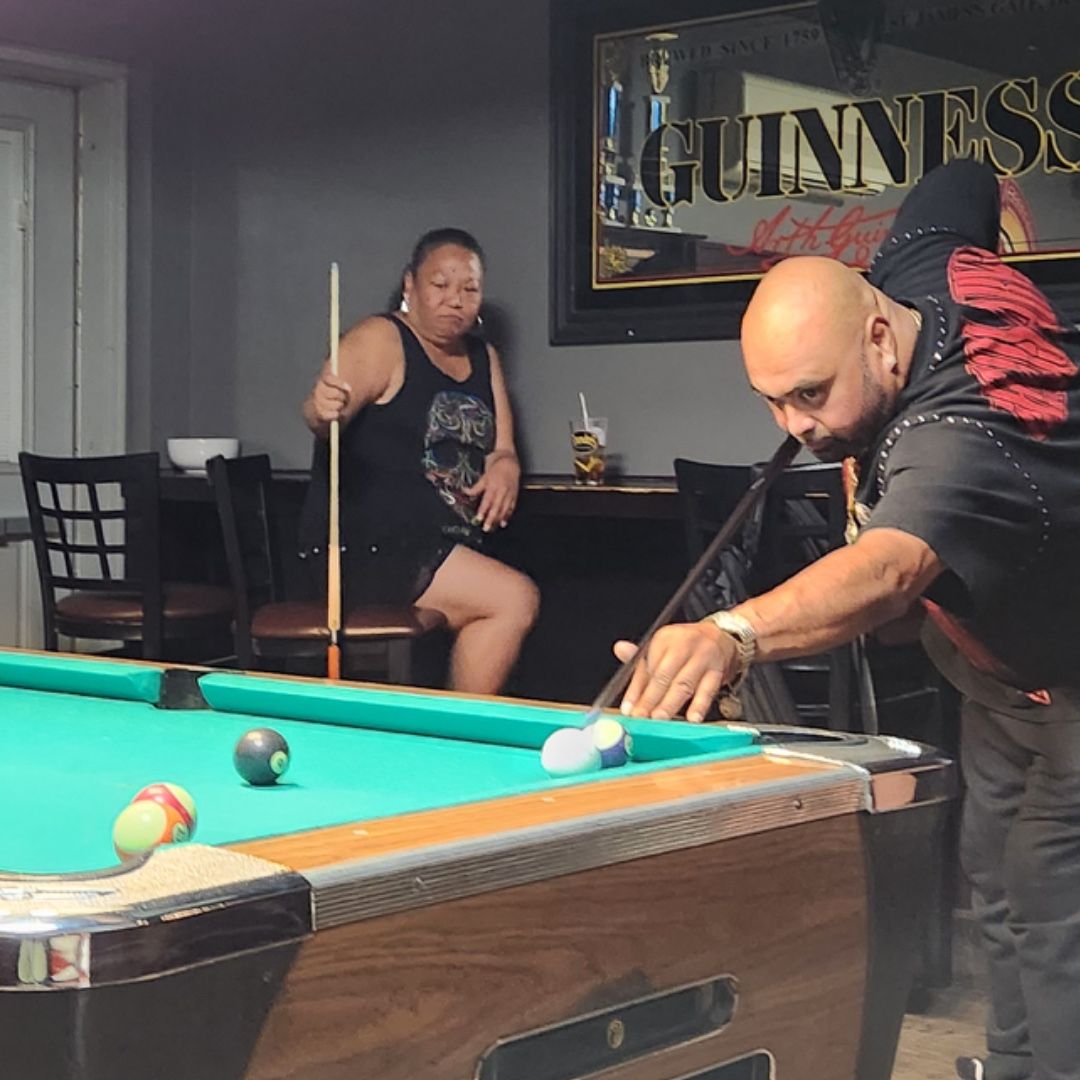
He won on his first try! Congrats on qualifying for the championship, Ryan!
STK
STK
Sep 21
STK Carom Cafe & Billiards Monday Recap
Match complete / Winners circle
ROOM CONQUERED. TICKET PUNCHED.
RYAN
Bounty
Carom Cafe & Billiards
Championship qualifier
W
Bounty bonus
NEIL TOOK OUT DARWIN.
+1 LIFE
Previous winner bounty · +1 regular-match credit
Bounty bonus
RYAN TOOK OUT NEILLE.
+1 LIFE
Host bounty · +1 regular-match credit
Bounty bonus
RYAN TOOK OUT NEIL.
+1 LIFE
Previous winner bounty · +1 regular-match credit
Bounty bonus
RYAN TOOK OUT DUC L.
+1 LIFE
Previous winner bounty · +1 regular-match credit
1 / 5
STK
STK
Sep 20
STK Globe Tavern Sunday Recap
Match complete / Winners circle
ROOM CONQUERED. TICKET PUNCHED.
ED S.
Bounty
The Globe Tavern
Championship qualifier
W
Match complete / Winners circle
ROOM CONQUERED. TICKET PUNCHED.
NEILLE
Bounty
The Globe Tavern
Championship qualifier · +1 Championship life
W
Bounty bonus
ED S. TOOK OUT MILLIE P.
+1 LIFE
Previous winner bounty · +1 regular-match credit
Bounty bonus
ED S. TOOK OUT NEILLE.
+1 LIFE
Host bounty · +1 regular-match credit
Bounty bonus
ED S. TOOK OUT DILLY.
+1 LIFE
Previous winner bounty · +1 regular-match credit
Bounty bonus
NEILLE TOOK OUT ED S.
+1 LIFE
Previous winner bounty · +1 regular-match credit
Bounty bonus
NEILLE TOOK OUT MILLIE P.
+1 LIFE
Previous winner bounty · +1 regular-match credit
Bounty bonus
DEBORAH B. TOOK OUT DILLY.
+1 LIFE
Previous winner bounty · +1 regular-match credit
1 / 10
STK
STK
Sep 17
STK Carom Cafe & Billiards Thursday Recap
Match complete / Winners circle
ROOM CONQUERED. TICKET PUNCHED.
NEIL
Bounty
Carom Cafe & Billiards
Championship qualifier
W
Bounty bonus
NEILLE TOOK OUT DARWIN.
+1 LIFE
Previous winner bounty · +1 regular-match credit
Bounty bonus
DUC L. TOOK OUT MHET V.
+1 LIFE
Previous winner bounty · +1 regular-match credit
Bounty bonus
DUC L. TOOK OUT NEILLE.
+1 LIFE
Host bounty · +1 regular-match credit
Bounty bonus
NEIL TOOK OUT DUC L.
+1 LIFE
Previous winner bounty · +1 regular-match credit
1 / 5
NC
Neille C.
Sep 16, 9:54 AM
Who's coming to play STK at Carom on Thursday?
STK
STK
Sep 14
STK Carom Cafe & Billiards Monday Recap
Winners circle
DUC IS MAXED OUT.
+1 LIFE
Championship: 3 base + 2 bonus = 5 lives · Cap reached
STK
STK
League recap · Win 2
Uh-oh! Duc has an extra life in the championship! Two wins, a couple of matches apart.
Winners circle
UH-OH! DUC DID IT AGAIN.
+1 LIFE
Championship: 3 base + 1 bonus = 4 lives
STK
STK
League recap · Bounty claimed
Neille eliminated Duc between his two wins and earned a bounty bonus.
Bounty bonus
NEILLE TOOK OUT DUC.
+1 LIFE
+1 regular-match credit
M
Michelle
Sep 10, 4:00 AM
Who’s coming to the Globe Tavern on Sunday?
STK
STK
League recap · Win 1
Duc takes his first win and qualifies for the championship.
Winners circle
ROOM CONQUERED. TICKET PUNCHED.
Championship qualified · 3 base lives
STK
STK
Sep 7
STK Monday Recap
Match complete / Winners circle
ROOM CONQUERED. TICKET PUNCHED.
MIKE D.
Bounty
Championship qualifier
W
1 / 5
STK
STK
Sep 6
STK Globe Tavern Sunday Recap
Match complete / Winners circle
ROOM CONQUERED. TICKET PUNCHED.
SUZZIE
Bounty
Championship qualifier
W
Match complete / Winners circle
ROOM CONQUERED. TICKET PUNCHED.
CLAUDIO
Bounty
Championship qualifier
W
1 / 2
STK
STK
Sep 3
STK Carom Cafe & Billiards Thursday Recap
Match complete / Winners circle
ROOM CONQUERED. TICKET PUNCHED.
CARMINE
Bounty
Championship qualifier
W
STK
STK
Aug 30
STK Globe Tavern Sunday Recap
Match complete / Winners circle
ROOM CONQUERED. TICKET PUNCHED.
MILLIE
Bounty
Championship qualifier
W
Match complete / Winners circle
ROOM CONQUERED. TICKET PUNCHED.
MICHELLE
Bounty
Championship qualifier
W
Match complete / Winners circle
ROOM CONQUERED. TICKET PUNCHED.
DILLY
Bounty
Championship qualifier
W
1 / 7
Show up. Shoot your shot.
Find your room
All times New York
Show up. Shoot your shot.
Venues
STK venues
Rooms running STK now.
Pending activation
Hit 15 votes. Getting set up.
Nominated
Sorted by votes, highest first.
Special nights
Events
Add event
The last ones standing
Winners circle
Season prize pool
of the season goal
0%20%40%60%80%100%
Road to the championship
ONE WIN. YOU’RE IN.
Win a match and advance to the championship.
Bounty Eliminate a previous winner to earn an extra life while you’re still active.
D
Duc
Bounty
Thursday Night Kill Shot · Sep 11
10 points
2 wins · 4 championship lives
MD
Mike D.
Bounty
Monday Night Kill Shot · Sep 8
14 points
C
Claudio
Bounty
Sunday Night Kill Shot · Sep 7
20 points
S
Suzzie
Bounty
Sunday Night Kill Shot · Sep 6
19 points
C
Carmine
Bounty
Thursday Night Kill Shot · Sep 4
15 points
D
Duke
Bounty
Friday Night Killer · Sep 1
12 points
D
Dilly
Bounty
Friday Night Killer · Aug 30
9 points
M
Michelle
Bounty
Friday Night Killer · Aug 30
11 points
M
Millie
Bounty
Friday Night Killer · Aug 30
14 points
M
Mhet
Bounty
Friday Night Killer · Aug 28
14 points
N
Neille
Bounty
Friday Night Killer · Aug 24
20 points
D
Dominic
Bounty
Friday Night Killer · Aug 24
16 points
K
Kool-Aid
Bounty
Friday Night Kill Shot · Aug 22
14 points
L
Leon
Bounty
Friday Night Kill Shot · Aug 21
10 points
D
Darwin
Bounty
Thursday Kill Shot · Aug 21
15 points
J
Jesus
Bounty
Friday Night Kill Shot · Aug 20
6 points
Know the game
Rules of the room
Watch: How to get on the STK Roster
STK Kill Shot Rules
Everyone plays at once. Players shoot in order. Player order is shuffled before the match starts. You get one shot per turn. All you have to do is make a ball - slop counts. If you miss, scratch, or foul, you get a strike. Reach your strike limit and you're eliminated.
Everyone starts the game with a 3-strike limit. In this series, you can purchase up to 2 more strikes for $5 each.
Pot a ball — no strike, next player shoots
Miss, scratch, or foul — you take a strike
Once you hit your strike limit, you're eliminated.
Breaks
If you break dry, you may shoot again. If you pot at least one ball on the break, the next player shoots. Any 4 balls must make contact with a rail for the break to be legal.
Shot clock
There is a 60-second shot clock if you need coaching on a shot.
Additional shot clocks for players who repeatedly slow down play: 30 seconds to approach the table, 60 seconds to shoot.
Fouls
Only cue ball fouls are counted as strikes.
An object ball that comes off the table also results in a strike and remains off the table.
Conduct
Banter is welcomed. Rudeness is never tolerated.
Earn Extra Lives
Refer a new player who registers, make two food or beverage orders during a match, or eliminate Neille or any previous Kill Shot winner to earn an extra life. But if you are eliminated before one of the players with a bounty is eliminated, you do not receive an extra life. You must still be active on the scoreboard to receive the extra life bounty.
These lives are added to your player account and may be saved or used during any regular Kill Shot Series match.
Extra lives earned through referrals, purchases, or bounties cannot be used at the Championship. Championship extra lives can only be earned by winning qualifying matches.
Entry Fee
$25 entry fee per match
Player Incentives
Refer new players: earn extra lives to use in any regular series match of your choosing.
Eliminate Neille: earn a bounty extra life.
Eliminate a previous match winner: earn a bounty extra life.
Earn a bonus life for placing two food or beverage orders per match in one night. If there are multiple matches, there are multiple opportunities to earn lives.
Win a regular match: qualify for the $5000 Championship. Win multiple matches, earn Championship lives (max 2 bonus, 5 lives total).
Championship lives can only be earned by winning matches. Referral, purchase, bounty rewards cannot create Championship lives.
Last player standing wins.
Your place in the league
Player profile
Grow the league
Invite friends
Send a private link. Invite friends to THE pool party
AdminTribes & roles0
Tribes
AdminVenues0
Ranked by votes. Pending rooms are ready to activate.
AdminReported messages0
Only reported messages show here — never a full chat.
Admin
Top 8
Controls the Player Top 8 and Venue Top 8 blocks on the feed. Hidden from every player until this is turned on.
Status: Off — hidden from players
Status: Off — hidden from players
Update your details
Edit profile
Profile photo
Before you chalk up
Frequently asked questions
First time here?
Do I have to be good at pool?
No. You get one shot per turn, and any pocketed ball counts—even slop. You’re here to play, meet people, and try to be the last one standing.
How does a match work?
Player order is shuffled before the match. Make a ball and your turn ends. Miss, scratch, or foul and you take a strike. Reach your strike limit and you’re eliminated. The last player standing wins.
How do I find a match and RSVP?
Open Matches, choose your night, and RSVP. RSVPs are for registered players and close one hour before the match starts.
What does it cost?
The current series rules list $25 entry fee per match.
How do I earn extra lives?
Bring a new player who registers, make two food or beverage orders during a match, or collect a bounty. Your profile keeps a record of earned and used regular-match credits.
What does the bounty icon mean?
Every previous Kill Shot winner is a bounty target. Neille is a bounty target too. Eliminate a target while you’re still active to earn an extra life. The next-game bounty board shows attending targets; seeded entries are marked until attendance is confirmed.
How do I qualify for the championship?
Win a regular match. A second win earns one extra championship life; a third earns another. Championship lives are capped at five: three base lives plus two bonus lives.
Can I bring my regular extra-life credits to the championship?
No. Referral, bar-purchase, and bounty credits are for regular series matches. Only qualifying match wins earn championship bonus lives.
Where do photos and match results appear?
Photos you post appear in the feed with an STK watermark. Winner cards celebrate match results, and reward announcements explain who earned an extra life and how.
How do I report a wrong stat or suggest something?
Use the feedback form. For a stats correction, include the player, match, date, and what needs fixing.
Official
November 15, 2026 · 6 min read
Music and Play
Does Music Help Your Pool Game? What Research Says
Music can lift mood before you play. Research on precise shots is thin, so use it to warm up, not to carry your aim.
Fourteen young tennis players sat down with researchers at Brunel University and described how they pick songs before a match. They did not pick at random. They chose tracks to lift their mood, raise their energy, or put a vivid picture in their heads (Bishop, Karageorghis, and Loizou, Journal of Sport & Exercise Psychology, 2007). Players often say music changes how they feel. The harder question is whether it changes how they shoot.
The research gives a split answer. Across exercise and sport, music tends to lift mood and ease perceived effort, but the evidence that it improves a precise shot is thin. This article shows what the studies found, how strong each one is, and how to build a routine that uses music for what it does well.
The short answer
Probably a little, and mostly through mood. A review of 139 studies found small benefits for mood, performance and perceived effort, with smaller performance benefits in sport than in exercise. Evidence on precise shots is thin: one darts experiment found no change in accuracy, and a small golf study is preliminary. Use music to get ready, then play your own routine.
Does music improve athletic performance?
On average, yes, with limits. A meta-analysis of 139 studies found music listening was linked to benefits for mood, physical performance, perceived exertion, and oxygen use, but not heart rate. The authors describe the effects as generally small. The performance benefit was larger in exercise than in sport, and larger for faster tempos than for slow-to-medium ones.
The review is Terry, Karageorghis, Curran, Martin, and Parsons-Smith (Psychological Bulletin, 2020). A meta-analysis pools many studies, so it carries more weight than any single experiment. Two cautions apply to a pool player. First, the finding that sport benefits trail exercise benefits suggests you should not expect the gains seen in exercise studies to carry over to the table. Second, I read the paper's abstract-level summary, so the exact effect sizes belong to the original article, and this piece does not quote them.
Why it matters at the table: the best-supported payoff is how you feel walking up, not how the ball rolls.
Can music throw off a precise shot?
In the one controlled darts study we found, no. Music at two tempos did not change accuracy for novice throwers. Players in the slow music group took longer to finish than players in the fast music group. The result covers a narrow group, so treat it as one data point, not a rule for every cue stick.
Arbinaga and colleagues (International Journal of Environmental Research and Public Health, 2020) studied 56 female university students, all novices, in three groups: no music, slow music at 60 beats per minute, or fast music at 105. Scores did not differ between groups (p = 0.926 for the comparison between groups in the second phase). Total time did: the slow group averaged 3.00 minutes against 2.60 for the fast group. The no-music group averaged 2.68 minutes and did not differ significantly from either music group. The authors note the limits. The sample was women only and novices only, and the music played during the throws.
A throw at a fixed target resembles a pool shot, because the target waits for you. The comparison is mine, not the authors'.
Does music help with fine-motor accuracy at all?
Possibly, but the evidence is early. In a small golf-putting study, players putted better with music than in silence, and jazz looked best. The sample was 22 collegiate golfers, and the authors themselves call for larger studies before anyone relies on the result.
Baghurst, Tapps, Boolani, Jacobson, and Gill (International Journal of Exercise Science: Conference Proceedings, 2013) had 22 Division I golfers, each with at least eight years of experience, putt five balls at four spots across six randomized trials: no music, or one of five genres. Music beat silence in four genres, rock came close, and jazz beat every other genre. The page I read also showed some statistics that did not add up, so the result is preliminary. This is a conference paper, not a full peer-reviewed article.
Why it matters at the table: we found no study showing that a playlist makes you pocket more balls. Anyone who says so is overstating the research.
Why do players choose music before a match?
Because it lets them steer their own state. In interviews and diaries, the 14 young tennis players described choosing songs to improve mood, raise arousal, and spark vivid imagery. Lyrics, associations, and the musical qualities all shaped the choice.
Bishop and colleagues (2007) built what researchers call a grounded theory from those accounts. That method describes what players report. It does not prove the music made them play better, and 14 young tennis players are not a pool league. Still, the pattern fits the larger review: the best-supported effect of music is on feeling.
It also fits what you already do. A pre-match song works like a pre-shot routine, only longer. Our article on visualization covers the imagery side.
What about the music playing in the bar?
None of the studies above tested a bar jukebox, a crowded room, or earbuds worn at the table in competition. The darts players wore headphones at 75 decibels in a controlled setting. So the honest answer is that the research does not say.
What the research does support is choosing music with a purpose when you can, and keeping your own routine steady when you cannot. A loud song you dislike is one more thing to ignore, and our piece on nerves covers how to do that.
Try this at your next match
Name the job first. Decide whether you need to calm down or wake up. Write one word on your phone: calm or sharp.
Build a short playlist from songs you like. Songs with lyrics or associations you enjoy matched what the tennis players chose. For energy, lean toward faster tracks, since faster tempos beat slow-to-medium ones in the review.
Play it on the way to the venue or while you set up. Treat it as a warm-up for your mood.
Take the music out before you shoot. No study we found tested earbuds in a live match, so keep your normal pre-shot routine at the table.
Run your own test. Play three practice racks with your playlist beforehand and three without. Write down how you felt and how you shot. Your own results beat any average.
Plan for the bar's choice. If the room plays something you dislike, take one slow breath and start your routine anyway.
Weekly email
Behind the Ball
A free weekly email: a recap of our new articles, tournaments coming up (STK’s and others’) and the pool news we shared.
In the 139-study review, faster tempos produced bigger performance benefits than slow-to-medium ones. In the darts experiment, tempo did not change accuracy.
Does music make you worse at precision shots?
The one controlled darts study found no accuracy loss among novice players. It is a single small study, so it does not settle the question for experienced players.
Is jazz the best music for accuracy?
In a study of 22 golfers, jazz beat the other genres. The sample was small and the result is preliminary, so it is not a recommendation.
Should I wear headphones during a match?
We found no study that tested this in live competition. Check your league rules, and consider taking music out before you shoot.
Do elite players use music?
The tennis study did not describe its 14 young players as elite. Its authors said anecdotal evidence suggests elite athletes often use music before competing, but that little research backs this up.