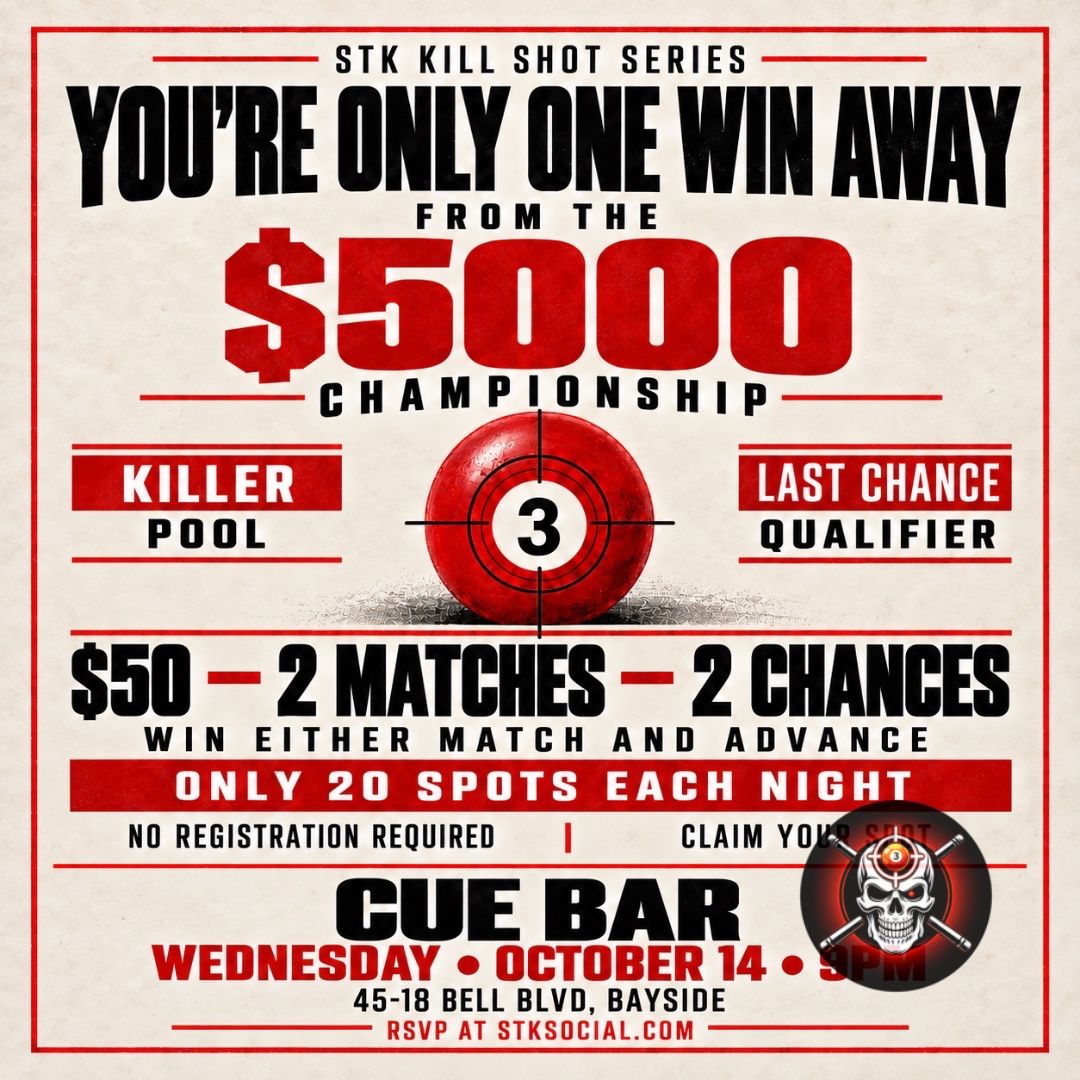
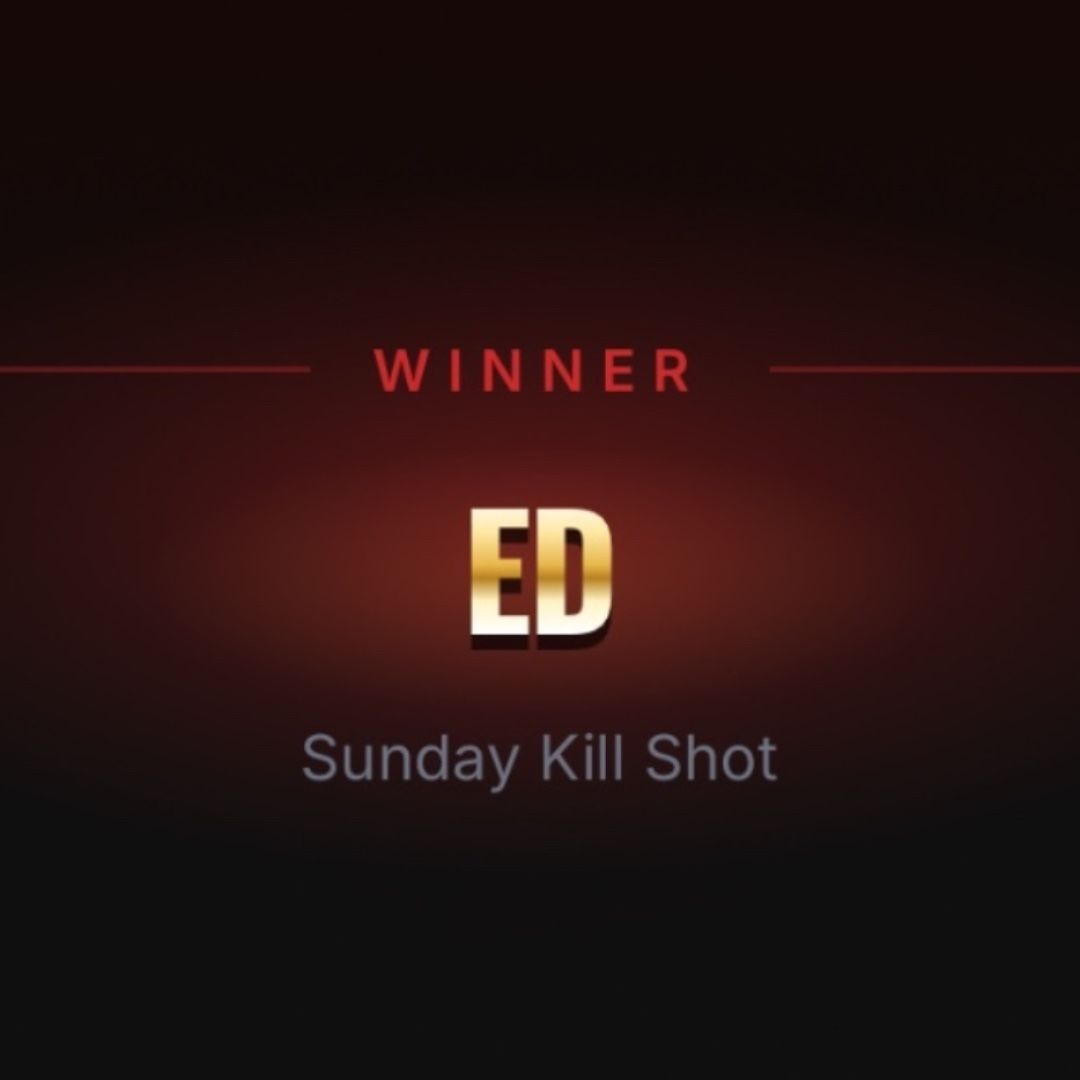
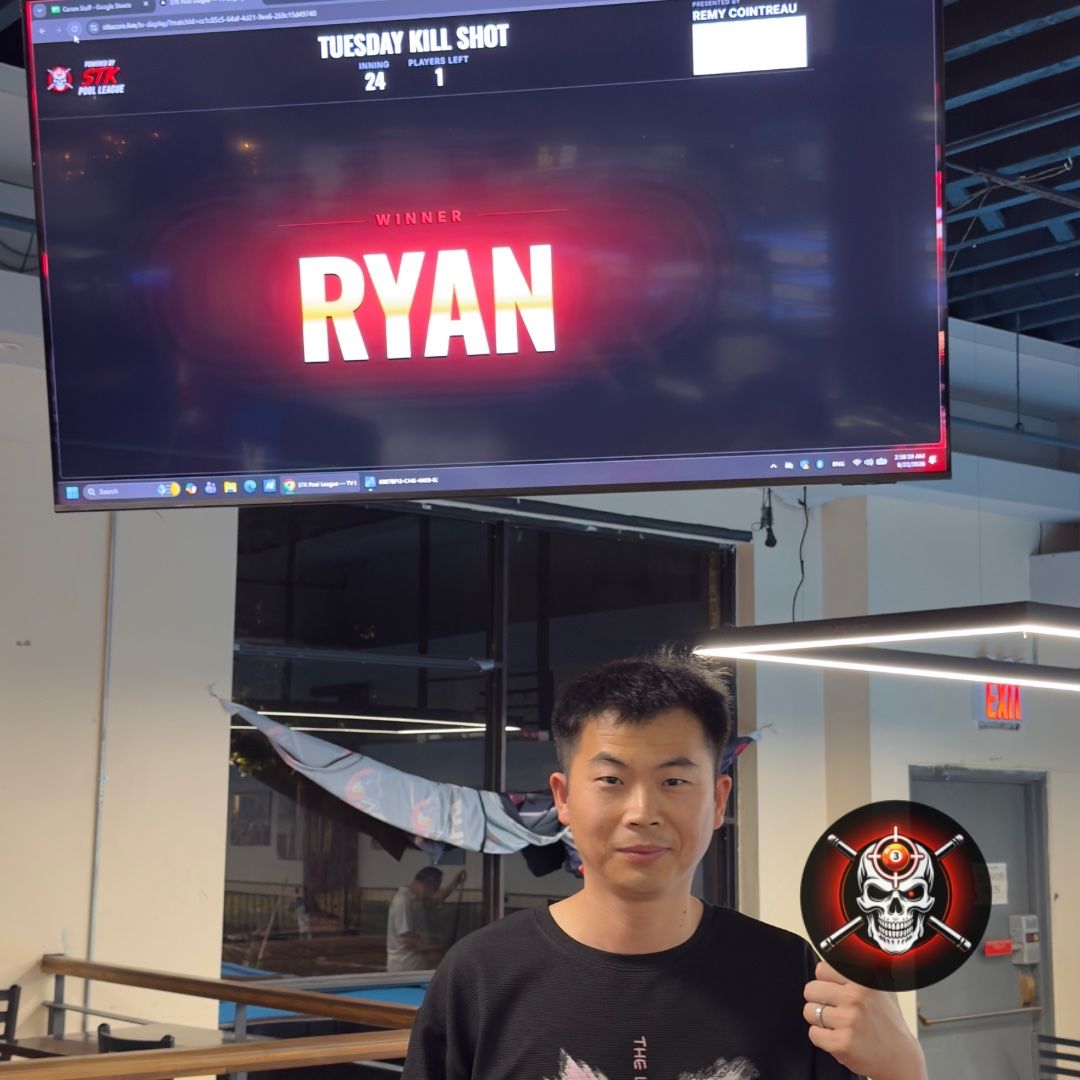
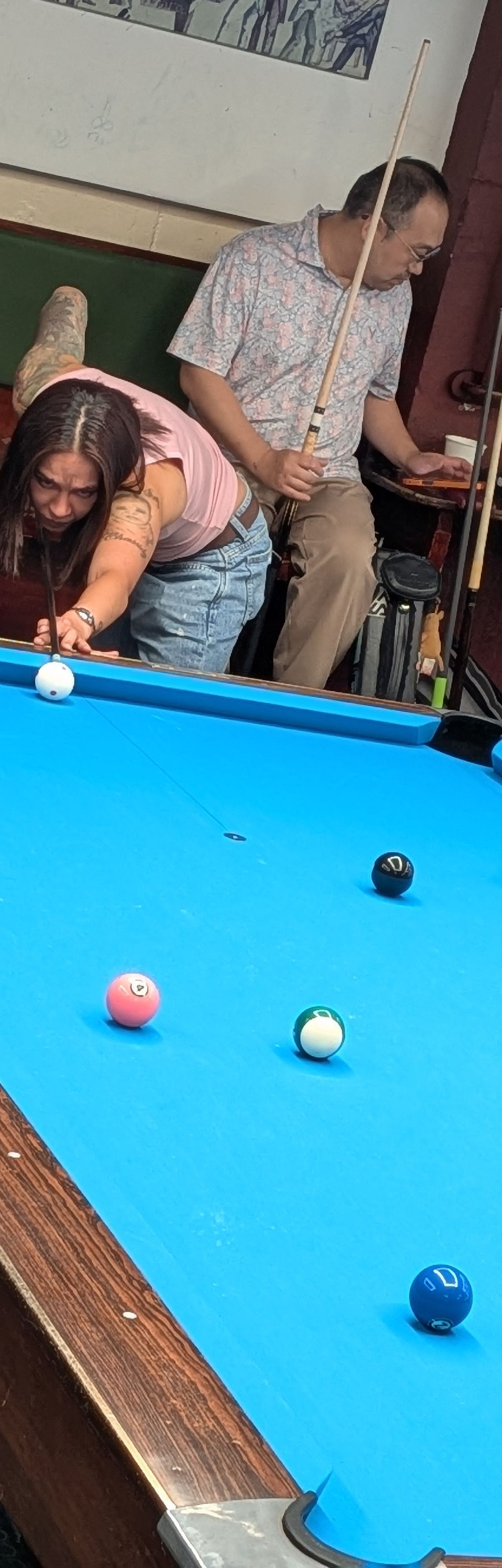
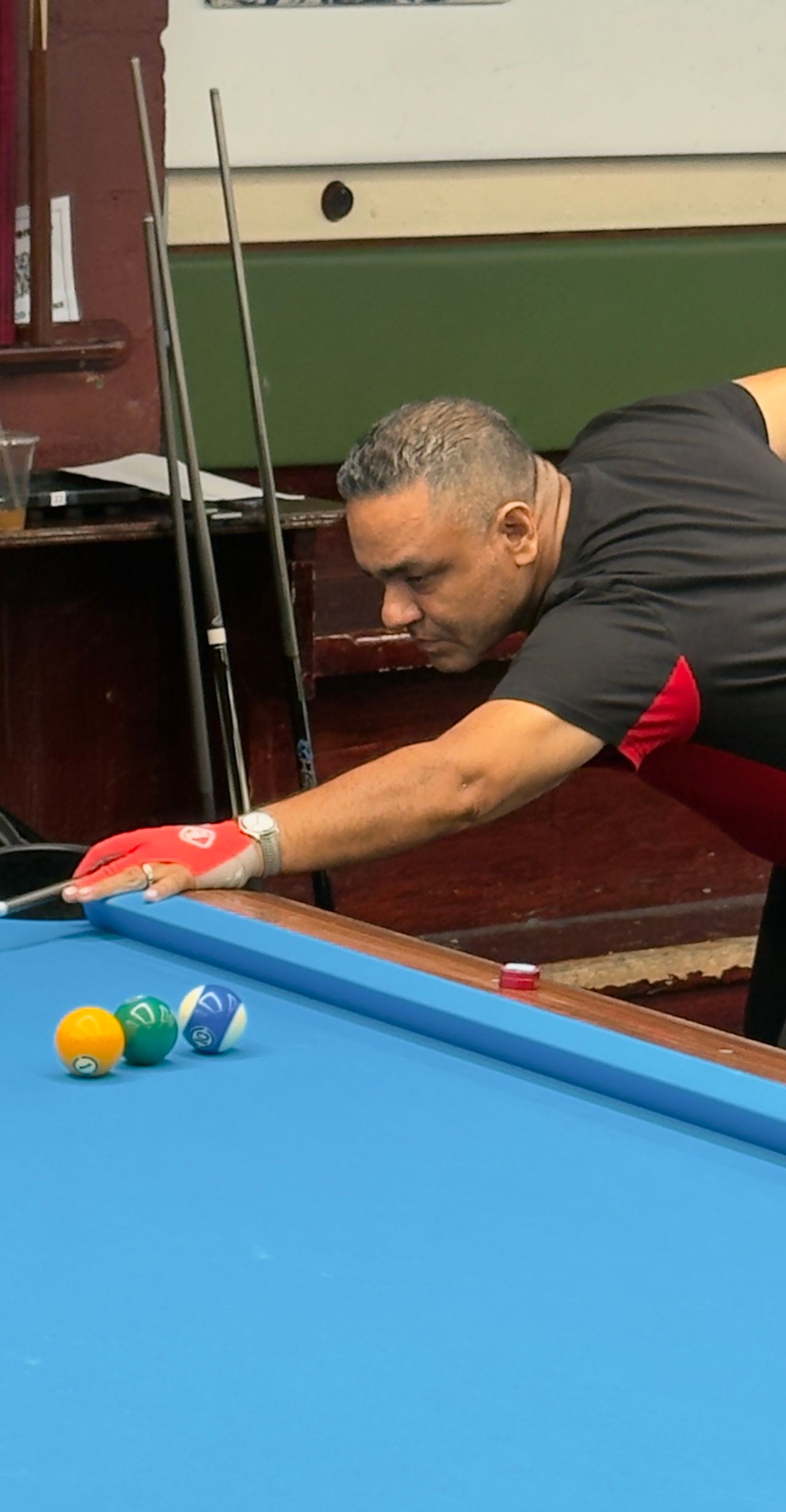
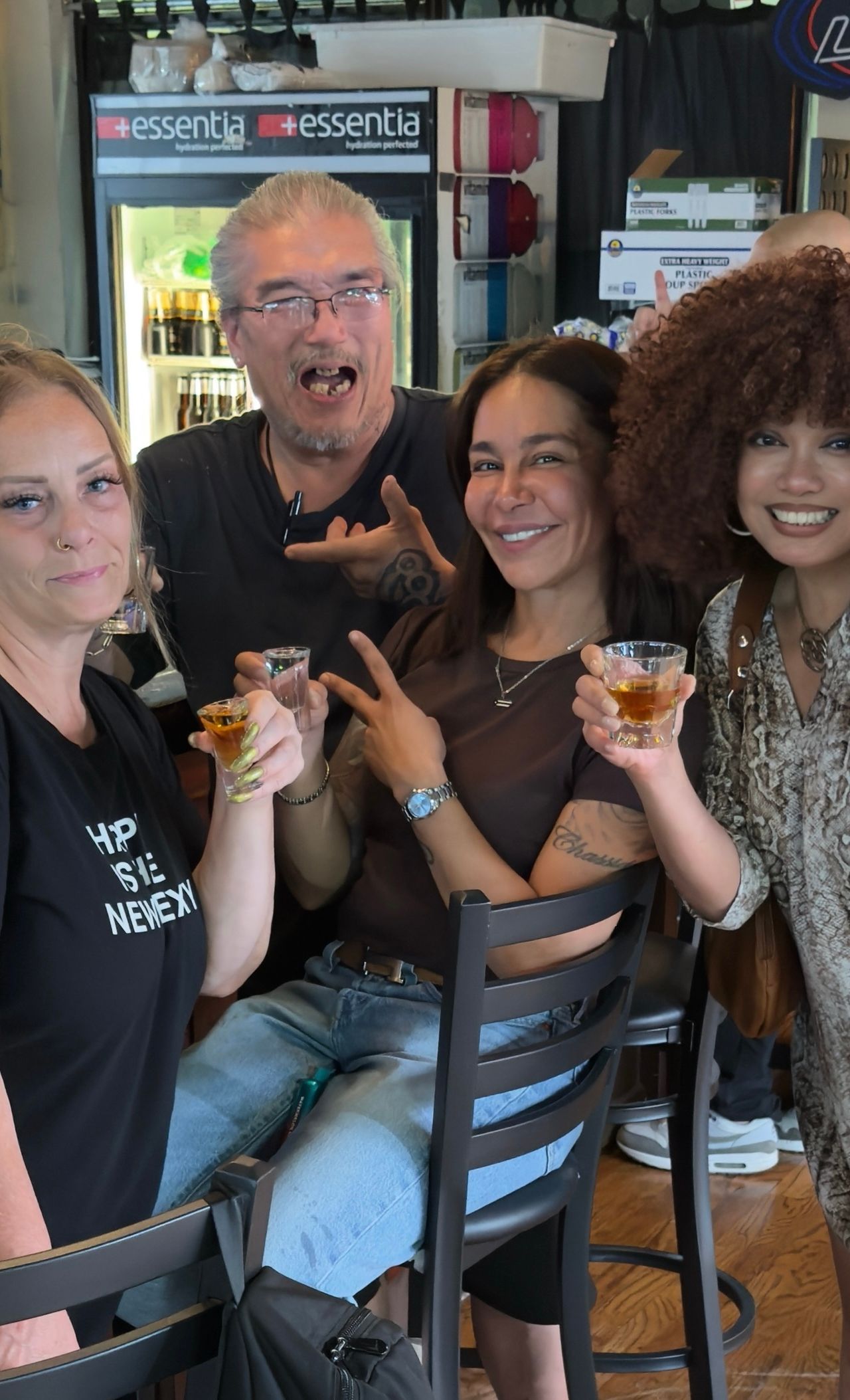
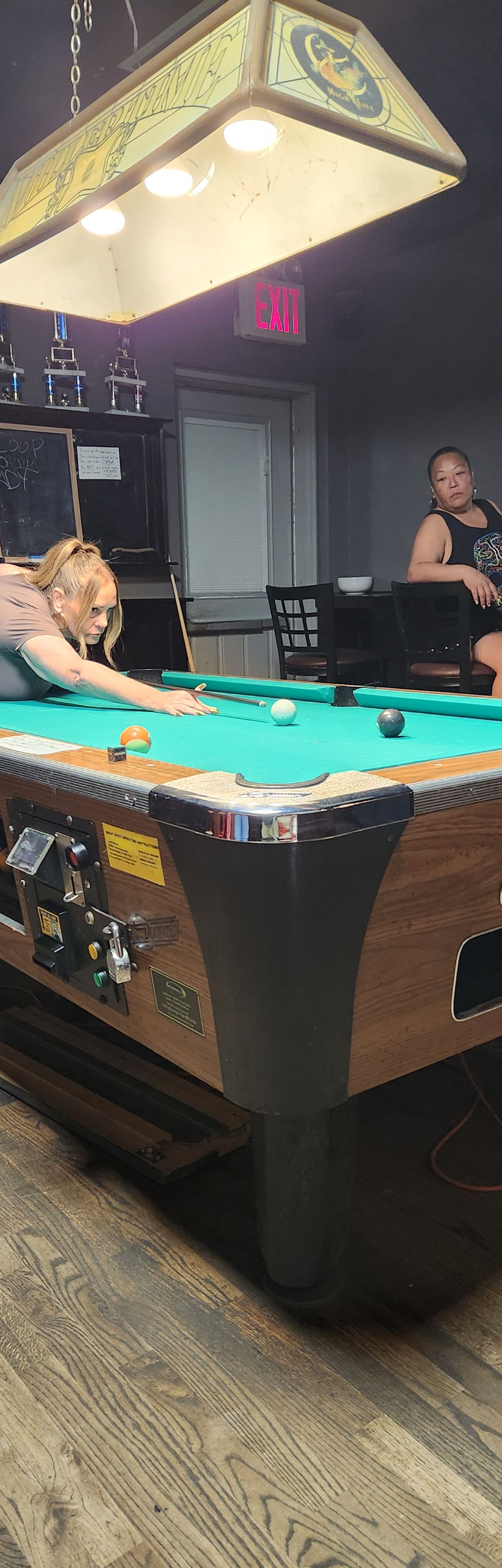
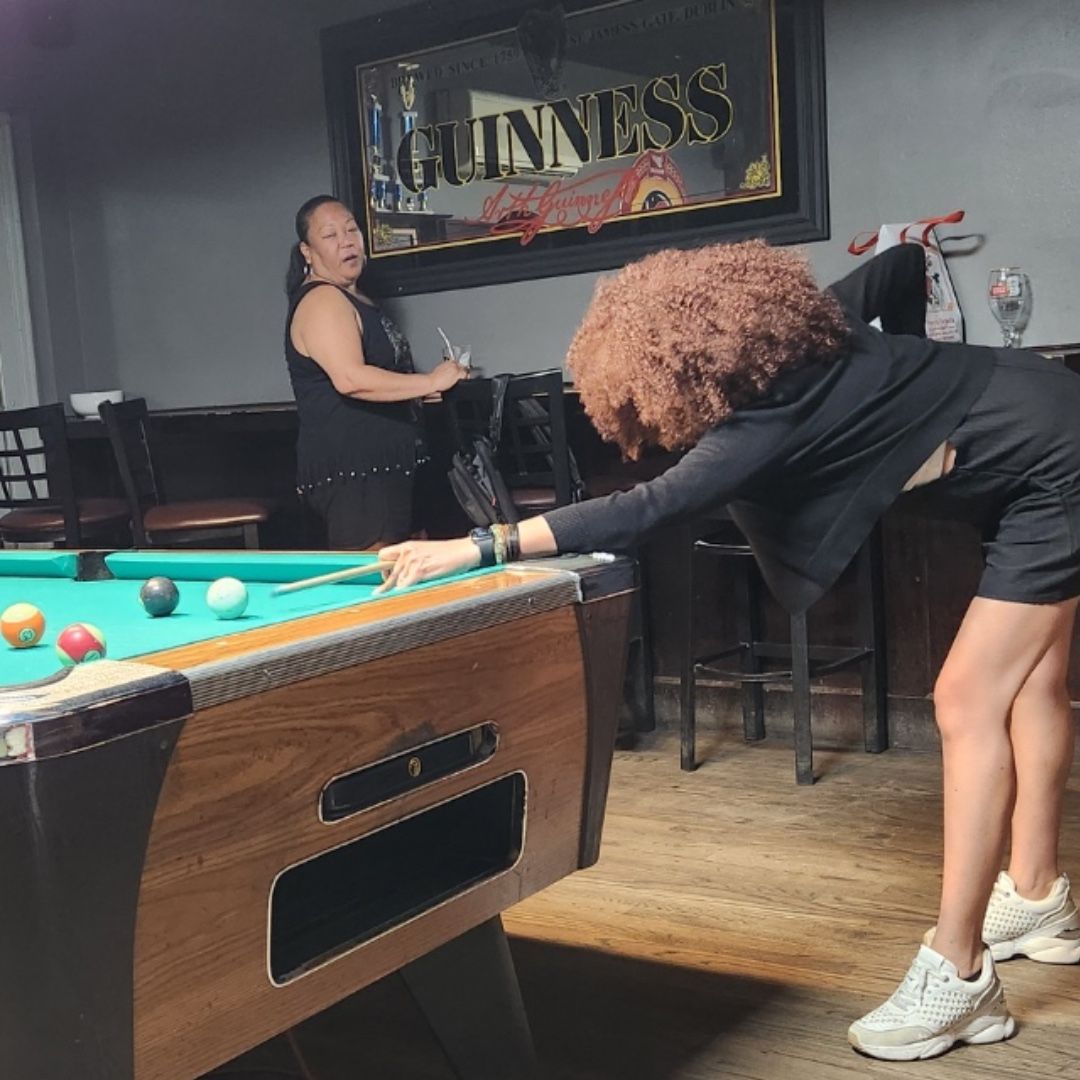
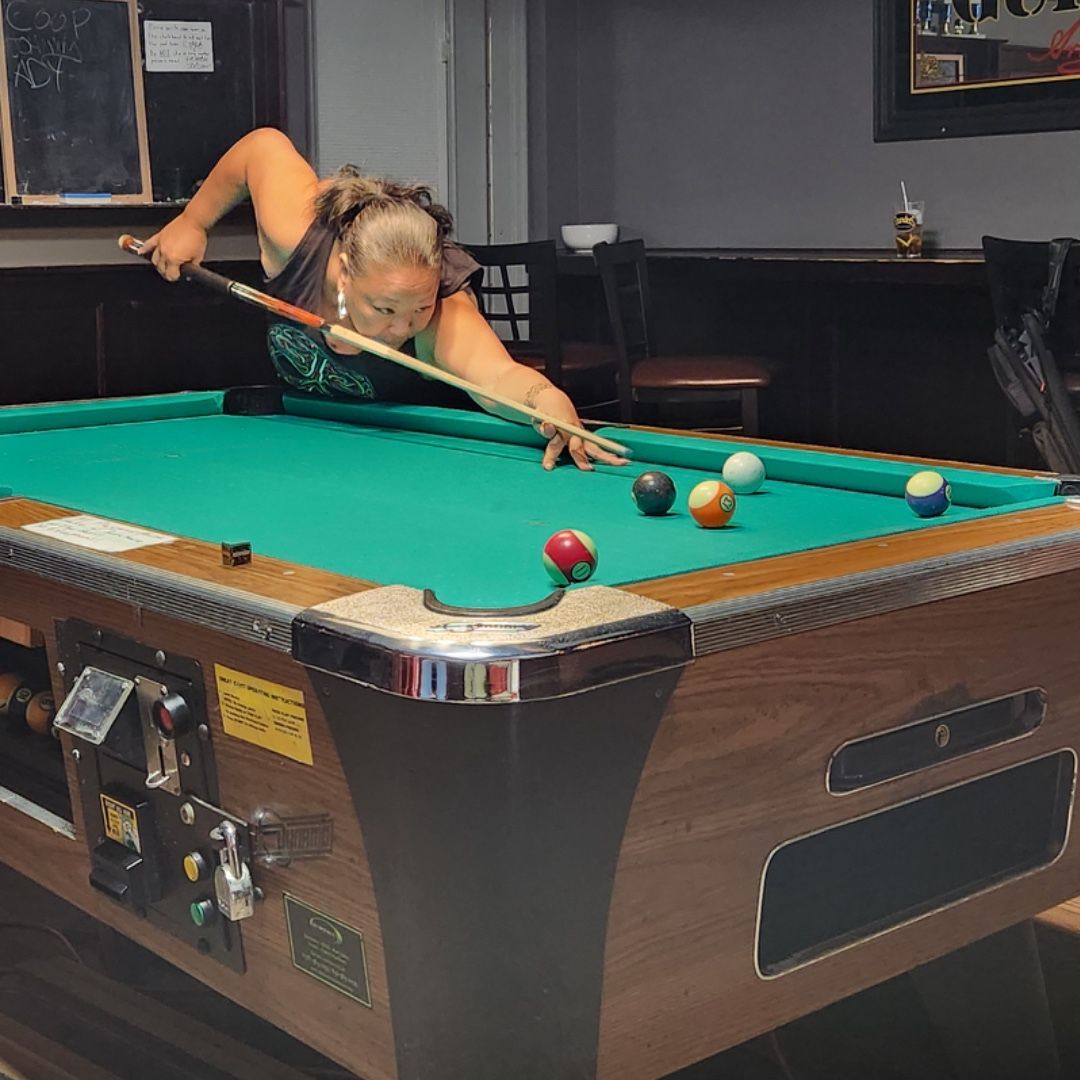
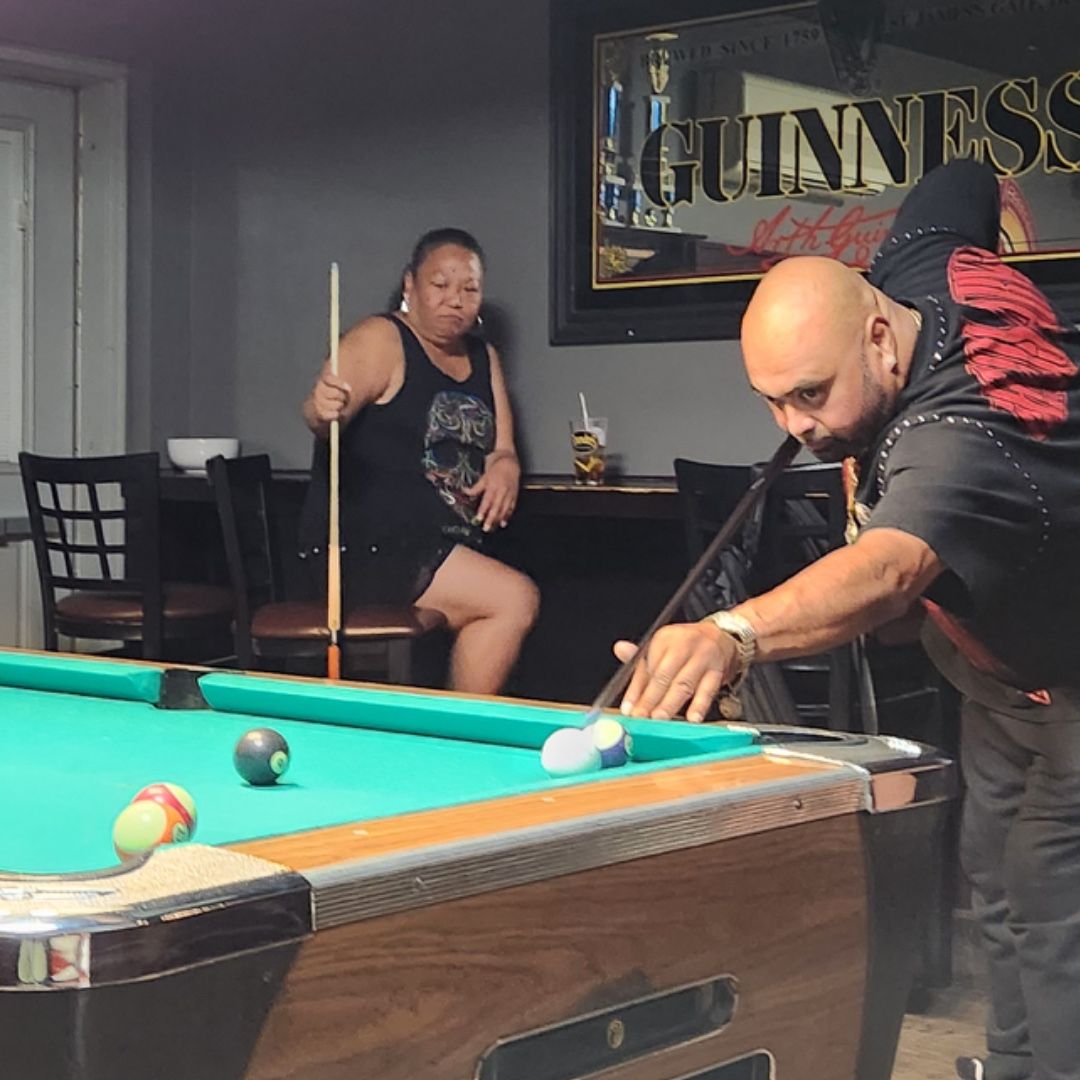
He won on his first try! Congrats on qualifying for the championship, Ryan!
STK
STK
Sep 21
STK Carom Cafe & Billiards Monday Recap
Match complete / Winners circle
ROOM CONQUERED. TICKET PUNCHED.
RYAN
Bounty
Carom Cafe & Billiards
Championship qualifier
W
Bounty bonus
NEIL TOOK OUT DARWIN.
+1 LIFE
Previous winner bounty · +1 regular-match credit
Bounty bonus
RYAN TOOK OUT NEILLE.
+1 LIFE
Host bounty · +1 regular-match credit
Bounty bonus
RYAN TOOK OUT NEIL.
+1 LIFE
Previous winner bounty · +1 regular-match credit
Bounty bonus
RYAN TOOK OUT DUC L.
+1 LIFE
Previous winner bounty · +1 regular-match credit
1 / 5
STK
STK
Sep 20
STK Globe Tavern Sunday Recap
Match complete / Winners circle
ROOM CONQUERED. TICKET PUNCHED.
ED S.
Bounty
The Globe Tavern
Championship qualifier
W
Match complete / Winners circle
ROOM CONQUERED. TICKET PUNCHED.
NEILLE
Bounty
The Globe Tavern
Championship qualifier · +1 Championship life
W
Bounty bonus
ED S. TOOK OUT MILLIE P.
+1 LIFE
Previous winner bounty · +1 regular-match credit
Bounty bonus
ED S. TOOK OUT NEILLE.
+1 LIFE
Host bounty · +1 regular-match credit
Bounty bonus
ED S. TOOK OUT DILLY.
+1 LIFE
Previous winner bounty · +1 regular-match credit
Bounty bonus
NEILLE TOOK OUT ED S.
+1 LIFE
Previous winner bounty · +1 regular-match credit
Bounty bonus
NEILLE TOOK OUT MILLIE P.
+1 LIFE
Previous winner bounty · +1 regular-match credit
Bounty bonus
DEBORAH B. TOOK OUT DILLY.
+1 LIFE
Previous winner bounty · +1 regular-match credit
1 / 10
STK
STK
Sep 17
STK Carom Cafe & Billiards Thursday Recap
Match complete / Winners circle
ROOM CONQUERED. TICKET PUNCHED.
NEIL
Bounty
Carom Cafe & Billiards
Championship qualifier
W
Bounty bonus
NEILLE TOOK OUT DARWIN.
+1 LIFE
Previous winner bounty · +1 regular-match credit
Bounty bonus
DUC L. TOOK OUT MHET V.
+1 LIFE
Previous winner bounty · +1 regular-match credit
Bounty bonus
DUC L. TOOK OUT NEILLE.
+1 LIFE
Host bounty · +1 regular-match credit
Bounty bonus
NEIL TOOK OUT DUC L.
+1 LIFE
Previous winner bounty · +1 regular-match credit
1 / 5
NC
Neille C.
Sep 16, 9:54 AM
Who's coming to play STK at Carom on Thursday?
STK
STK
Sep 14
STK Carom Cafe & Billiards Monday Recap
Winners circle
DUC IS MAXED OUT.
+1 LIFE
Championship: 3 base + 2 bonus = 5 lives · Cap reached
STK
STK
League recap · Win 2
Uh-oh! Duc has an extra life in the championship! Two wins, a couple of matches apart.
Winners circle
UH-OH! DUC DID IT AGAIN.
+1 LIFE
Championship: 3 base + 1 bonus = 4 lives
STK
STK
League recap · Bounty claimed
Neille eliminated Duc between his two wins and earned a bounty bonus.
Bounty bonus
NEILLE TOOK OUT DUC.
+1 LIFE
+1 regular-match credit
M
Michelle
Sep 10, 4:00 AM
Who’s coming to the Globe Tavern on Sunday?
STK
STK
League recap · Win 1
Duc takes his first win and qualifies for the championship.
Winners circle
ROOM CONQUERED. TICKET PUNCHED.
Championship qualified · 3 base lives
STK
STK
Sep 7
STK Monday Recap
Match complete / Winners circle
ROOM CONQUERED. TICKET PUNCHED.
MIKE D.
Bounty
Championship qualifier
W
1 / 5
STK
STK
Sep 6
STK Globe Tavern Sunday Recap
Match complete / Winners circle
ROOM CONQUERED. TICKET PUNCHED.
SUZZIE
Bounty
Championship qualifier
W
Match complete / Winners circle
ROOM CONQUERED. TICKET PUNCHED.
CLAUDIO
Bounty
Championship qualifier
W
1 / 2
STK
STK
Sep 3
STK Carom Cafe & Billiards Thursday Recap
Match complete / Winners circle
ROOM CONQUERED. TICKET PUNCHED.
CARMINE
Bounty
Championship qualifier
W
STK
STK
Aug 30
STK Globe Tavern Sunday Recap
Match complete / Winners circle
ROOM CONQUERED. TICKET PUNCHED.
MILLIE
Bounty
Championship qualifier
W
Match complete / Winners circle
ROOM CONQUERED. TICKET PUNCHED.
MICHELLE
Bounty
Championship qualifier
W
Match complete / Winners circle
ROOM CONQUERED. TICKET PUNCHED.
DILLY
Bounty
Championship qualifier
W
1 / 7
Show up. Shoot your shot.
Find your room
All times New York
Show up. Shoot your shot.
Venues
STK venues
Rooms running STK now.
Pending activation
Hit 15 votes. Getting set up.
Nominated
Sorted by votes, highest first.
Special nights
Events
Add event
The last ones standing
Winners circle
Season prize pool
of the season goal
0%20%40%60%80%100%
Road to the championship
ONE WIN. YOU’RE IN.
Win a match and advance to the championship.
Bounty Eliminate a previous winner to earn an extra life while you’re still active.
D
Duc
Bounty
Thursday Night Kill Shot · Sep 11
10 points
2 wins · 4 championship lives
MD
Mike D.
Bounty
Monday Night Kill Shot · Sep 8
14 points
C
Claudio
Bounty
Sunday Night Kill Shot · Sep 7
20 points
S
Suzzie
Bounty
Sunday Night Kill Shot · Sep 6
19 points
C
Carmine
Bounty
Thursday Night Kill Shot · Sep 4
15 points
D
Duke
Bounty
Friday Night Killer · Sep 1
12 points
D
Dilly
Bounty
Friday Night Killer · Aug 30
9 points
M
Michelle
Bounty
Friday Night Killer · Aug 30
11 points
M
Millie
Bounty
Friday Night Killer · Aug 30
14 points
M
Mhet
Bounty
Friday Night Killer · Aug 28
14 points
N
Neille
Bounty
Friday Night Killer · Aug 24
20 points
D
Dominic
Bounty
Friday Night Killer · Aug 24
16 points
K
Kool-Aid
Bounty
Friday Night Kill Shot · Aug 22
14 points
L
Leon
Bounty
Friday Night Kill Shot · Aug 21
10 points
D
Darwin
Bounty
Thursday Kill Shot · Aug 21
15 points
J
Jesus
Bounty
Friday Night Kill Shot · Aug 20
6 points
Know the game
Rules of the room
Watch: How to get on the STK Roster
STK Kill Shot Rules
Everyone plays at once. Players shoot in order. Player order is shuffled before the match starts. You get one shot per turn. All you have to do is make a ball - slop counts. If you miss, scratch, or foul, you get a strike. Reach your strike limit and you're eliminated.
Everyone starts the game with a 3-strike limit. In this series, you can purchase up to 2 more strikes for $5 each.
Pot a ball — no strike, next player shoots
Miss, scratch, or foul — you take a strike
Once you hit your strike limit, you're eliminated.
Breaks
If you break dry, you may shoot again. If you pot at least one ball on the break, the next player shoots. Any 4 balls must make contact with a rail for the break to be legal.
Shot clock
There is a 60-second shot clock if you need coaching on a shot.
Additional shot clocks for players who repeatedly slow down play: 30 seconds to approach the table, 60 seconds to shoot.
Fouls
Only cue ball fouls are counted as strikes.
An object ball that comes off the table also results in a strike and remains off the table.
Conduct
Banter is welcomed. Rudeness is never tolerated.
Earn Extra Lives
Refer a new player who registers, make two food or beverage orders during a match, or eliminate Neille or any previous Kill Shot winner to earn an extra life. But if you are eliminated before one of the players with a bounty is eliminated, you do not receive an extra life. You must still be active on the scoreboard to receive the extra life bounty.
These lives are added to your player account and may be saved or used during any regular Kill Shot Series match.
Extra lives earned through referrals, purchases, or bounties cannot be used at the Championship. Championship extra lives can only be earned by winning qualifying matches.
Entry Fee
$25 entry fee per match
Player Incentives
Refer new players: earn extra lives to use in any regular series match of your choosing.
Eliminate Neille: earn a bounty extra life.
Eliminate a previous match winner: earn a bounty extra life.
Earn a bonus life for placing two food or beverage orders per match in one night. If there are multiple matches, there are multiple opportunities to earn lives.
Win a regular match: qualify for the $5000 Championship. Win multiple matches, earn Championship lives (max 2 bonus, 5 lives total).
Championship lives can only be earned by winning matches. Referral, purchase, bounty rewards cannot create Championship lives.
Last player standing wins.
Your place in the league
Player profile
Grow the league
Invite friends
Send a private link. Invite friends to THE pool party
AdminTribes & roles0
Tribes
AdminVenues0
Ranked by votes. Pending rooms are ready to activate.
AdminReported messages0
Only reported messages show here — never a full chat.
Admin
Top 8
Controls the Player Top 8 and Venue Top 8 blocks on the feed. Hidden from every player until this is turned on.
Status: Off — hidden from players
Status: Off — hidden from players
Update your details
Edit profile
Profile photo
Before you chalk up
Frequently asked questions
First time here?
Do I have to be good at pool?
No. You get one shot per turn, and any pocketed ball counts—even slop. You’re here to play, meet people, and try to be the last one standing.
How does a match work?
Player order is shuffled before the match. Make a ball and your turn ends. Miss, scratch, or foul and you take a strike. Reach your strike limit and you’re eliminated. The last player standing wins.
How do I find a match and RSVP?
Open Matches, choose your night, and RSVP. RSVPs are for registered players and close one hour before the match starts.
What does it cost?
The current series rules list $25 entry fee per match.
How do I earn extra lives?
Bring a new player who registers, make two food or beverage orders during a match, or collect a bounty. Your profile keeps a record of earned and used regular-match credits.
What does the bounty icon mean?
Every previous Kill Shot winner is a bounty target. Neille is a bounty target too. Eliminate a target while you’re still active to earn an extra life. The next-game bounty board shows attending targets; seeded entries are marked until attendance is confirmed.
How do I qualify for the championship?
Win a regular match. A second win earns one extra championship life; a third earns another. Championship lives are capped at five: three base lives plus two bonus lives.
Can I bring my regular extra-life credits to the championship?
No. Referral, bar-purchase, and bounty credits are for regular series matches. Only qualifying match wins earn championship bonus lives.
Where do photos and match results appear?
Photos you post appear in the feed with an STK watermark. Winner cards celebrate match results, and reward announcements explain who earned an extra life and how.
How do I report a wrong stat or suggest something?
Use the feedback form. For a stats correction, include the player, match, date, and what needs fixing.
Official
October 26, 2026 · 6 min read
Mindfulness
What Phil Jackson's Meditation Coach Knew About Winning
Phil Jackson hired a meditation teacher for the Bulls and Lakers. Research now shows mindfulness helps most in precision sports like pool.
In October 1993, a meditation teacher named George Mumford walked into the Chicago Bulls' training camp in Deerfield, Illinois. Phil Jackson had hired him to teach the team what was billed as stress reduction. By 1997, Jackson had noticed a pattern: "The funny thing is, invariably we go on a five-game winning streak whenever we see George." (Quoted in Katy Butler, Tricycle, Summer 2003.)
Mumford went on to work with Jackson for more than 20 years, from the Bulls to the Lakers of Shaquille O'Neal and Kobe Bryant. The idea he taught is simple enough to use on a Tuesday night at the pool hall: you play your best when you stop fighting your own mind. Here is what he taught, what the science says about it, and a ten-minute practice you can start this week.
Who was George Mumford?
George Mumford is a meditation teacher and sports psychology consultant who worked with Phil Jackson's teams for more than two decades. He taught Vipassana, an insight meditation practice, along with stress reduction. He came to meditation through his own recovery from addiction, and he wrote The Mindful Athlete about applying it to sport.
Mumford has been open about why the practice mattered to him. "My life depended on meditation practice," he told Tricycle. That honesty is part of why players listened. He was not selling calm as a performance trick; he had needed it to survive.
What did he teach the Bulls and Lakers?
He taught players to notice what was happening in their minds and bodies without being ruled by it. His sessions mixed meditation, conversation and team building. The point was not to empty the mind. It was to stay present, steady and connected to teammates while the game swirled around them.
In a 2016 profile for Mindful, Hugh Delehanty, who co-wrote Jackson's book Eleven Rings, summarized Mumford's lessons in three ideas: be still so you can act without overthinking; forget yourself and focus on your values and your teammates; and remember that mindfulness alone is not enough without steady effort and good judgment. Mumford once told Kobe Bryant that the best way to score was not to try to score. Bryant scored 16 points in the first quarter. "Because he wasn't trying to score," Mumford said, "he was letting the game come to him."
Michael Jordan put the result in his own words: "George talked me off the ledge of anger and frustration." That line matters for pool players. Anger after a miss rarely costs one shot. It costs the next three.
Does mindfulness improve performance?
The research says yes, and pool players have a particular reason to pay attention. Two reviews point the same way. One found the clearest performance gains in precision sports like shooting and darts. Another found that mindfulness training lowered competitive anxiety, with larger effects from programs longer than seven weeks.
The first review, led by Laura Bühlmayer and published in Sports Medicine in 2017, pooled nine trials with 290 athletes. Mindfulness practice improved performance in shooting and dart throwing. The second, by Xin Wang and colleagues in Current Psychology in 2024, pooled 20 studies, 14 of them randomized controlled trials. Mindfulness reduced both the worried thoughts and the physical jitters of competitive anxiety, and it raised self-confidence.
Why precision sports? They share the demands of a pool shot: stillness, fine motor control and a single moment of execution after time to think. That window is exactly where a wandering, anxious mind does damage. Nine trials is not a mountain of evidence, and the authors call for more high-quality trials. Still, for a sport built like ours, the direction is clear.
What does "let the game come to you" mean at the table?
It means you stop forcing outcomes and respond to the table in front of you. You play the shot that is there, not the shot you wish were there. You let a bad roll go instead of carrying it into the next rack.
In practice, this is the difference between a player who misses, mutters and then rushes the next shot, and a player who misses, breathes and walks around the table to see what is left. The second player is not calmer by nature. That player has practiced noticing the frustration and letting it pass before it reaches the stroke. That is a trainable skill, and it is the one Mumford taught.
Try this at your next match
Start with ten minutes a day and keep it up for more than seven weeks; the 2024 review found that programs longer than seven weeks cut competitive anxiety more than shorter ones.
Sit for ten minutes a day. Breathe normally and count each exhale from one to ten, then start over. When your mind wanders, and it will, notice it and return to one. The returning is the exercise.
Name the feeling at the table. After a miss, say silently what you feel: "frustrated," "rushed," "embarrassed." Naming it creates a gap between the feeling and your next decision.
Take one breath before you choose a shot. Stand behind the table, exhale slowly, and look at the whole layout before you pick a shot.
Let the last rack go. Before each new break, take one breath and decide that the previous rack is finished, win or lose.
Track it. Write one line after each match night: when did your mind leave the table, and what brought it back?
Weekly email
Behind the Ball
A free weekly email: a recap of our new articles, tournaments coming up (STK’s and others’) and the pool news we shared.
Jordan worked with George Mumford, the meditation teacher Phil Jackson brought to the Bulls, and credited him with helping him handle anger and frustration.
Did Kobe Bryant work with George Mumford?
Yes. Mumford worked with the Lakers under Phil Jackson. He once told Bryant not to try to score; Bryant scored 16 first-quarter points, and Mumford said he was "letting the game come to him."
Does mindfulness help pool players?
A 2017 review found better performance after mindfulness training in shooting and darts, precision sports that share pool's demands for stillness and fine control. A 2024 review found lower competitive anxiety across sports.
How long before mindfulness training works?
In a 2024 meta-analysis, programs longer than seven weeks reduced competitive anxiety more than shorter ones.
Is mindfulness the same as relaxing?
No. Mindfulness is paying attention to the present moment without judgment. You can be alert and mindful at the same time, which is what a pool shot needs.