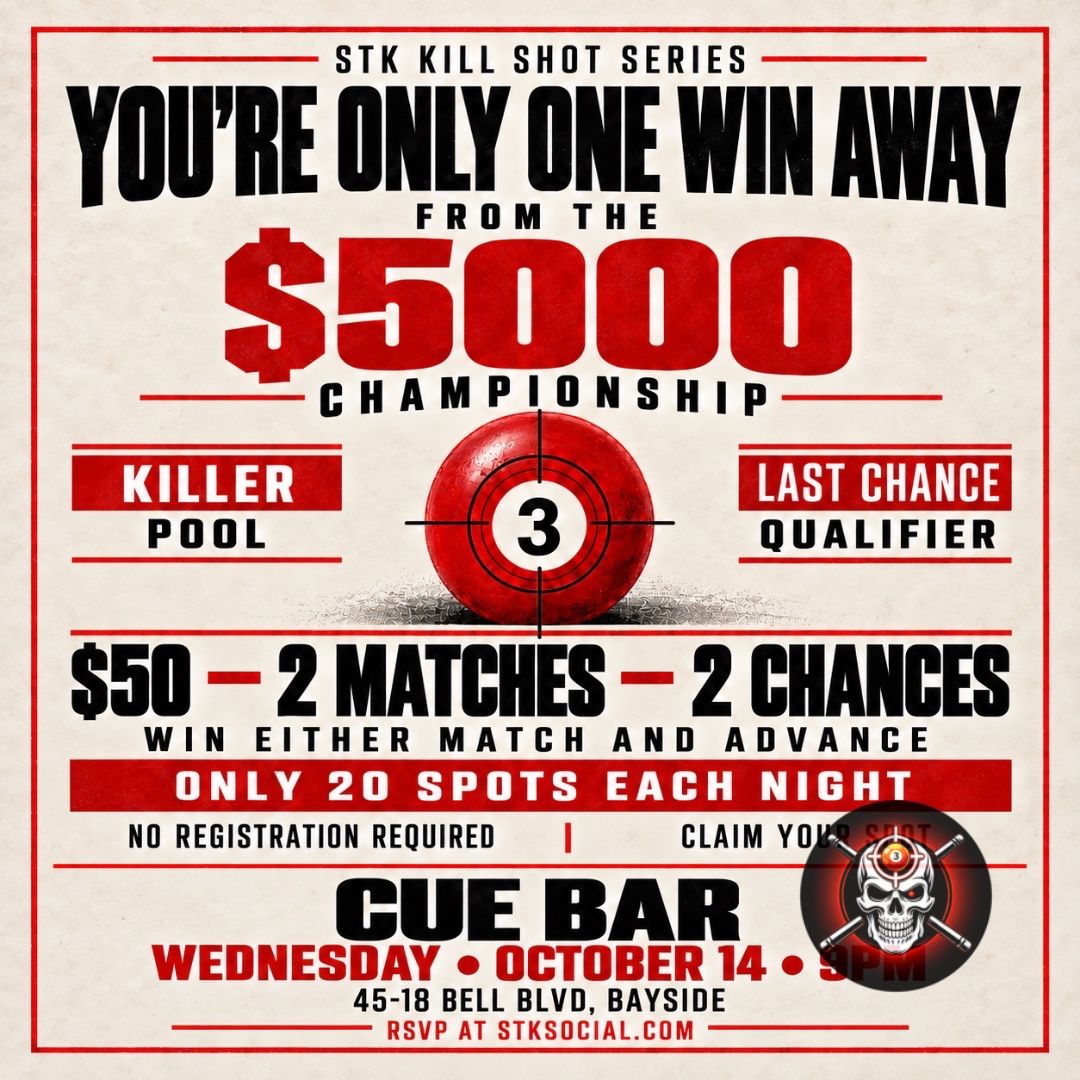
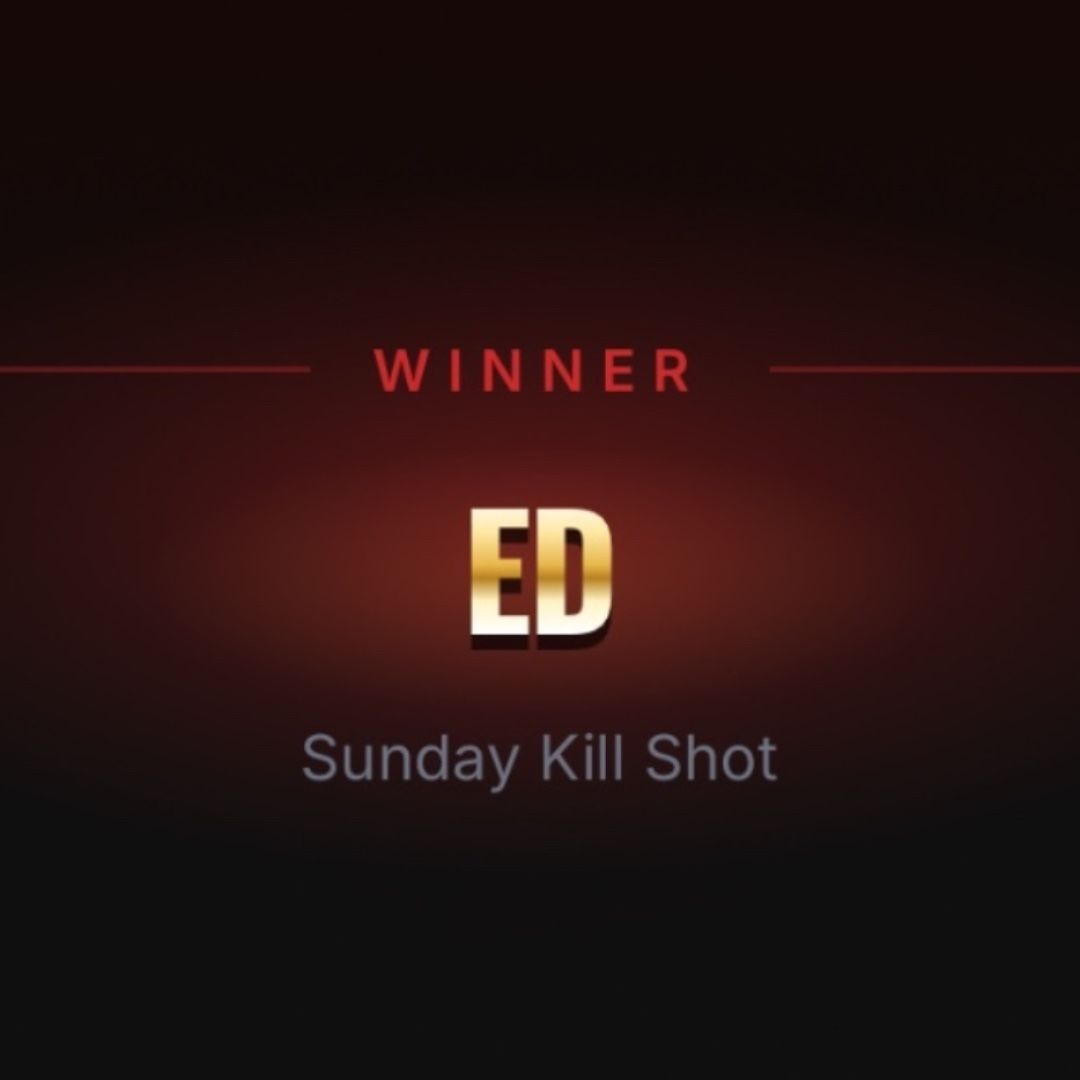
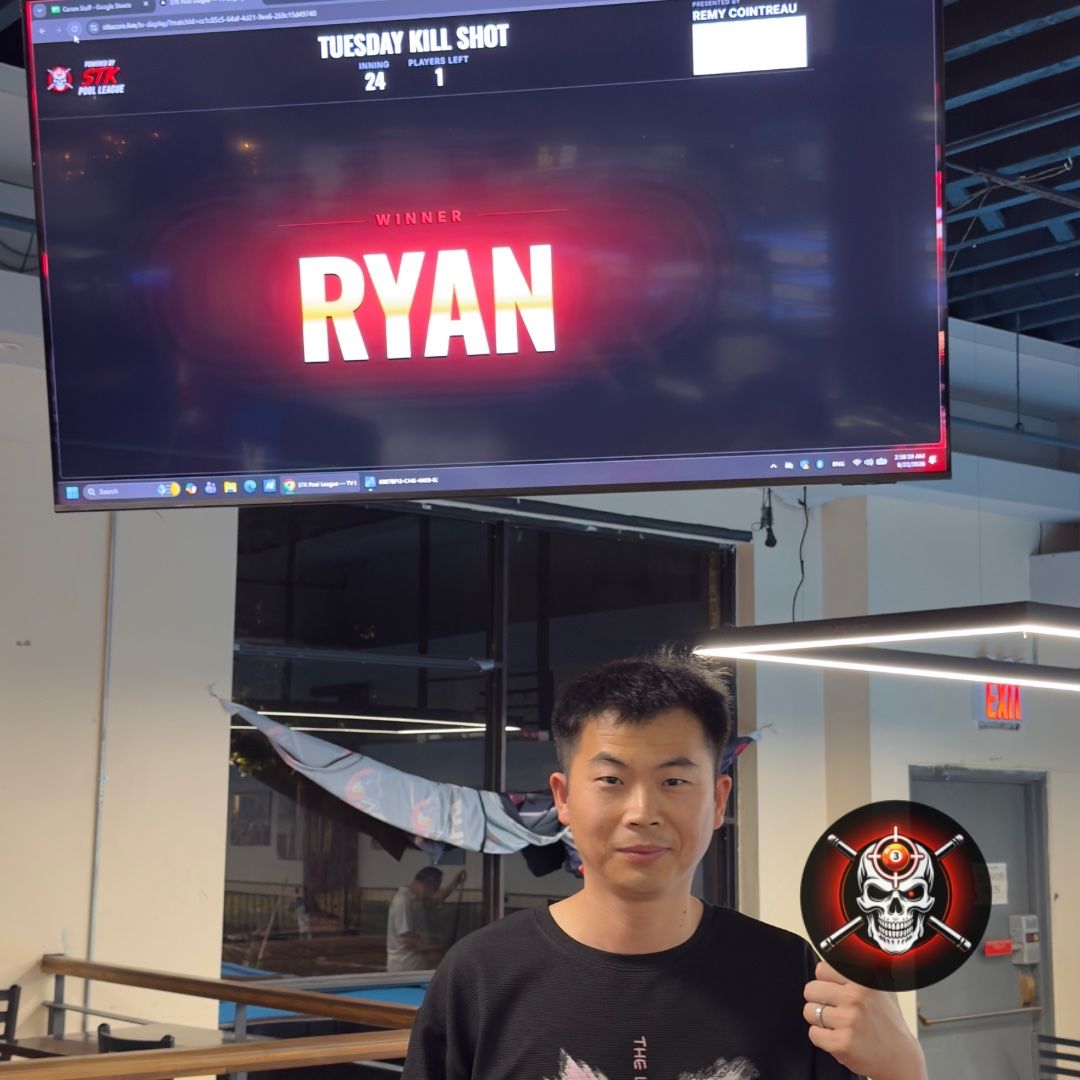
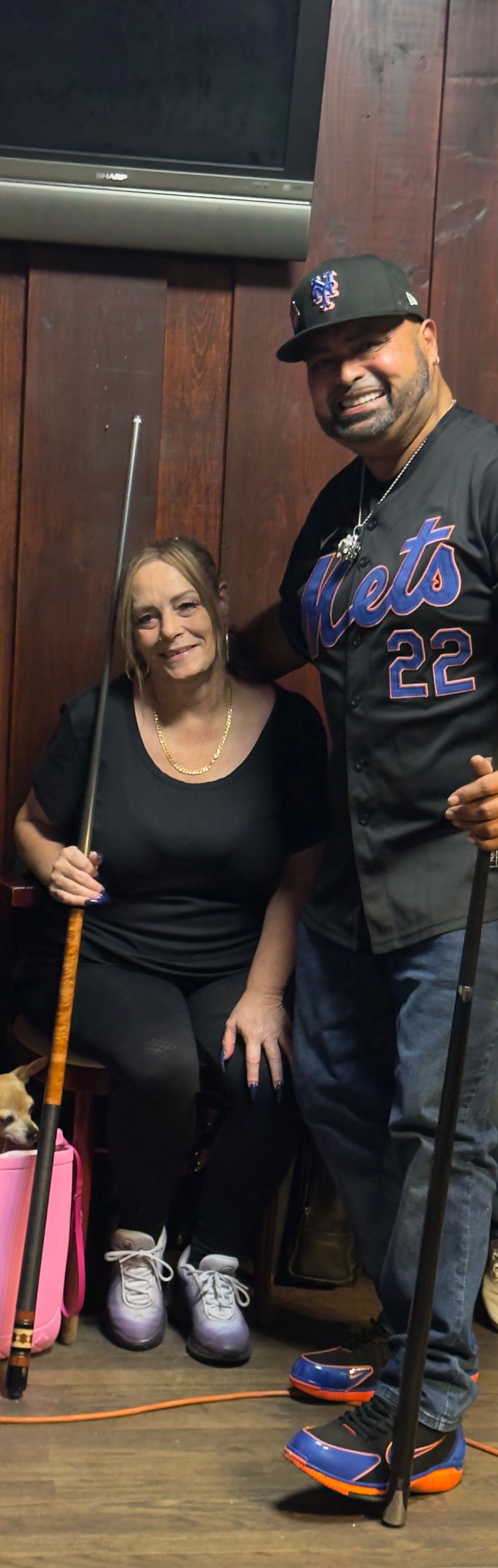
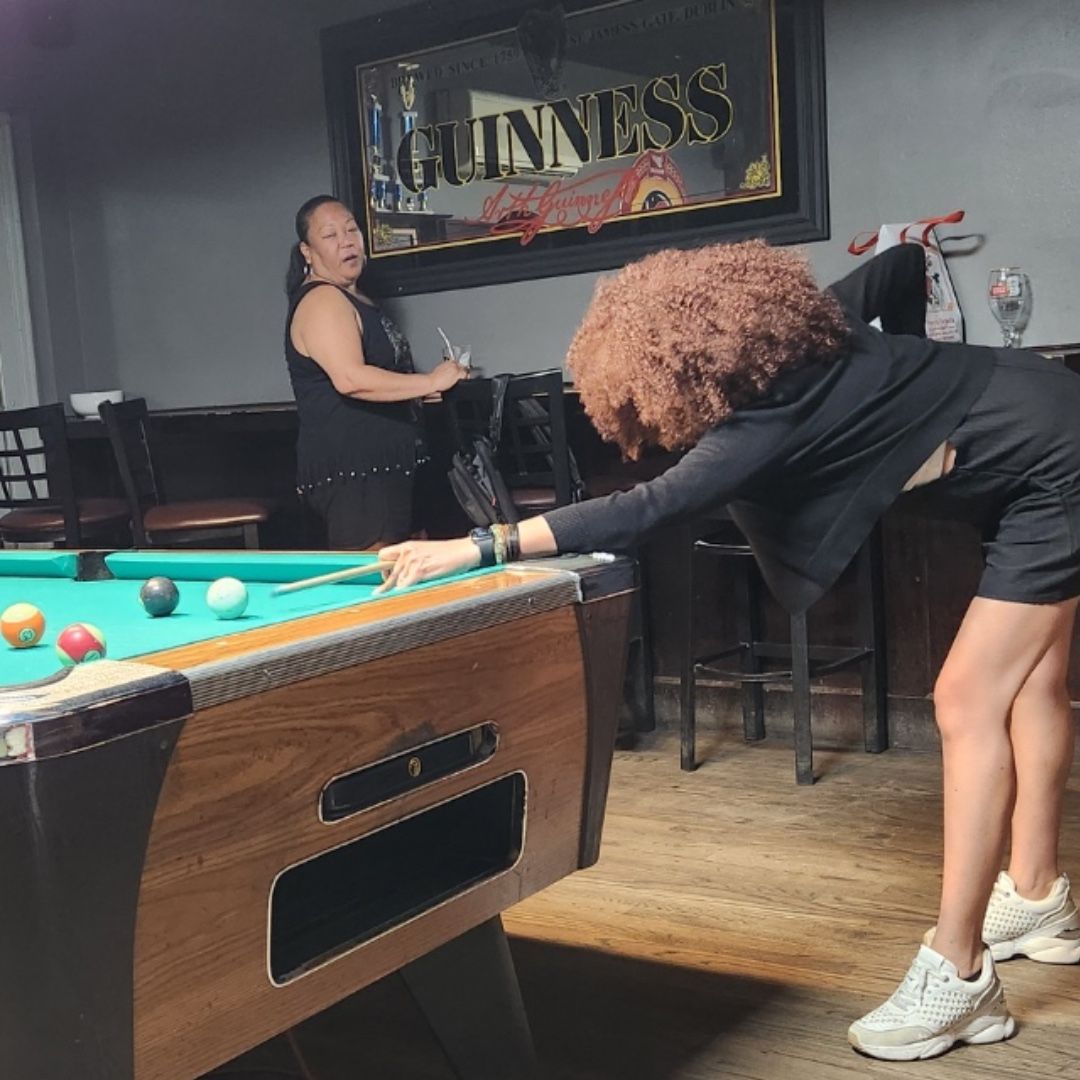
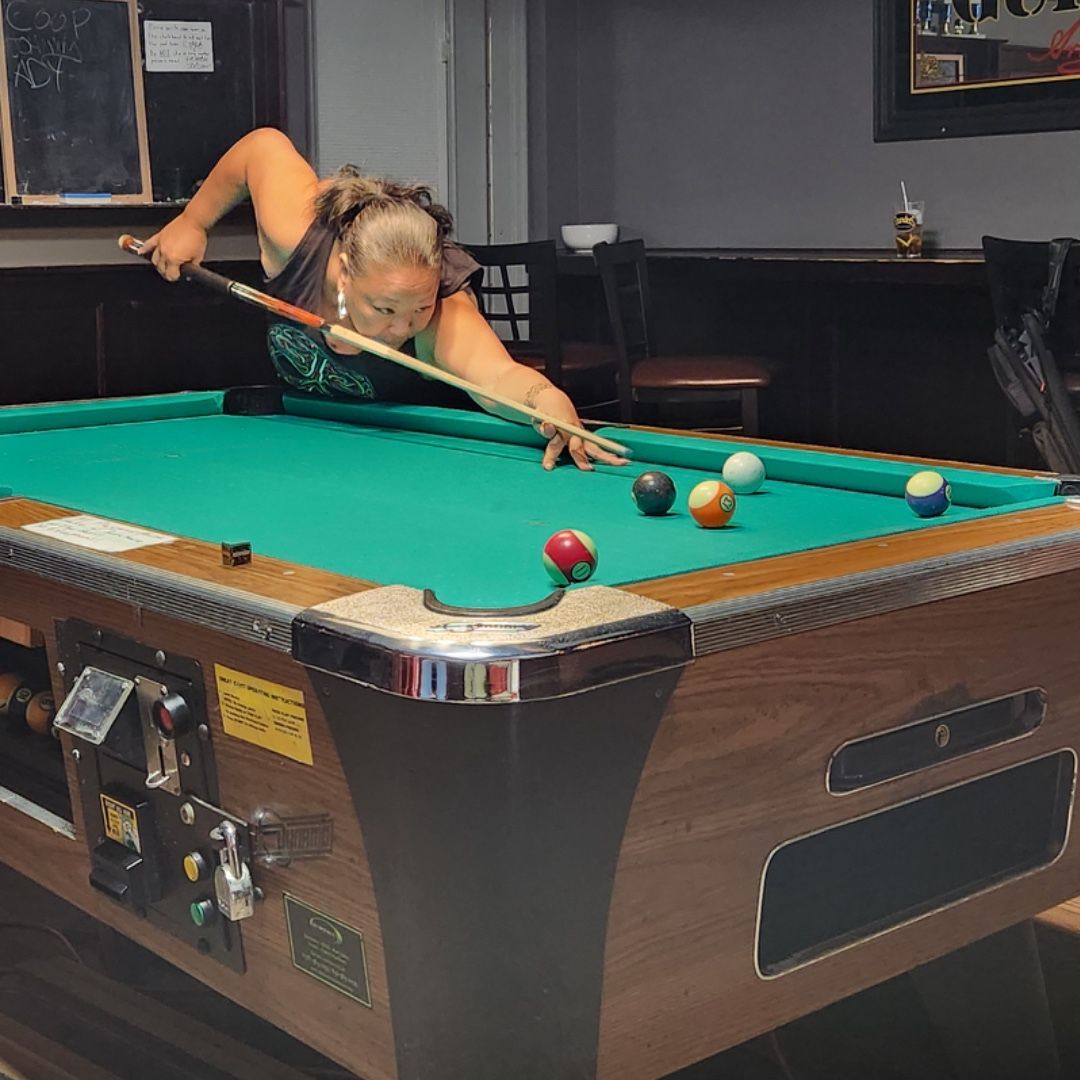
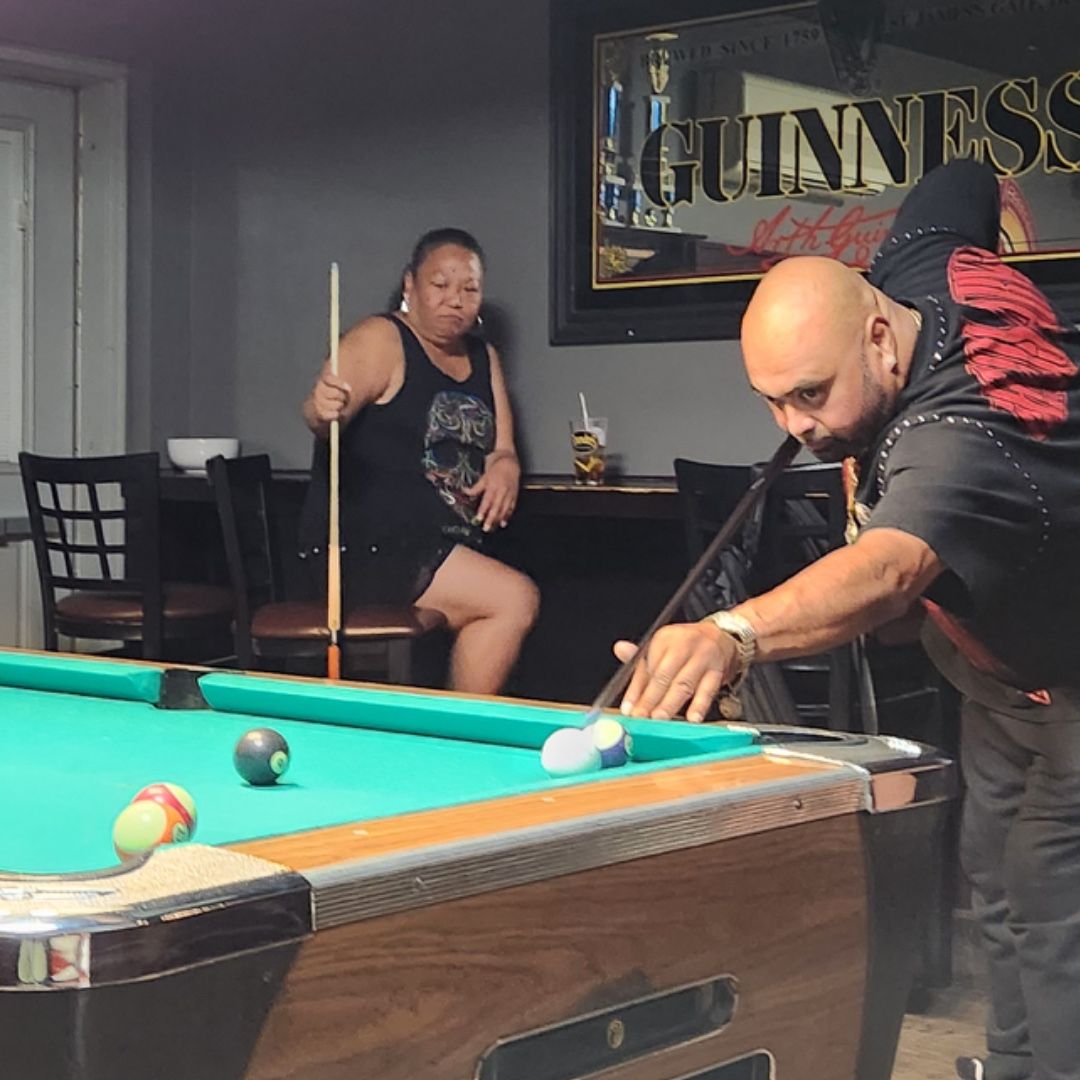
He won on his first try! Congrats on qualifying for the championship, Ryan!
STK
STK
Sep 21
STK Carom Cafe & Billiards Monday Recap
Match complete / Winners circle
ROOM CONQUERED. TICKET PUNCHED.
RYAN
Bounty
Carom Cafe & Billiards
Championship qualifier
W
Bounty bonus
NEIL TOOK OUT DARWIN.
+1 LIFE
Previous winner bounty · +1 regular-match credit
Bounty bonus
RYAN TOOK OUT NEILLE.
+1 LIFE
Host bounty · +1 regular-match credit
Bounty bonus
RYAN TOOK OUT NEIL.
+1 LIFE
Previous winner bounty · +1 regular-match credit
Bounty bonus
RYAN TOOK OUT DUC L.
+1 LIFE
Previous winner bounty · +1 regular-match credit
1 / 5
STK
STK
Sep 20
STK Globe Tavern Sunday Recap
Match complete / Winners circle
ROOM CONQUERED. TICKET PUNCHED.
ED S.
Bounty
The Globe Tavern
Championship qualifier
W
Match complete / Winners circle
ROOM CONQUERED. TICKET PUNCHED.
NEILLE
Bounty
The Globe Tavern
Championship qualifier · +1 Championship life
W
Bounty bonus
ED S. TOOK OUT MILLIE P.
+1 LIFE
Previous winner bounty · +1 regular-match credit
Bounty bonus
ED S. TOOK OUT NEILLE.
+1 LIFE
Host bounty · +1 regular-match credit
Bounty bonus
ED S. TOOK OUT DILLY.
+1 LIFE
Previous winner bounty · +1 regular-match credit
Bounty bonus
NEILLE TOOK OUT ED S.
+1 LIFE
Previous winner bounty · +1 regular-match credit
Bounty bonus
NEILLE TOOK OUT MILLIE P.
+1 LIFE
Previous winner bounty · +1 regular-match credit
Bounty bonus
DEBORAH B. TOOK OUT DILLY.
+1 LIFE
Previous winner bounty · +1 regular-match credit
1 / 10
STK
STK
Sep 17
STK Carom Cafe & Billiards Thursday Recap
Match complete / Winners circle
ROOM CONQUERED. TICKET PUNCHED.
NEIL
Bounty
Carom Cafe & Billiards
Championship qualifier
W
Bounty bonus
NEILLE TOOK OUT DARWIN.
+1 LIFE
Previous winner bounty · +1 regular-match credit
Bounty bonus
DUC L. TOOK OUT MHET V.
+1 LIFE
Previous winner bounty · +1 regular-match credit
Bounty bonus
DUC L. TOOK OUT NEILLE.
+1 LIFE
Host bounty · +1 regular-match credit
Bounty bonus
NEIL TOOK OUT DUC L.
+1 LIFE
Previous winner bounty · +1 regular-match credit
1 / 5
NC
Neille C.
Sep 16, 9:54 AM
Who's coming to play STK at Carom on Thursday?
STK
STK
Sep 14
STK Carom Cafe & Billiards Monday Recap
Winners circle
DUC IS MAXED OUT.
+1 LIFE
Championship: 3 base + 2 bonus = 5 lives · Cap reached
STK
STK
League recap · Win 2
Uh-oh! Duc has an extra life in the championship! Two wins, a couple of matches apart.
Winners circle
UH-OH! DUC DID IT AGAIN.
+1 LIFE
Championship: 3 base + 1 bonus = 4 lives
STK
STK
League recap · Bounty claimed
Neille eliminated Duc between his two wins and earned a bounty bonus.
Bounty bonus
NEILLE TOOK OUT DUC.
+1 LIFE
+1 regular-match credit
M
Michelle
Sep 10, 4:00 AM
Who’s coming to the Globe Tavern on Sunday?
STK
STK
League recap · Win 1
Duc takes his first win and qualifies for the championship.
Winners circle
ROOM CONQUERED. TICKET PUNCHED.
Championship qualified · 3 base lives
STK
STK
Sep 7
STK Monday Recap
Match complete / Winners circle
ROOM CONQUERED. TICKET PUNCHED.
MIKE D.
Bounty
Championship qualifier
W
1 / 5
STK
STK
Sep 6
STK Globe Tavern Sunday Recap
Match complete / Winners circle
ROOM CONQUERED. TICKET PUNCHED.
SUZZIE
Bounty
Championship qualifier
W
Match complete / Winners circle
ROOM CONQUERED. TICKET PUNCHED.
CLAUDIO
Bounty
Championship qualifier
W
1 / 2
STK
STK
Sep 3
STK Carom Cafe & Billiards Thursday Recap
Match complete / Winners circle
ROOM CONQUERED. TICKET PUNCHED.
CARMINE
Bounty
Championship qualifier
W
STK
STK
Aug 30
STK Globe Tavern Sunday Recap
Match complete / Winners circle
ROOM CONQUERED. TICKET PUNCHED.
MILLIE
Bounty
Championship qualifier
W
Match complete / Winners circle
ROOM CONQUERED. TICKET PUNCHED.
MICHELLE
Bounty
Championship qualifier
W
Match complete / Winners circle
ROOM CONQUERED. TICKET PUNCHED.
DILLY
Bounty
Championship qualifier
W
1 / 7
Show up. Shoot your shot.
Find your room
All times New York
Show up. Shoot your shot.
Venues
STK venues
Rooms running STK now.
Pending activation
Hit 15 votes. Getting set up.
Nominated
Sorted by votes, highest first.
Special nights
Events
Add event
The last ones standing
Winners circle
Season prize pool
of the season goal
0%20%40%60%80%100%
Road to the championship
ONE WIN. YOU’RE IN.
Win a match and advance to the championship.
Bounty Eliminate a previous winner to earn an extra life while you’re still active.
D
Duc
Bounty
Thursday Night Kill Shot · Sep 11
10 points
2 wins · 4 championship lives
MD
Mike D.
Bounty
Monday Night Kill Shot · Sep 8
14 points
C
Claudio
Bounty
Sunday Night Kill Shot · Sep 7
20 points
S
Suzzie
Bounty
Sunday Night Kill Shot · Sep 6
19 points
C
Carmine
Bounty
Thursday Night Kill Shot · Sep 4
15 points
D
Duke
Bounty
Friday Night Killer · Sep 1
12 points
D
Dilly
Bounty
Friday Night Killer · Aug 30
9 points
M
Michelle
Bounty
Friday Night Killer · Aug 30
11 points
M
Millie
Bounty
Friday Night Killer · Aug 30
14 points
M
Mhet
Bounty
Friday Night Killer · Aug 28
14 points
N
Neille
Bounty
Friday Night Killer · Aug 24
20 points
D
Dominic
Bounty
Friday Night Killer · Aug 24
16 points
K
Kool-Aid
Bounty
Friday Night Kill Shot · Aug 22
14 points
L
Leon
Bounty
Friday Night Kill Shot · Aug 21
10 points
D
Darwin
Bounty
Thursday Kill Shot · Aug 21
15 points
J
Jesus
Bounty
Friday Night Kill Shot · Aug 20
6 points
Know the game
Rules of the room
Watch: How to get on the STK Roster
STK Kill Shot Rules
Everyone plays at once. Players shoot in order. Player order is shuffled before the match starts. You get one shot per turn. All you have to do is make a ball - slop counts. If you miss, scratch, or foul, you get a strike. Reach your strike limit and you're eliminated.
Everyone starts the game with a 3-strike limit. In this series, you can purchase up to 2 more strikes for $5 each.
Pot a ball — no strike, next player shoots
Miss, scratch, or foul — you take a strike
Once you hit your strike limit, you're eliminated.
Breaks
If you break dry, you may shoot again. If you pot at least one ball on the break, the next player shoots. Any 4 balls must make contact with a rail for the break to be legal.
Shot clock
There is a 60-second shot clock if you need coaching on a shot.
Additional shot clocks for players who repeatedly slow down play: 30 seconds to approach the table, 60 seconds to shoot.
Fouls
Only cue ball fouls are counted as strikes.
An object ball that comes off the table also results in a strike and remains off the table.
Conduct
Banter is welcomed. Rudeness is never tolerated.
Earn Extra Lives
Refer a new player who registers, make two food or beverage orders during a match, or eliminate Neille or any previous Kill Shot winner to earn an extra life. But if you are eliminated before one of the players with a bounty is eliminated, you do not receive an extra life. You must still be active on the scoreboard to receive the extra life bounty.
These lives are added to your player account and may be saved or used during any regular Kill Shot Series match.
Extra lives earned through referrals, purchases, or bounties cannot be used at the Championship. Championship extra lives can only be earned by winning qualifying matches.
Entry Fee
$25 entry fee per match
Player Incentives
Refer new players: earn extra lives to use in any regular series match of your choosing.
Eliminate Neille: earn a bounty extra life.
Eliminate a previous match winner: earn a bounty extra life.
Earn a bonus life for placing two food or beverage orders per match in one night. If there are multiple matches, there are multiple opportunities to earn lives.
Win a regular match: qualify for the $5000 Championship. Win multiple matches, earn Championship lives (max 2 bonus, 5 lives total).
Championship lives can only be earned by winning matches. Referral, purchase, bounty rewards cannot create Championship lives.
Last player standing wins.
Your place in the league
Player profile
Grow the league
Invite friends
Send a private link. Invite friends to THE pool party
AdminTribes & roles0
Tribes
AdminVenues0
Ranked by votes. Pending rooms are ready to activate.
AdminReported messages0
Only reported messages show here — never a full chat.
Admin
Top 8
Controls the Player Top 8 and Venue Top 8 blocks on the feed. Hidden from every player until this is turned on.
Status: Off — hidden from players
Status: Off — hidden from players
Update your details
Edit profile
Profile photo
Before you chalk up
Frequently asked questions
First time here?
Do I have to be good at pool?
No. You get one shot per turn, and any pocketed ball counts—even slop. You’re here to play, meet people, and try to be the last one standing.
How does a match work?
Player order is shuffled before the match. Make a ball and your turn ends. Miss, scratch, or foul and you take a strike. Reach your strike limit and you’re eliminated. The last player standing wins.
How do I find a match and RSVP?
Open Matches, choose your night, and RSVP. RSVPs are for registered players and close one hour before the match starts.
What does it cost?
The current series rules list $25 entry fee per match.
How do I earn extra lives?
Bring a new player who registers, make two food or beverage orders during a match, or collect a bounty. Your profile keeps a record of earned and used regular-match credits.
What does the bounty icon mean?
Every previous Kill Shot winner is a bounty target. Neille is a bounty target too. Eliminate a target while you’re still active to earn an extra life. The next-game bounty board shows attending targets; seeded entries are marked until attendance is confirmed.
How do I qualify for the championship?
Win a regular match. A second win earns one extra championship life; a third earns another. Championship lives are capped at five: three base lives plus two bonus lives.
Can I bring my regular extra-life credits to the championship?
No. Referral, bar-purchase, and bounty credits are for regular series matches. Only qualifying match wins earn championship bonus lives.
Where do photos and match results appear?
Photos you post appear in the feed with an STK watermark. Winner cards celebrate match results, and reward announcements explain who earned an extra life and how.
How do I report a wrong stat or suggest something?
Use the feedback form. For a stats correction, include the player, match, date, and what needs fixing.
Official
November 12, 2026 · 6 min read
Sleep and Performance
Does Losing Sleep Hurt Your Game? What Research Says
Sleep loss causes attention lapses, and you may not notice. Athlete research is mixed, and no study has tested pool players.
In 2011, Stanford researchers asked eleven varsity basketball players to sleep as much as they could for five to seven weeks, aiming for at least ten hours in bed each night. By the end, the players made more free throws and more three-pointers than they had at baseline. Their reaction times were faster too. With no control group, the study cannot show that the extra sleep caused the gains, and it did not test pool. By the end of this article, you will know what the research can and cannot say about sleep and your game, and you will have a plan for the night before you play.
The short answer
Yes, probably. Lab studies show that losing sleep slows and blurs thinking and causes lapses in attention. Our reading is that these are skills a pool player uses to read a table and stay patient. No study has tested pool players, and results in athletes are mixed. Still, the research is a reason to take sleep before match night seriously.
Did extra sleep really improve basketball shooting?
Probably, but the study is small. In 2011, Stanford researchers asked eleven varsity players to extend their sleep for several weeks. Free-throw and three-point shooting improved afterward. Because there was no control group, the study cannot prove that sleep caused the gains.
Mah, Mah, Kezirian, and Dement published the work in Sleep in 2011. Players first kept their normal sleep habits for two to four weeks, then tried to reach at least ten hours in bed for five to seven weeks. Sleep measured by a wrist monitor rose from about 6.7 hours to about 8.5 hours a night. Free throws made out of ten rose from 7.9 to 8.8, and three-pointers made out of fifteen rose from 10.2 to 11.6. Average reaction time on a vigilance test fell from about 311 to about 275 milliseconds.
The authors listed their own limits. The sample was eleven players from one team. Every player was compared only with himself, there was no control or crossover group, and the players may simply have improved with practice. Performance was also measured in practice, not in games. Treat the study as a hint, not proof.
What does losing sleep do to attention?
In one large analysis, lapses in simple attention showed the biggest effect. A 2010 meta-analysis of 70 articles found that effects ranged from small to large, with the largest on lapses, the moments when attention drops out. At the table, a lapse might look like shooting on habit instead of reading the layout.
Lim and Dinges pooled 147 cognitive tests in Psychological Bulletin in 2010. All the studies involved a single stretch of total sleep loss shorter than 48 hours. Lapses in simple attention showed a large effect (g = -0.78). Reasoning accuracy showed a small effect that was not statistically significant.
The pattern matters for players because pool rewards steady attention: patience in a safety battle, a clear head for a long run, and the discipline to follow your pre-shot routine on the fifth rack as you did on the first. The authors note that the tests were not equally pure measures of the skill they targeted and that the analysis covered only sleep loss shorter than 48 hours. The studies also did not involve pool. The link to your game is our reading of the science, not a result anyone has measured.
Does sleep loss hurt every physical skill?
No, and that is why the evidence is hard to read. Fullagar and colleagues reviewed the research in 2015 and found conflicting results. Some maximal efforts and gross motor tasks held up, while athlete studies showed worse sport-specific performance. We found no study of pool players.
The review in Sports Medicine covered exercise performance and the body's response to exercise. The authors report that studies consistently found slower and less accurate thinking after sleep loss. They also say the extent of the effect and the reasons behind it remain unclear, and they call for more research.
That honesty is useful. Our reading is that skills which depend on precise attention, which includes most of pool, may be the ones more likely to wobble.
Can you tell when you are running short?
Not reliably. In a 2003 laboratory study, people limited to six hours a night kept lapsing more while their own sleepiness ratings rose only a little after the first days. Feeling fine is not proof that you are fine.
Van Dongen, Maislin, Mullington, and Dinges ran the study in Sleep in 2003. Of 48 healthy adults aged 21 to 38, participants were randomized to four, six, or eight hours in bed for fourteen nights, and a separate group went without sleep for three nights. The authors report that restriction to six hours or less produced deficits comparable to up to two nights of total sleep loss. Sleepiness ratings rose at first, then changed little, and did not separate the six-hour and four-hour groups. The authors concluded that people were largely unaware of their growing deficits.
The subjects were healthy adults in a laboratory, not tired players in a bar. Even so, the finding suggests that a run of short nights can feel normal while still costing you.
Try this at your next match
Protect the night before. Plan your sleep before match night so you are not trying to make up for it on the day of play.
Plan the ride home. If your league plays late, decide before the match how you will get to bed soon after, instead of deciding at midnight.
Do not trust how you feel. If you slept less than usual for several nights, assume your attention is below its best, whatever you feel, and play the simple, high-percentage shot more often.
Lean on your routine. Keep your usual pre-shot routine, especially late in a match.
Track it for four weeks. After each match, note your sleep the two nights before and how you played, then look for a pattern. This is your own record, not a study, so treat it as a clue.
Weekly email
Behind the Ball
A free weekly email: a recap of our new articles, tournaments coming up (STK’s and others’) and the pool news we shared.
Not necessarily. Research on single nights of lost sleep shows clear effects on attention, but athlete studies on physical performance are mixed, and no study has tested pool.
How much sleep should I get before a match?
The Stanford players aimed for at least ten hours in bed, but that was an experiment with athletes, not advice for you. Ask a doctor or sleep professional about your own needs.
Is this medical advice?
No. This article describes research. If you struggle to sleep, talk to a healthcare professional.
Does the basketball study prove sleep improves performance?
No. It had eleven players, no control group, and measured performance in practice. It shows a link worth taking seriously.
Why do I feel fine when I am short on sleep?
In the 2003 laboratory study, people's sleepiness ratings rose only slightly after the first days while their lapses kept rising, so feeling fine did not mean performing fine.