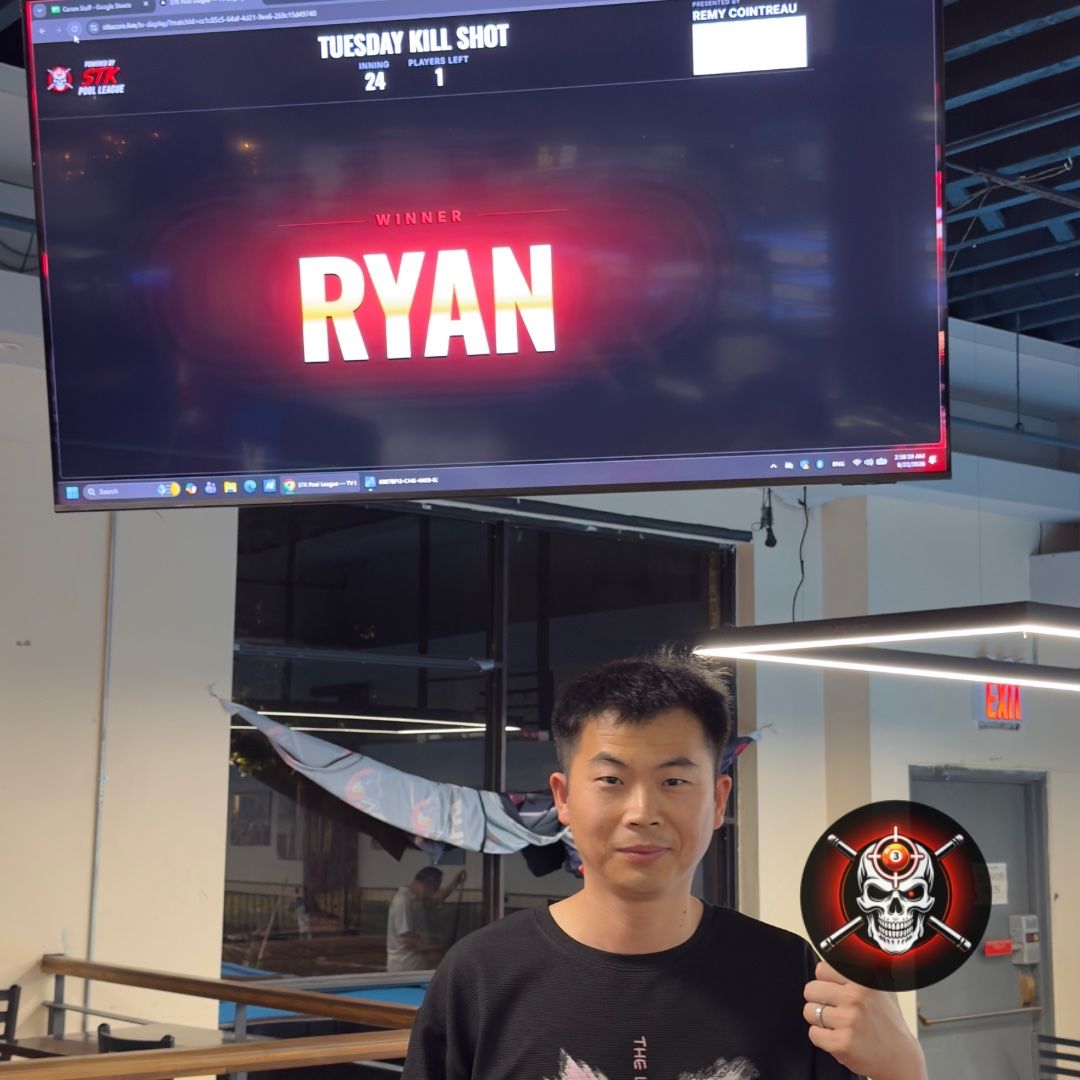
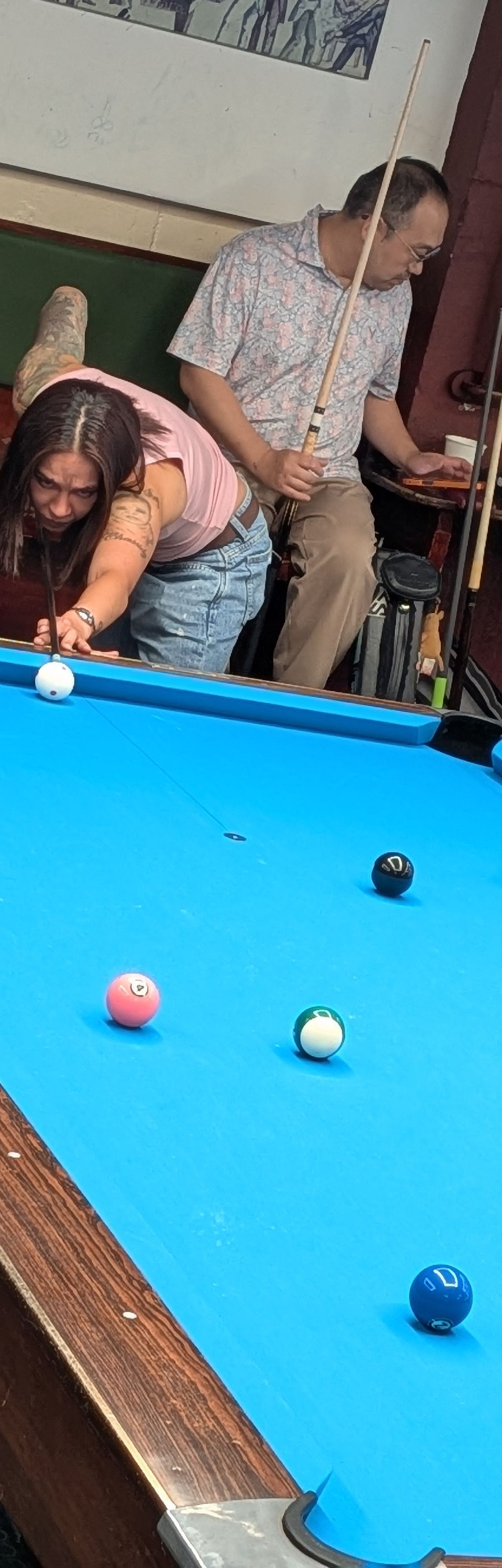
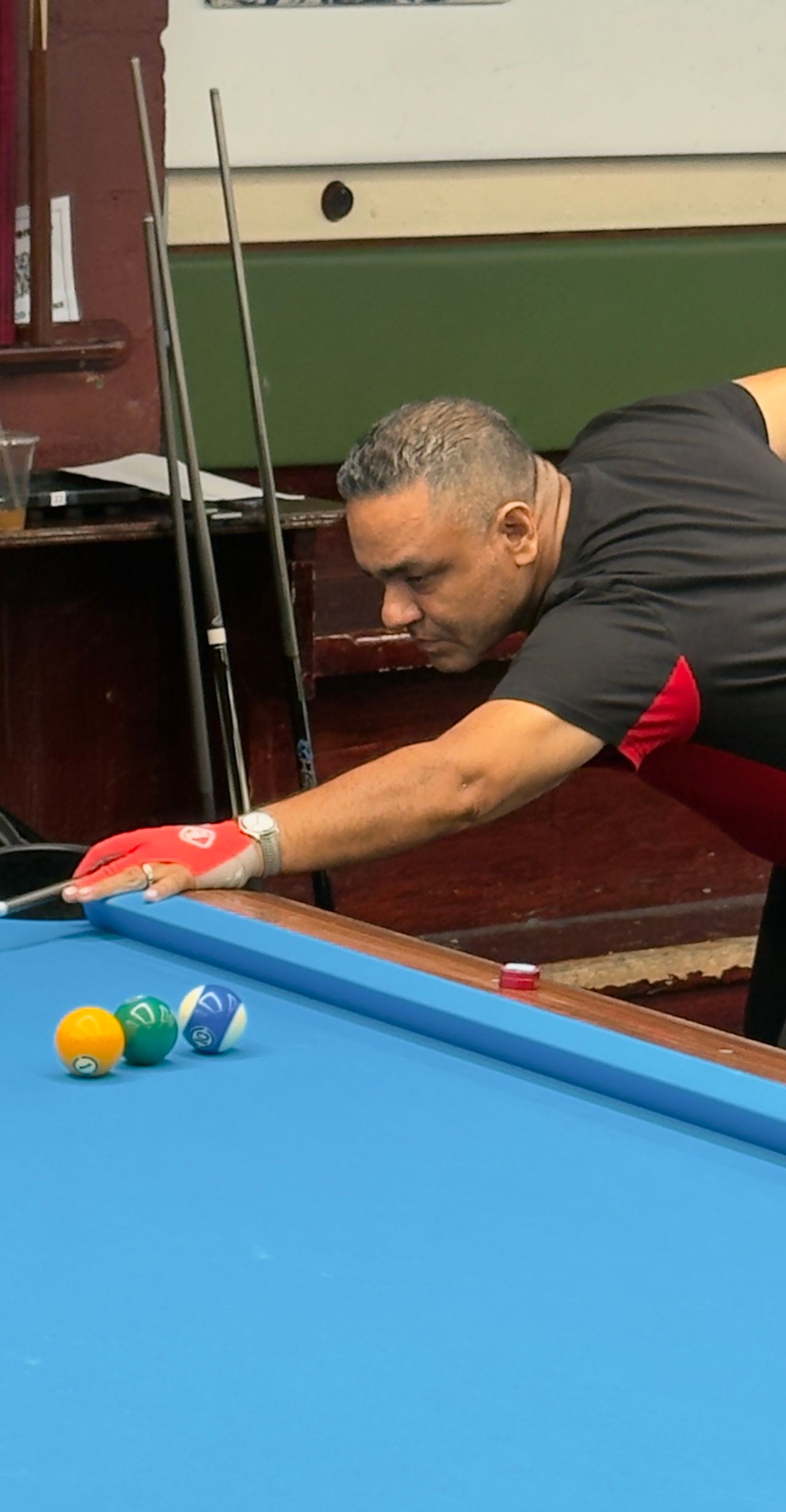
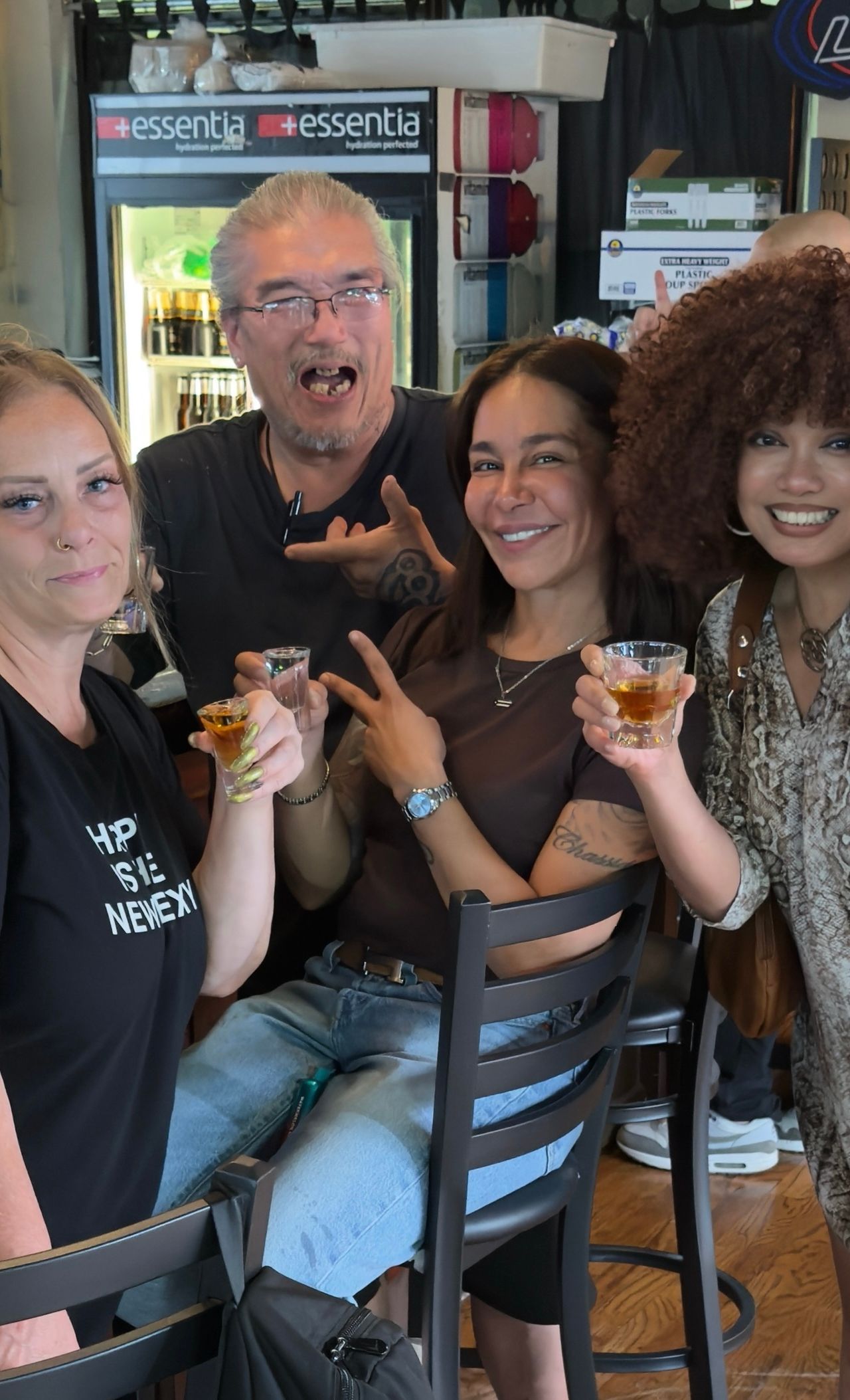
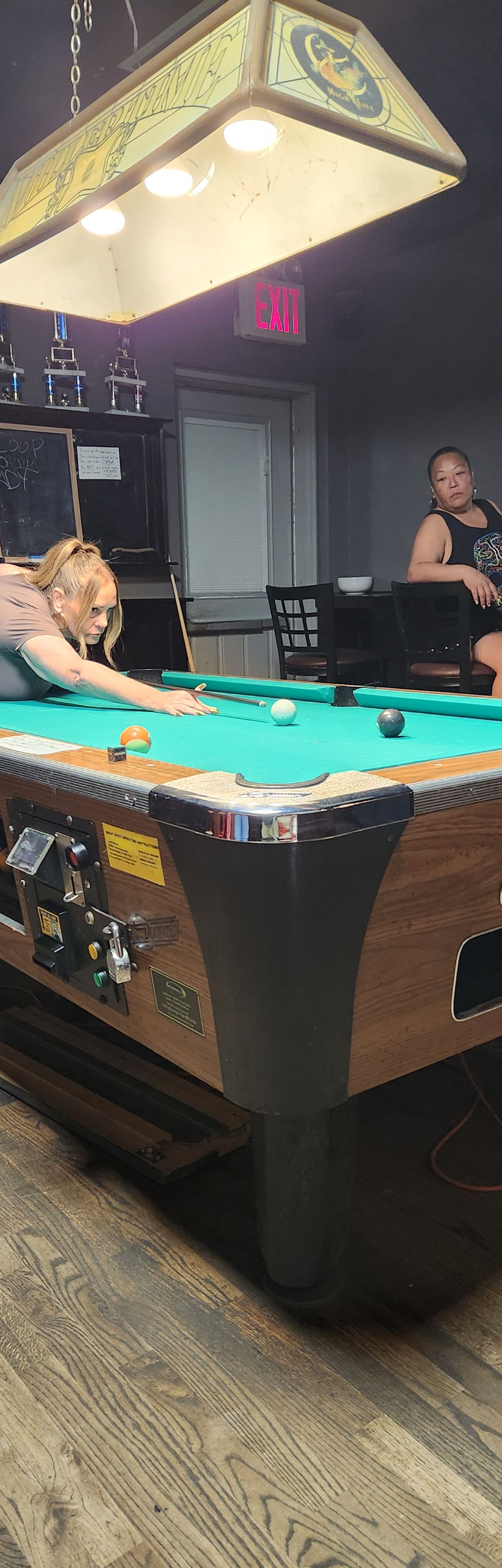
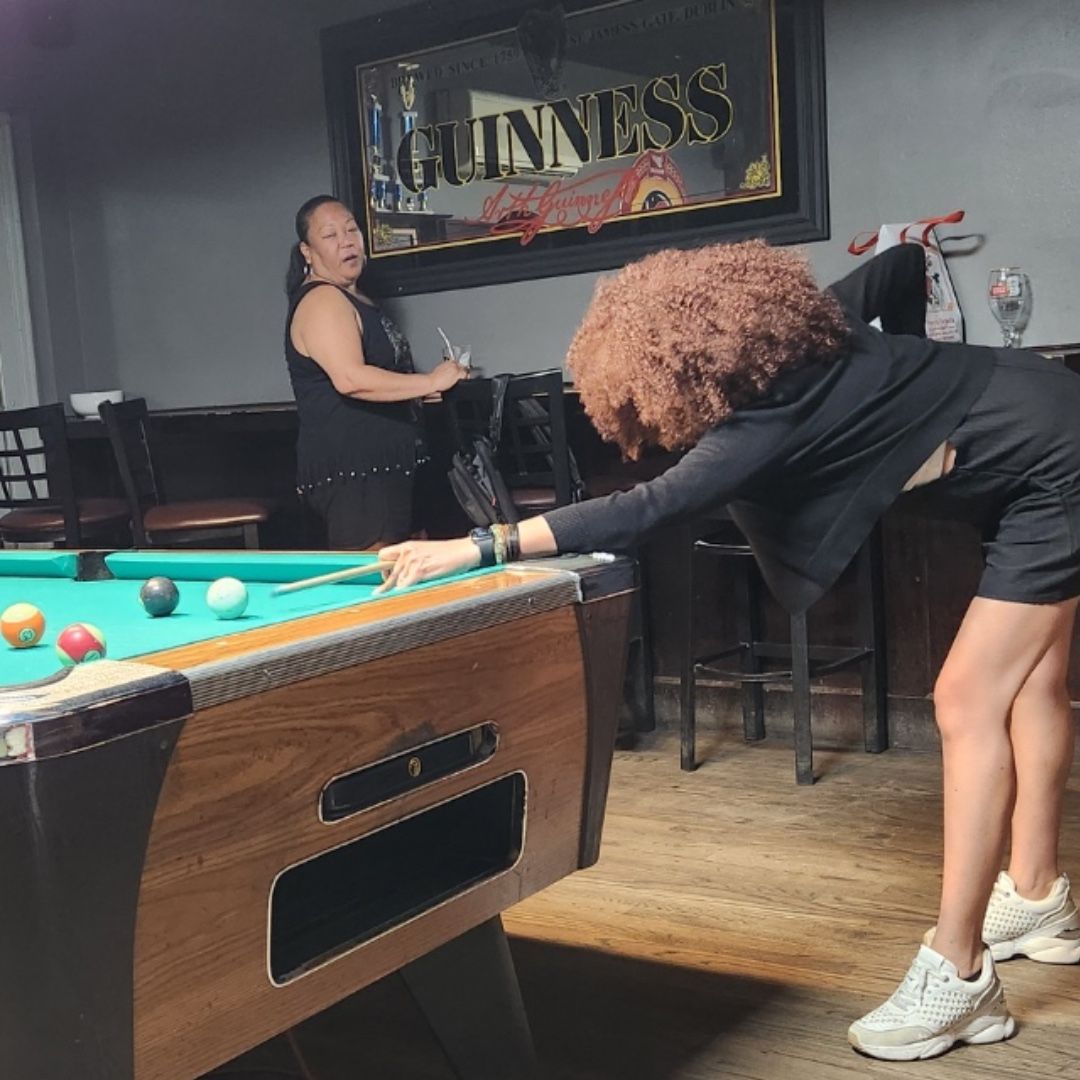
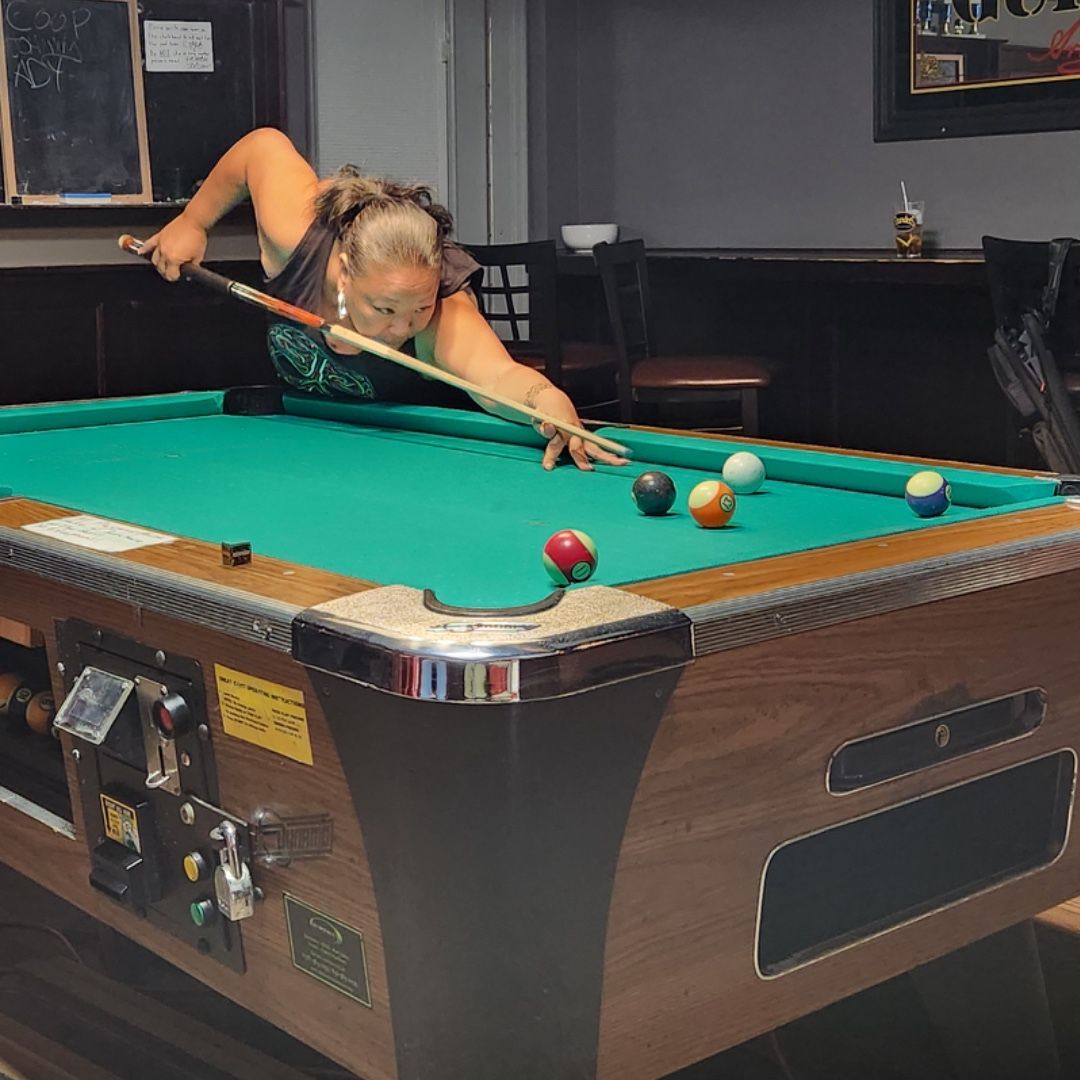
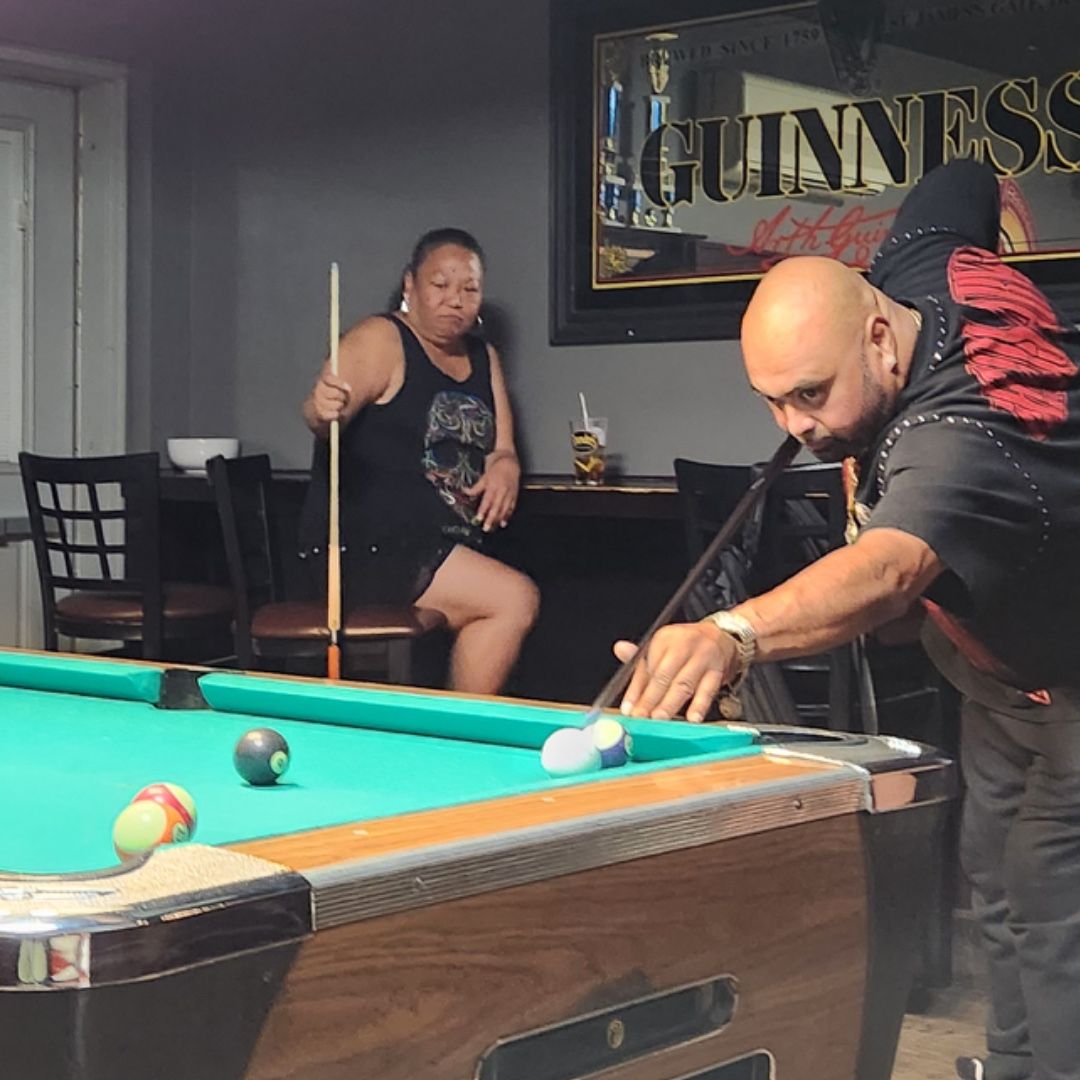
He won on his first try! Congrats on qualifying for the championship, Ryan!
STK
STK
Sep 21
STK Carom Cafe & Billiards Monday Recap
Match complete / Winners circle
ROOM CONQUERED. TICKET PUNCHED.
RYAN
Bounty
Carom Cafe & Billiards
Championship qualifier
W
Bounty bonus
NEIL TOOK OUT DARWIN.
+1 LIFE
Previous winner bounty · +1 regular-match credit
Bounty bonus
RYAN TOOK OUT NEILLE.
+1 LIFE
Host bounty · +1 regular-match credit
Bounty bonus
RYAN TOOK OUT NEIL.
+1 LIFE
Previous winner bounty · +1 regular-match credit
Bounty bonus
RYAN TOOK OUT DUC L.
+1 LIFE
Previous winner bounty · +1 regular-match credit
1 / 5
STK
STK
Sep 20
STK Globe Tavern Sunday Recap
Match complete / Winners circle
ROOM CONQUERED. TICKET PUNCHED.
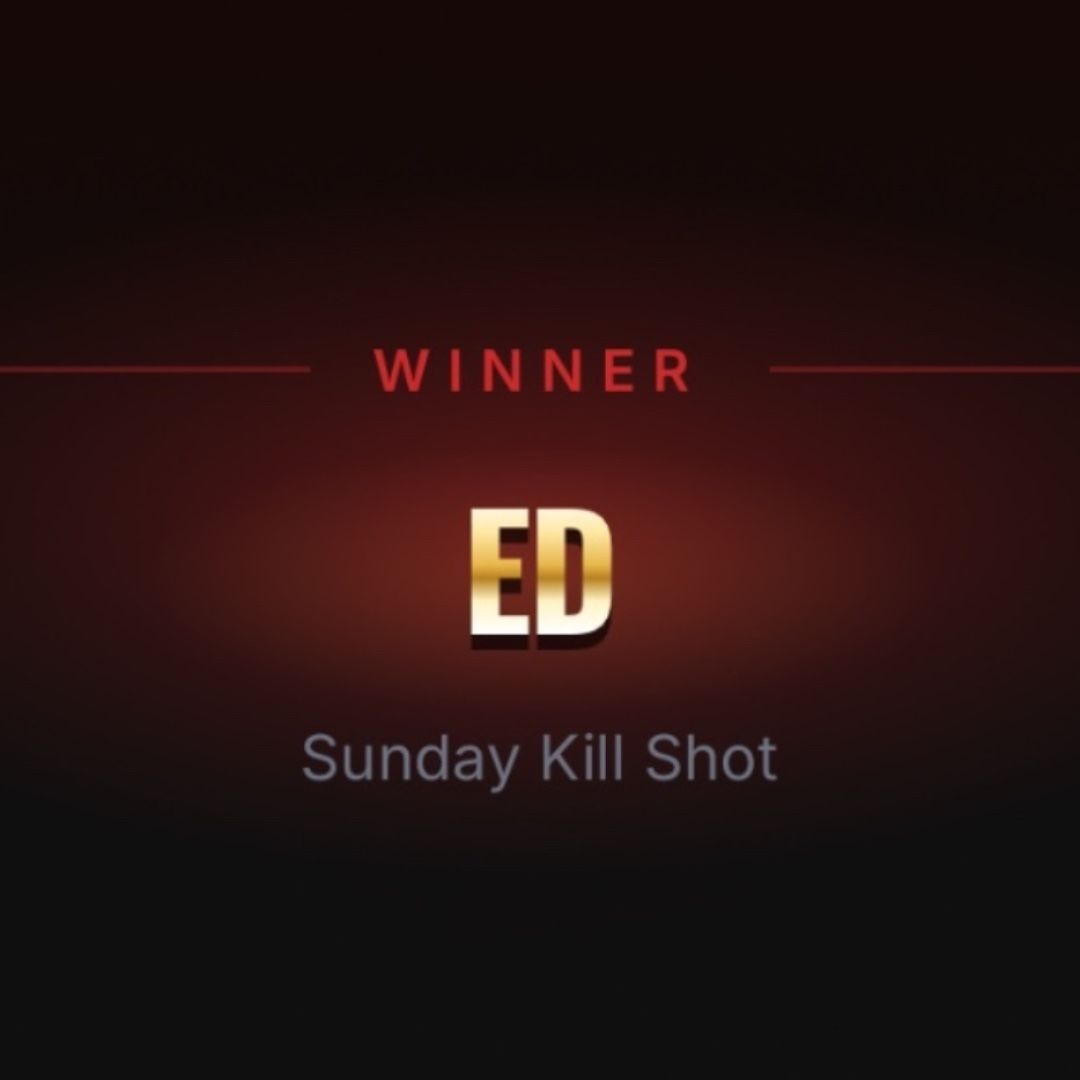
ED S.
Bounty
The Globe Tavern
Championship qualifier
W
Match complete / Winners circle
ROOM CONQUERED. TICKET PUNCHED.
NEILLE
Bounty
The Globe Tavern
Championship qualifier · +1 Championship life
W
Bounty bonus
ED S. TOOK OUT MILLIE P.
+1 LIFE
Previous winner bounty · +1 regular-match credit
Bounty bonus
ED S. TOOK OUT NEILLE.
+1 LIFE
Host bounty · +1 regular-match credit
Bounty bonus
ED S. TOOK OUT DILLY.
+1 LIFE
Previous winner bounty · +1 regular-match credit
Bounty bonus
NEILLE TOOK OUT ED S.
+1 LIFE
Previous winner bounty · +1 regular-match credit
Bounty bonus
NEILLE TOOK OUT MILLIE P.
+1 LIFE
Previous winner bounty · +1 regular-match credit
Bounty bonus
DEBORAH B. TOOK OUT DILLY.
+1 LIFE
Previous winner bounty · +1 regular-match credit
1 / 10
STK
STK
Sep 17
STK Carom Cafe & Billiards Thursday Recap
Match complete / Winners circle
ROOM CONQUERED. TICKET PUNCHED.
NEIL
Bounty
Carom Cafe & Billiards
Championship qualifier
W
Bounty bonus
NEILLE TOOK OUT DARWIN.
+1 LIFE
Previous winner bounty · +1 regular-match credit
Bounty bonus
DUC L. TOOK OUT MHET V.
+1 LIFE
Previous winner bounty · +1 regular-match credit
Bounty bonus
DUC L. TOOK OUT NEILLE.
+1 LIFE
Host bounty · +1 regular-match credit
Bounty bonus
NEIL TOOK OUT DUC L.
+1 LIFE
Previous winner bounty · +1 regular-match credit
1 / 5
NC
Neille C.
Sep 16, 9:54 AM
Who's coming to play STK at Carom on Thursday?
STK
STK
Sep 14
STK Carom Cafe & Billiards Monday Recap
Winners circle
DUC IS MAXED OUT.
+1 LIFE
Championship: 3 base + 2 bonus = 5 lives · Cap reached
STK
STK
League recap · Win 2
Uh-oh! Duc has an extra life in the championship! Two wins, a couple of matches apart.
Winners circle
UH-OH! DUC DID IT AGAIN.
+1 LIFE
Championship: 3 base + 1 bonus = 4 lives
STK
STK
League recap · Bounty claimed
Neille eliminated Duc between his two wins and earned a bounty bonus.
Bounty bonus
NEILLE TOOK OUT DUC.
+1 LIFE
+1 regular-match credit
M
Michelle
Sep 10, 4:00 AM
Who’s coming to the Globe Tavern on Sunday?
STK
STK
League recap · Win 1
Duc takes his first win and qualifies for the championship.
Winners circle
ROOM CONQUERED. TICKET PUNCHED.
Championship qualified · 3 base lives
STK
STK
Sep 7
STK Monday Recap
Match complete / Winners circle
ROOM CONQUERED. TICKET PUNCHED.
MIKE D.
Bounty
Championship qualifier
W
1 / 5
STK
STK
Sep 6
STK Globe Tavern Sunday Recap
Match complete / Winners circle
ROOM CONQUERED. TICKET PUNCHED.
SUZZIE
Bounty
Championship qualifier
W
Match complete / Winners circle
ROOM CONQUERED. TICKET PUNCHED.
CLAUDIO
Bounty
Championship qualifier
W
1 / 2
STK
STK
Sep 3
STK Carom Cafe & Billiards Thursday Recap
Match complete / Winners circle
ROOM CONQUERED. TICKET PUNCHED.
CARMINE
Bounty
Championship qualifier
W
STK
STK
Aug 30
STK Globe Tavern Sunday Recap
Match complete / Winners circle
ROOM CONQUERED. TICKET PUNCHED.
MILLIE
Bounty
Championship qualifier
W
Match complete / Winners circle
ROOM CONQUERED. TICKET PUNCHED.
MICHELLE
Bounty
Championship qualifier
W
Match complete / Winners circle
ROOM CONQUERED. TICKET PUNCHED.
DILLY
Bounty
Championship qualifier
W
1 / 7
Show up. Shoot your shot.
Find your room
All times New York
Show up. Shoot your shot.
Venues
STK venues
Rooms running STK now.
Pending activation
Hit 15 votes. Getting set up.
Nominated
Sorted by votes, highest first.
Special nights
Events
Add event
The last ones standing
Winners circle
Season prize pool
of the season goal
0%20%40%60%80%100%
Road to the championship
ONE WIN. YOU’RE IN.
Win a match and advance to the championship.
Bounty Eliminate a previous winner to earn an extra life while you’re still active.
D
Duc
Bounty
Thursday Night Kill Shot · Sep 11
10 points
2 wins · 4 championship lives
MD
Mike D.
Bounty
Monday Night Kill Shot · Sep 8
14 points
C
Claudio
Bounty
Sunday Night Kill Shot · Sep 7
20 points
S
Suzzie
Bounty
Sunday Night Kill Shot · Sep 6
19 points
C
Carmine
Bounty
Thursday Night Kill Shot · Sep 4
15 points
D
Duke
Bounty
Friday Night Killer · Sep 1
12 points
D
Dilly
Bounty
Friday Night Killer · Aug 30
9 points
M
Michelle
Bounty
Friday Night Killer · Aug 30
11 points
M
Millie
Bounty
Friday Night Killer · Aug 30
14 points
M
Mhet
Bounty
Friday Night Killer · Aug 28
14 points
N
Neille
Bounty
Friday Night Killer · Aug 24
20 points
D
Dominic
Bounty
Friday Night Killer · Aug 24
16 points
K
Kool-Aid
Bounty
Friday Night Kill Shot · Aug 22
14 points
L
Leon
Bounty
Friday Night Kill Shot · Aug 21
10 points
D
Darwin
Bounty
Thursday Kill Shot · Aug 21
15 points
J
Jesus
Bounty
Friday Night Kill Shot · Aug 20
6 points
Know the game
Rules of the room
Watch: How to get on the STK Roster
STK Kill Shot Rules
Everyone plays at once. Players shoot in order. Player order is shuffled before the match starts. You get one shot per turn. All you have to do is make a ball - slop counts. If you miss, scratch, or foul, you get a strike. Reach your strike limit and you're eliminated.
Everyone starts the game with a 3-strike limit. In this series, you can purchase up to 2 more strikes for $5 each.
Pot a ball — no strike, next player shoots
Miss, scratch, or foul — you take a strike
Once you hit your strike limit, you're eliminated.
Breaks
If you break dry, you may shoot again. If you pot at least one ball on the break, the next player shoots. Any 4 balls must make contact with a rail for the break to be legal.
Shot clock
There is a 60-second shot clock if you need coaching on a shot.
Additional shot clocks for players who repeatedly slow down play: 30 seconds to approach the table, 60 seconds to shoot.
Fouls
Only cue ball fouls are counted as strikes.
An object ball that comes off the table also results in a strike and remains off the table.
Conduct
Banter is welcomed. Rudeness is never tolerated.
Earn Extra Lives
Refer a new player who registers, make two food or beverage orders during a match, or eliminate Neille or any previous Kill Shot winner to earn an extra life. But if you are eliminated before one of the players with a bounty is eliminated, you do not receive an extra life. You must still be active on the scoreboard to receive the extra life bounty.
These lives are added to your player account and may be saved or used during any regular Kill Shot Series match.
Extra lives earned through referrals, purchases, or bounties cannot be used at the Championship. Championship extra lives can only be earned by winning qualifying matches.
Entry Fee
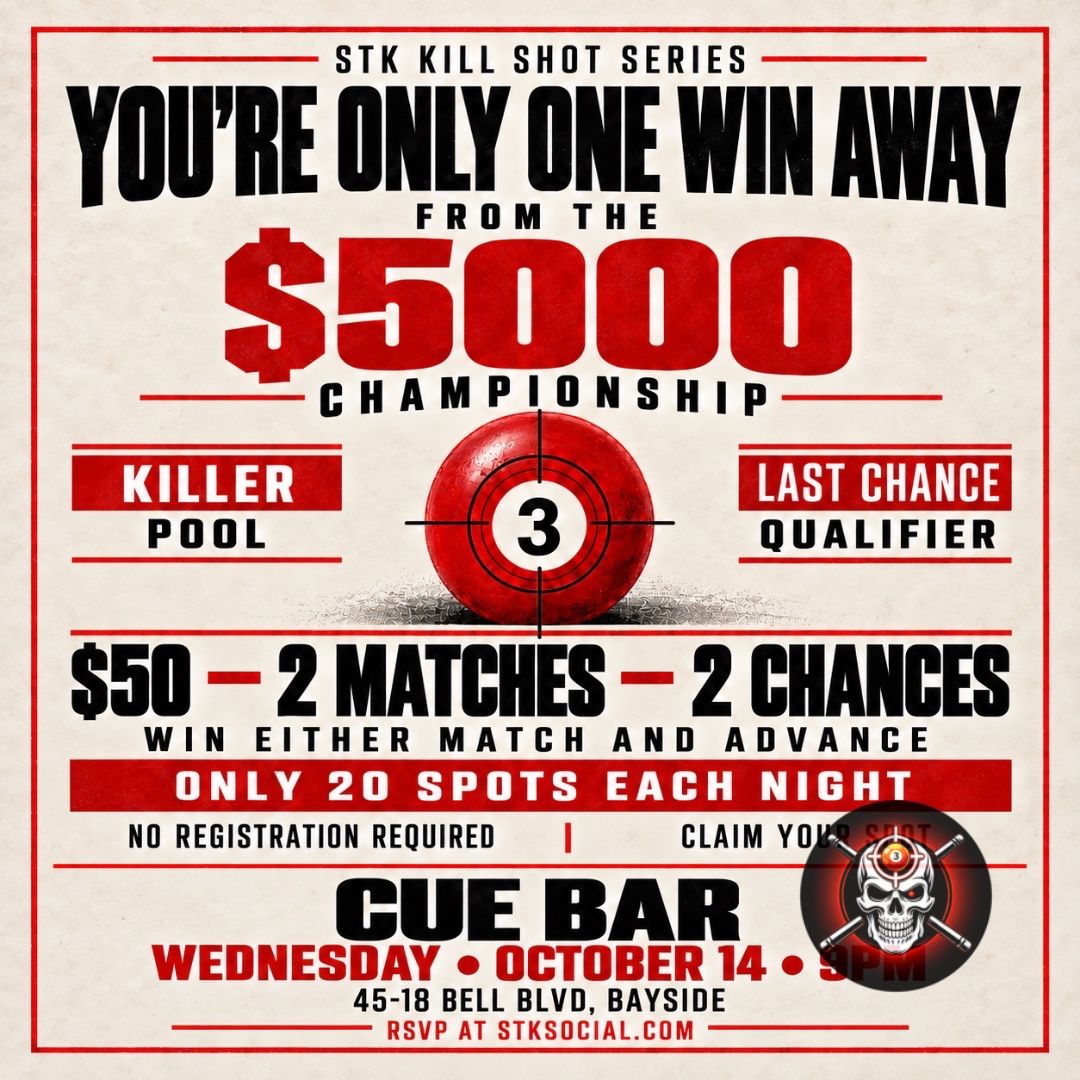
$25 entry fee per match
Player Incentives
Refer new players: earn extra lives to use in any regular series match of your choosing.
Eliminate Neille: earn a bounty extra life.
Eliminate a previous match winner: earn a bounty extra life.
Earn a bonus life for placing two food or beverage orders per match in one night. If there are multiple matches, there are multiple opportunities to earn lives.
Win a regular match: qualify for the $5000 Championship. Win multiple matches, earn Championship lives (max 2 bonus, 5 lives total).
Championship lives can only be earned by winning matches. Referral, purchase, bounty rewards cannot create Championship lives.
Last player standing wins.
Your place in the league
Player profile
Grow the league
Invite friends
Send a private link. Invite friends to THE pool party
AdminTribes & roles0
Tribes
AdminVenues0
Ranked by votes. Pending rooms are ready to activate.
AdminReported messages0
Only reported messages show here — never a full chat.
Admin
Top 8
Controls the Player Top 8 and Venue Top 8 blocks on the feed. Hidden from every player until this is turned on.
Status: Off — hidden from players
Status: Off — hidden from players
Update your details
Edit profile
Profile photo
Before you chalk up
Frequently asked questions
First time here?
Do I have to be good at pool?
No. You get one shot per turn, and any pocketed ball counts—even slop. You’re here to play, meet people, and try to be the last one standing.
How does a match work?
Player order is shuffled before the match. Make a ball and your turn ends. Miss, scratch, or foul and you take a strike. Reach your strike limit and you’re eliminated. The last player standing wins.
How do I find a match and RSVP?
Open Matches, choose your night, and RSVP. RSVPs are for registered players and close one hour before the match starts.
What does it cost?
The current series rules list $25 entry fee per match.
How do I earn extra lives?
Bring a new player who registers, make two food or beverage orders during a match, or collect a bounty. Your profile keeps a record of earned and used regular-match credits.
What does the bounty icon mean?
Every previous Kill Shot winner is a bounty target. Neille is a bounty target too. Eliminate a target while you’re still active to earn an extra life. The next-game bounty board shows attending targets; seeded entries are marked until attendance is confirmed.
How do I qualify for the championship?
Win a regular match. A second win earns one extra championship life; a third earns another. Championship lives are capped at five: three base lives plus two bonus lives.
Can I bring my regular extra-life credits to the championship?
No. Referral, bar-purchase, and bounty credits are for regular series matches. Only qualifying match wins earn championship bonus lives.
Where do photos and match results appear?
Photos you post appear in the feed with an STK watermark. Winner cards celebrate match results, and reward announcements explain who earned an extra life and how.
How do I report a wrong stat or suggest something?
Use the feedback form. For a stats correction, include the player, match, date, and what needs fixing.
Official
October 26, 2026 · 7 min read
Mamba Mentality
What Science Says About Kobe Bryant's 4 A.M. Workouts
Research on deliberate practice shows Kobe Bryant's 4 a.m. workouts worked less because of their length and more because of exactly what he rehearsed.
At 4:15 a.m. in a Las Vegas gym in the summer of 2008, Kobe Bryant called his trainer, Robert, to join him before Team USA's real practice began. Bryant trained for nearly seven hours, the first two with Robert on conditioning and strength work before he kept shooting alone, chasing a number he had set in his own head: 800 made shots. He finished as LeBron James, Carmelo Anthony, Kevin Durant, and the rest of the Olympic roster arrived for their 11 a.m. session (Shekhar, The SportsRush, 2021). The story gets repeated as proof that Bryant simply outworked the room. The research on expert performance says the hours were never the real lesson, and that distinction is one any weeknight player can borrow.
Research on deliberate practice, including a 2014 meta-analysis of 88 studies in Psychological Science, finds real but limited gains from practice alone: about 18 percent of the difference between athletes in sports. What separated Bryant's training was not the clock. It was a specific target, instant feedback, and rehearsal of the exact situations he expected to face.
Did Kobe Bryant's early workouts make him a better player?
Yes, within limits. A major review of practice research found that deliberate practice accounts for a real but modest share of skill differences among athletes, about 18 percent. That is well short of the near-total explanation the legend suggests. Bryant's hours mattered. They were never the whole story.
K. Anders Ericsson, Ralf Krampe, and Clemens Tesch-Römer proposed the modern theory of deliberate practice in Psychological Review in 1993, after studying violin students at a music academy in West Berlin. The best performers had logged more solitary, effortful practice hours by age 20 than the next tier down, a correlation drawn from the musicians' own recollections rather than a controlled trial.
In 2014, Brooke Macnamara, David Hambrick, and Frederick Oswald revisited that theory across 88 studies in Psychological Science. They found deliberate practice explained about 18 percent of the variance in sports performance, 21 percent in music, and under 1 percent in white-collar professions. Macnamara summarized it directly: deliberate practice is important, but not as important as its strongest advocates have claimed. For a player racking balls on a Tuesday night, that means hours help, but they do not guarantee a result.
What made Kobe Bryant's practice deliberate rather than merely long?
Deliberate practice, in Ericsson's framework, is not time on task. It is effortful work aimed at a specific weakness, with feedback attached and a target slightly beyond the player's current ability. Bryant's sessions chased a fixed number of makes and rehearsed exact footwork, down to moves he ran without a ball in his hands.
Ericsson's 1993 paper defines deliberate practice as activity designed specifically to improve performance, distinct from simply playing a sport or repeating what already feels comfortable. Bryant's trainer, Robert, recalled that the 4:15 a.m. session ended only when Bryant reached his set number of 800 makes, not when a clock ran out (Shekhar, The SportsRush, 2021). Shaquille O'Neal, in his book Shaq Uncut, described watching Bryant act out full possessions in the locker room with no ball at all: "cutting and grunting and motioning like he was dribbling and shooting, except there was no ball" (O'Neal, with MacMullan, 2011). Each example points to the same habit: practice organized around a precise outcome rather than open time.
Why did Kobe Bryant treat film study as a skill of its own?
Bryant treated film study as a trainable skill, not a passive habit, because what he looked for changed as he improved. In his book The Mamba Mentality, he wrote that his film habits evolved from watching what happened to watching for what should have happened and was missing. That shift, from observation to prediction, is what deliberate-practice researchers describe as building a sharper mental model of the game.
"From a young age, a very young age, I devoured film and watched everything I could get my hands on," Bryant wrote. "I went from watching what was there to watching for what was missing and should have been there" (Bryant, The Mamba Mentality: How I Play, 2018). Ericsson's framework treats this kind of refinement, not only physical repetition, as central to expertise: experts build detailed mental representations of their domain through practice and feedback (Ericsson, Krampe, and Tesch-Römer, 1993). For a player, that means watching your own matches back with a specific question in mind, not simply a replay for entertainment.
Does this mean more practice time is always the answer for a casual player?
No. The same 2014 meta-analysis found that practice's measured effect on performance shrank further when researchers used logged practice time instead of athletes' own estimates, a sign that raw hours get overstated. For a once-a-week league player, a focused twenty-minute session with a clear target beats an unfocused hour at the table.
Macnamara, Hambrick, and Oswald found that studies relying on self-reported practice hours showed a stronger link to skill than studies using objective logs, which suggests some of the hours-equal-mastery story comes from imprecise measurement rather than the practice itself (Macnamara, Hambrick, and Oswald, 2014). The lesson for a casual player is not to abandon practice. It is to spend limited table time on repetitions with a defined target and real feedback, the same structure behind Bryant's 800-make sessions, rather than racking an open hour with no goal attached.
Try this at your next match
Set a number, not a clock. Before you start, choose a specific make count for one shot you struggle with, such as 20 straight cut shots from the rail, and stop only when you hit it.
Rehearse the shot that beats you. Spend practice time on the exact shape of shot that costs you matches, such as a long safety or a tight bridge, instead of generic warm-up racks.
Replay your last match like film. After league night, go back through your three worst shots in your head and name what you should have done instead of what you did.
Attach a consequence to every miss. Play short races or small-stakes games with a practice partner so a miss means something, which forces the same correction a real match would.
Protect quiet table time. Find an hour before the room fills up to drill alone, the way Bryant did before his teammates arrived, so you can work on weaknesses without an audience.
Weekly email
Behind the Ball
A free weekly email: a recap of our new articles, tournaments coming up (STK’s and others’) and the pool news we shared.
Did Kobe Bryant really wake up at 4 a.m. every day?
In a filmed conversation with author Lewis Howes, Bryant said he kept waking at 4 a.m. after retirement to stay in shape and to train alongside his daughter Natalia, not only during his playing career (Holroyd, theScore, 2017).
Is the "10,000 hours" idea about practice accurate?
Not as usually stated. Ericsson's original research described deliberate practice as necessary but not sufficient, and a 2014 meta-analysis found it explains a meaningful but partial share of skill, far less than the slogan implies (Ericsson, Krampe, and Tesch-Römer, 1993; Macnamara, Hambrick, and Oswald, 2014).
What exactly makes practice "deliberate"?
Effort aimed at a specific weakness, a target slightly beyond current ability, and feedback the player can act on right away, rather than repeating a comfortable routine.
Can a recreational pool player use the same approach Bryant did?
Yes, at a smaller scale. The principle, a defined target with feedback, applies whether the session runs seven hours or twenty minutes.
Did visualizing a move without a ball or a cue help Bryant?
Shaquille O'Neal described Bryant rehearsing full possessions with no ball in the room, and Ericsson's framework credits refined mental rehearsal as part of expert skill, but this piece does not cite a sports-specific study isolating that technique's effect on its own (O'Neal, with MacMullan, 2011).
What is the biggest mistake casual players make with practice time?
Treating practice as open-ended table time rather than targeted repetition, which research suggests overstates how much raw hours alone improve performance (Macnamara, Hambrick, and Oswald, 2014).