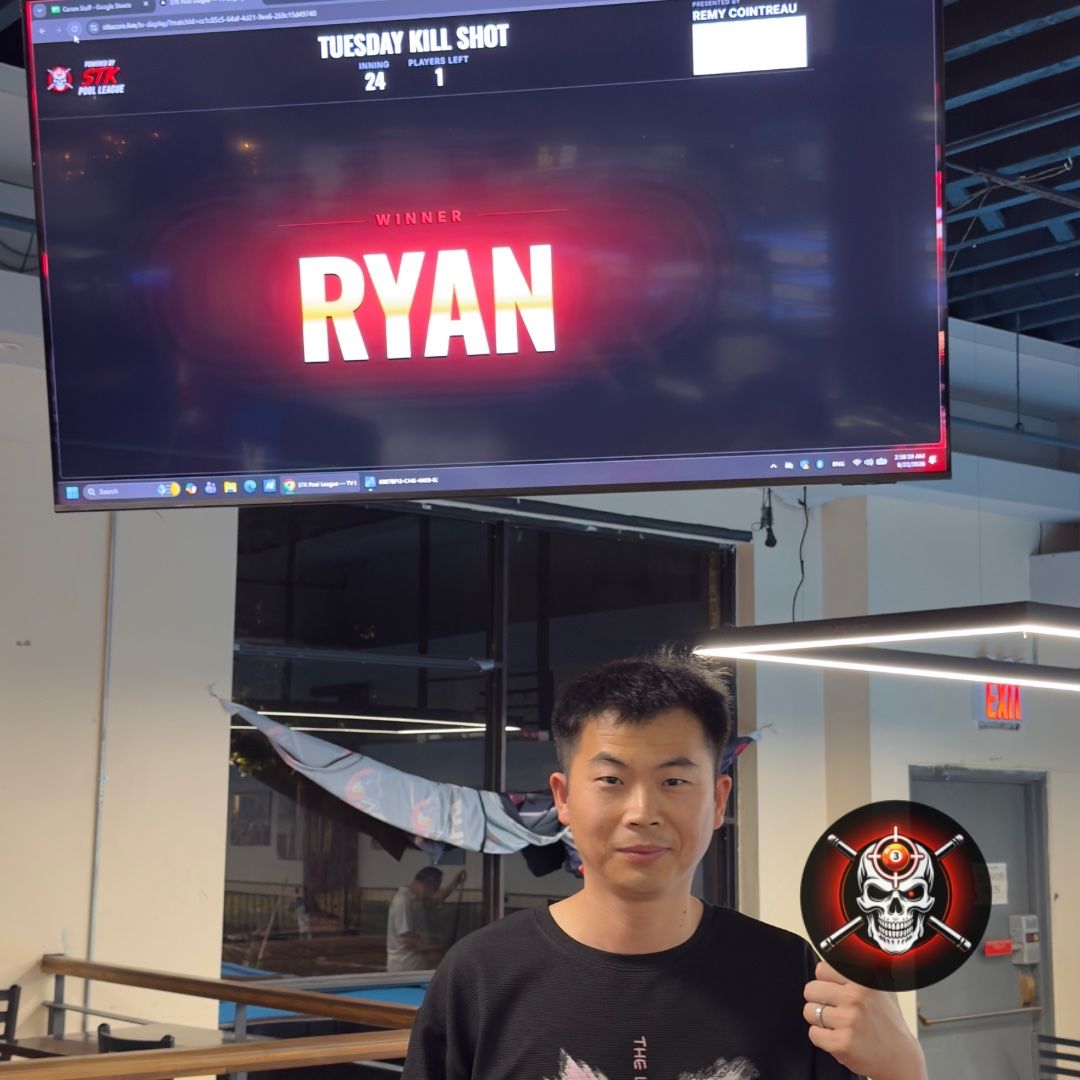
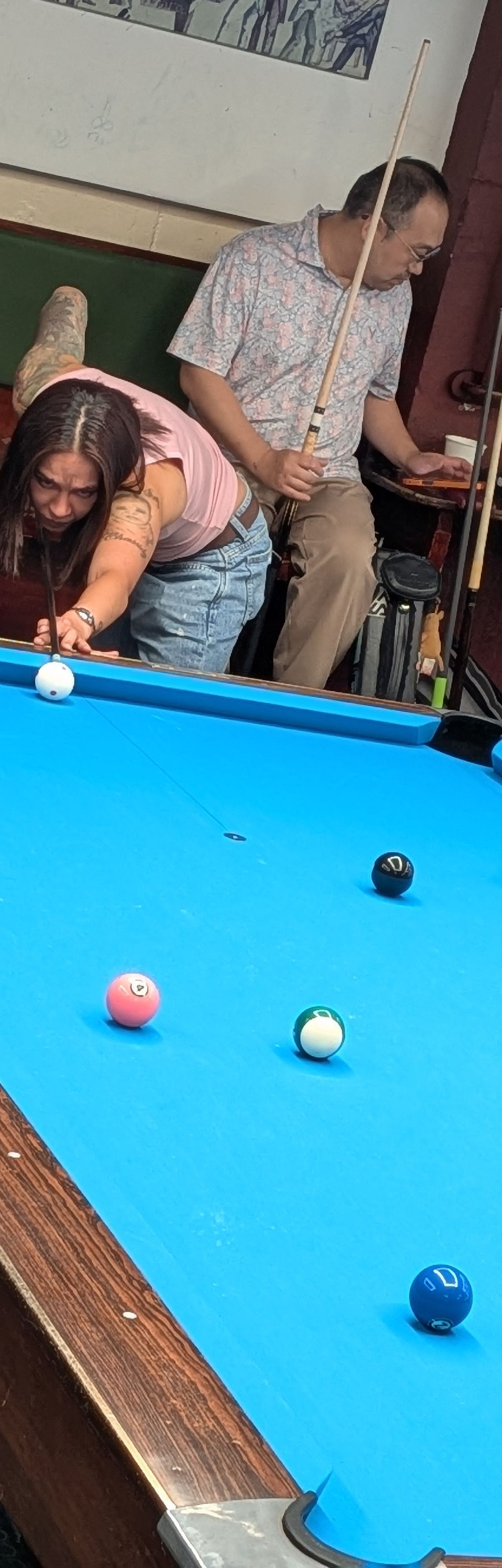
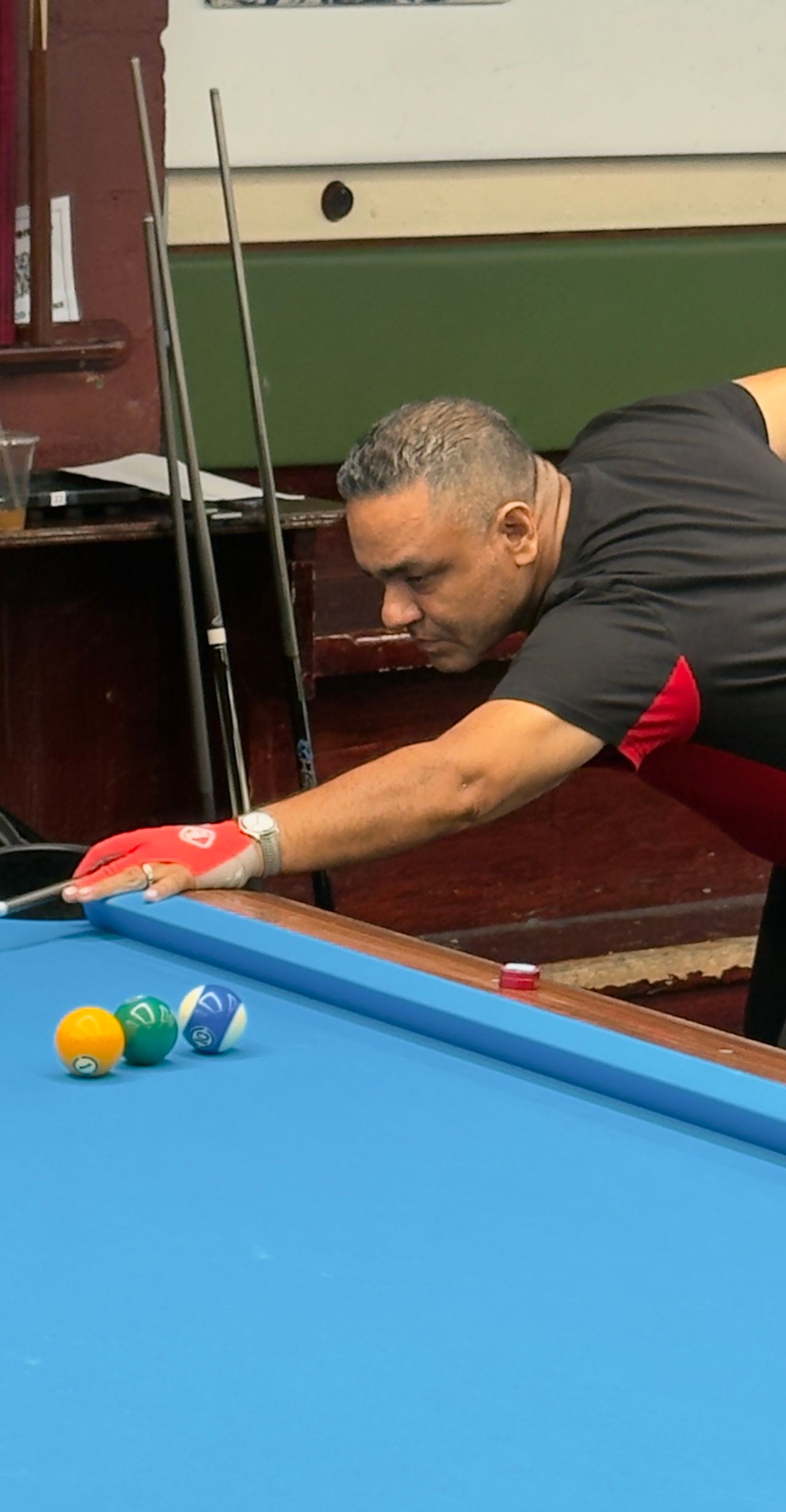
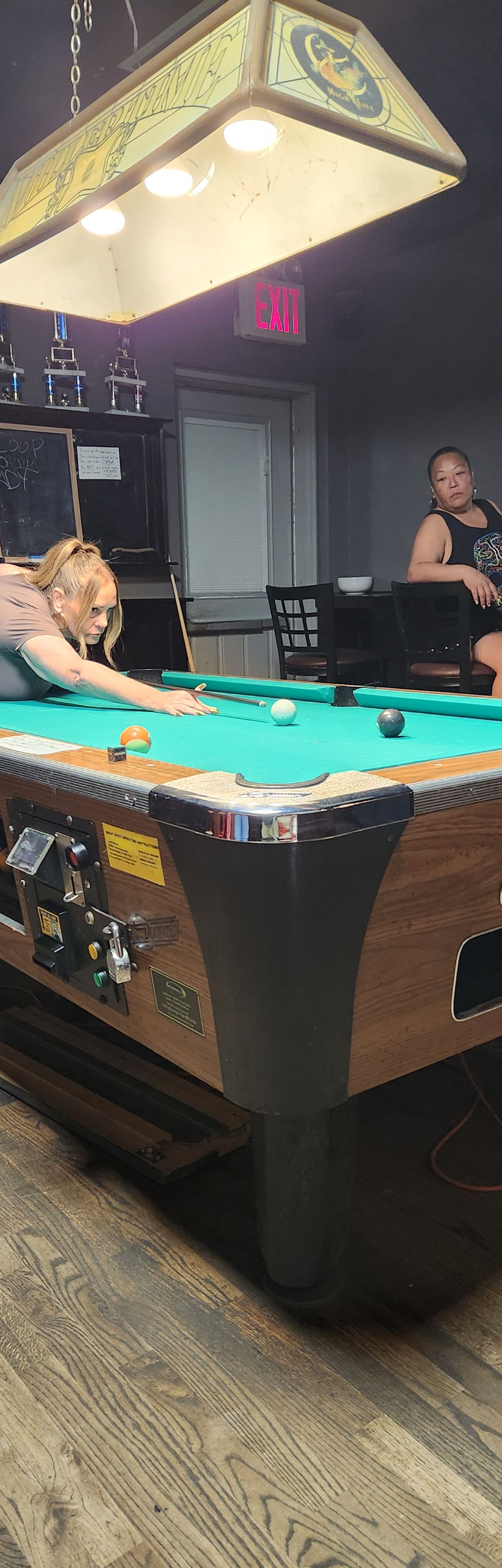
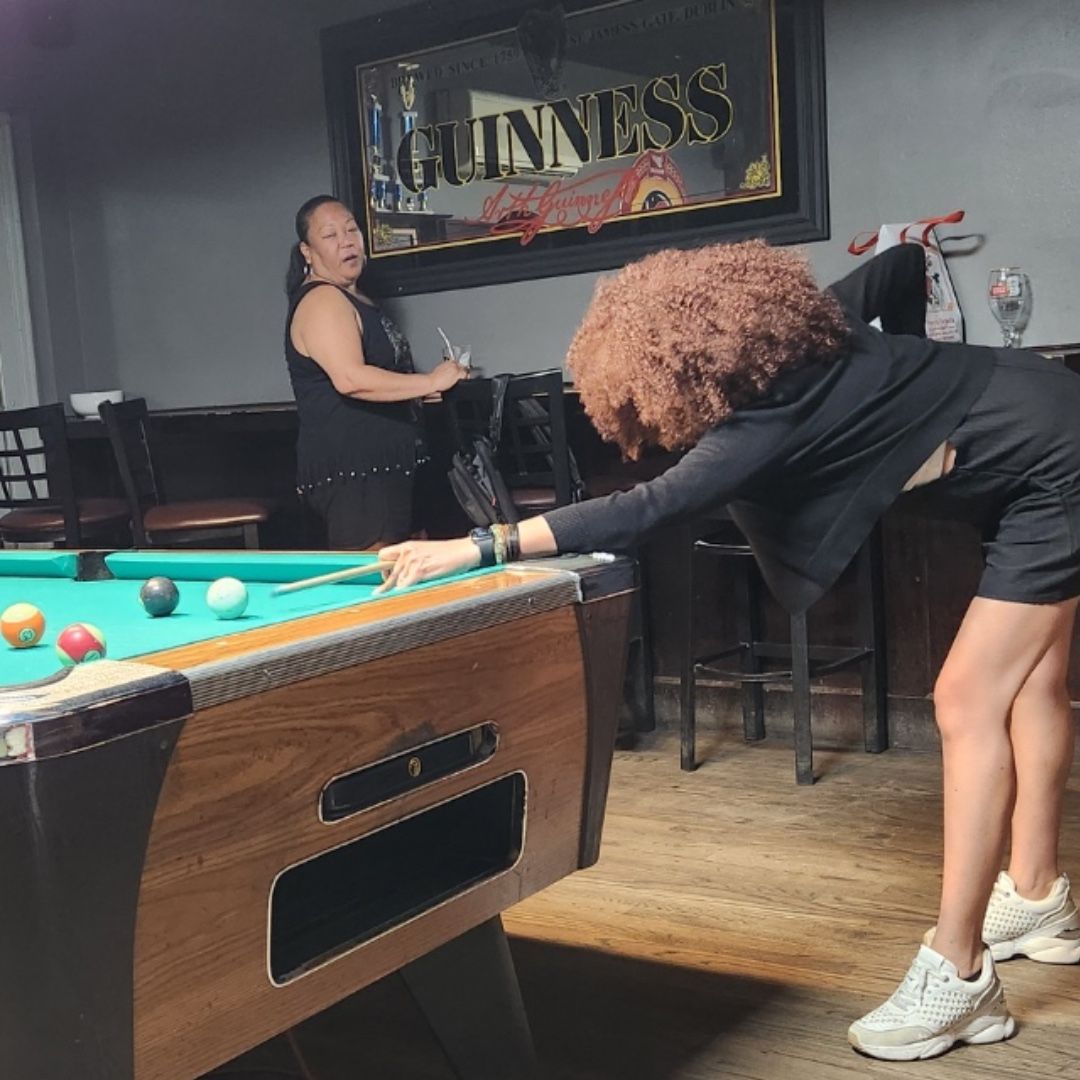
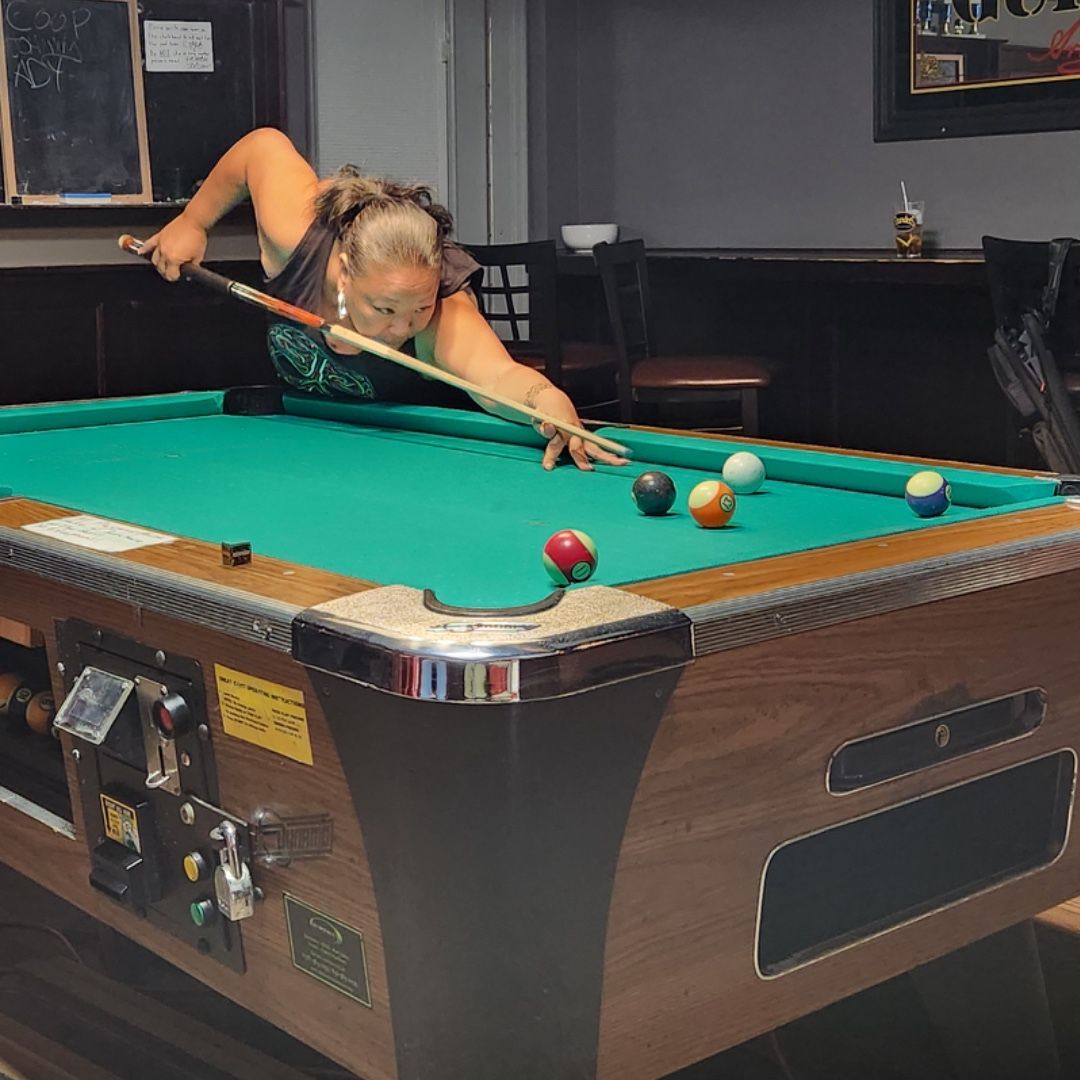
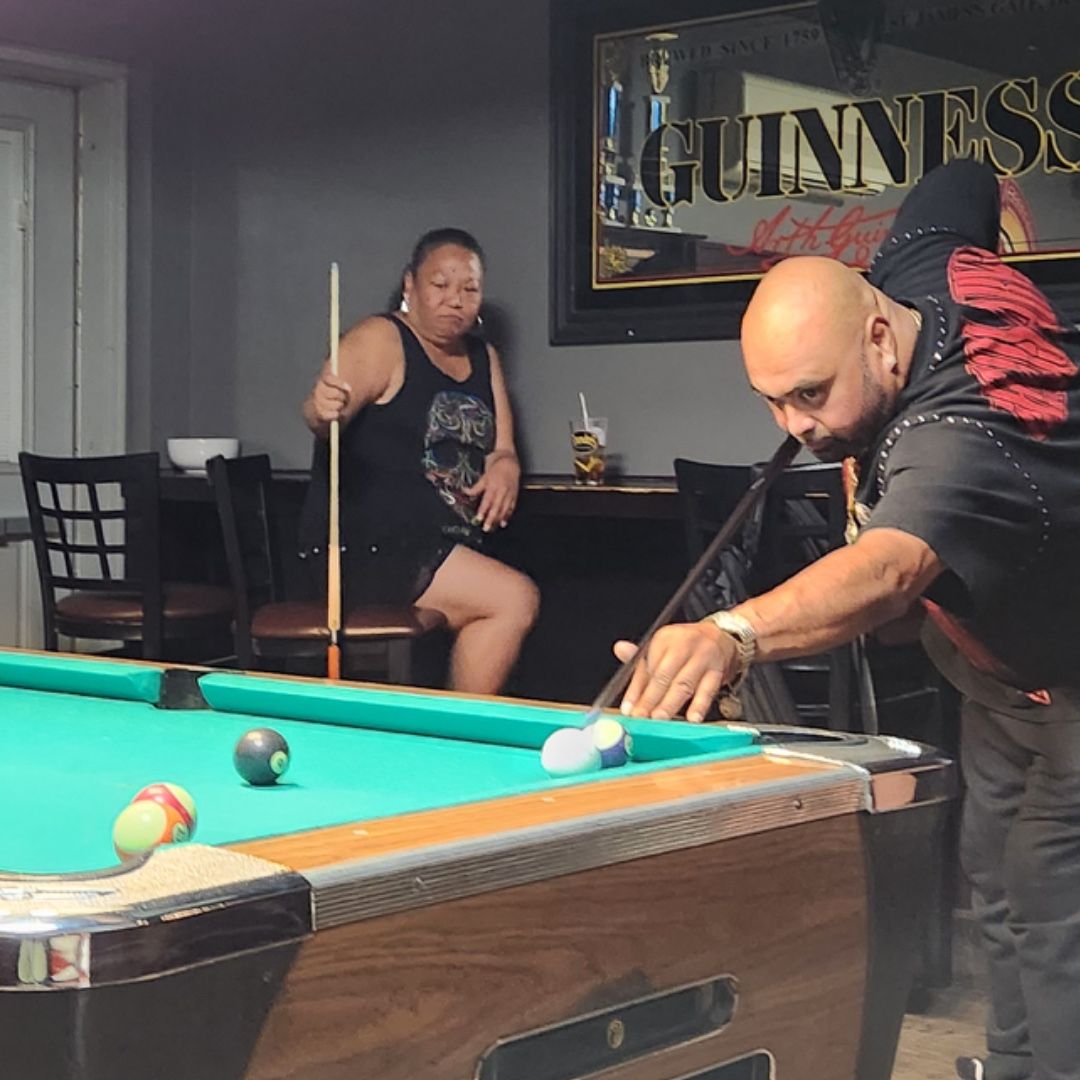
He won on his first try! Congrats on qualifying for the championship, Ryan!
STK
STK
Sep 21
STK Carom Cafe & Billiards Monday Recap
Match complete / Winners circle
ROOM CONQUERED. TICKET PUNCHED.
RYAN
Bounty
Carom Cafe & Billiards
Championship qualifier
W
Bounty bonus
NEIL TOOK OUT DARWIN.
+1 LIFE
Previous winner bounty · +1 regular-match credit
Bounty bonus
RYAN TOOK OUT NEILLE.
+1 LIFE
Host bounty · +1 regular-match credit
Bounty bonus
RYAN TOOK OUT NEIL.
+1 LIFE
Previous winner bounty · +1 regular-match credit
Bounty bonus
RYAN TOOK OUT DUC L.
+1 LIFE
Previous winner bounty · +1 regular-match credit
1 / 5
STK
STK
Sep 20
STK Globe Tavern Sunday Recap
Match complete / Winners circle
ROOM CONQUERED. TICKET PUNCHED.
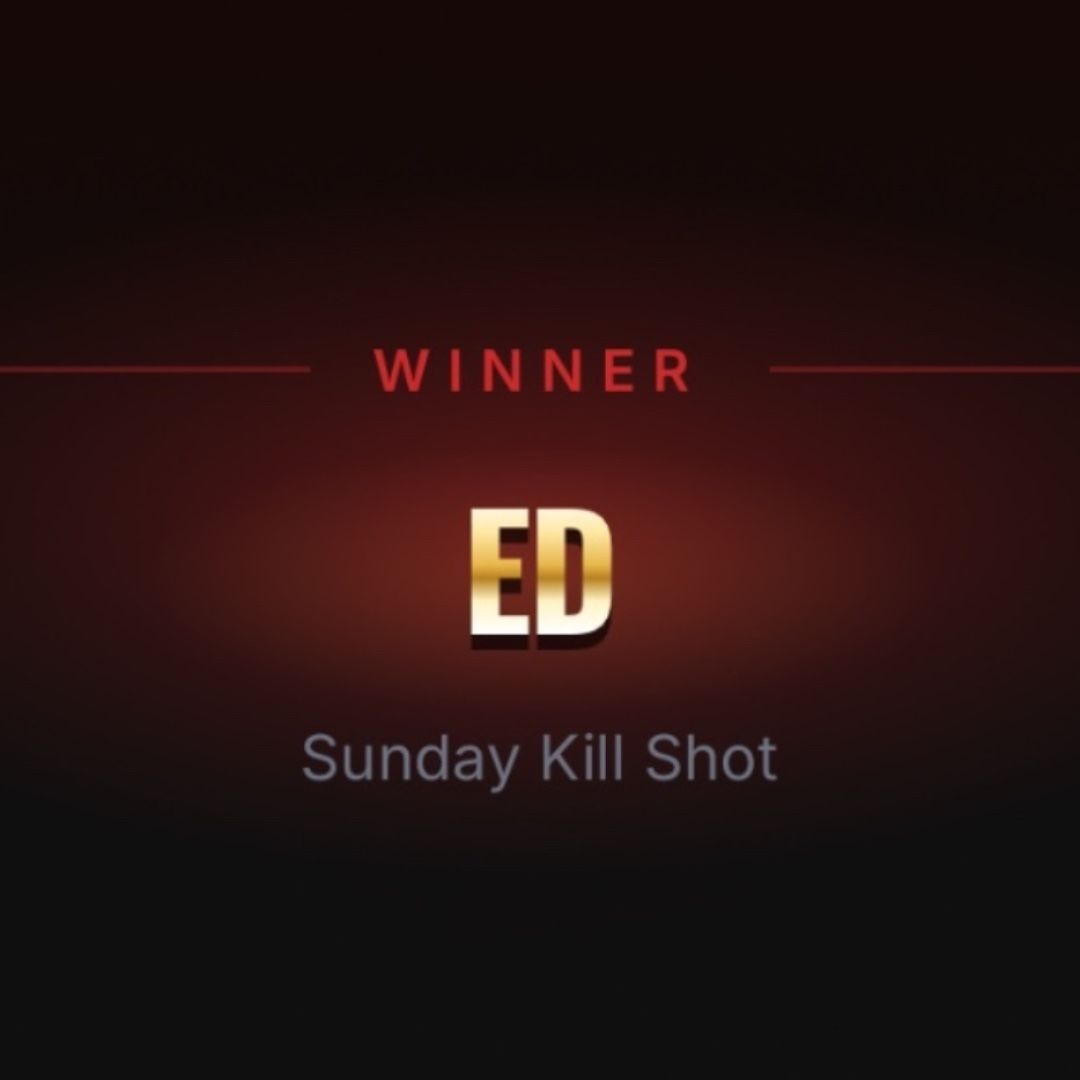
ED S.
Bounty
The Globe Tavern
Championship qualifier
W
Match complete / Winners circle
ROOM CONQUERED. TICKET PUNCHED.
NEILLE
Bounty
The Globe Tavern
Championship qualifier · +1 Championship life
W
Bounty bonus
ED S. TOOK OUT MILLIE P.
+1 LIFE
Previous winner bounty · +1 regular-match credit
Bounty bonus
ED S. TOOK OUT NEILLE.
+1 LIFE
Host bounty · +1 regular-match credit
Bounty bonus
ED S. TOOK OUT DILLY.
+1 LIFE
Previous winner bounty · +1 regular-match credit
Bounty bonus
NEILLE TOOK OUT ED S.
+1 LIFE
Previous winner bounty · +1 regular-match credit
Bounty bonus
NEILLE TOOK OUT MILLIE P.
+1 LIFE
Previous winner bounty · +1 regular-match credit
Bounty bonus
DEBORAH B. TOOK OUT DILLY.
+1 LIFE
Previous winner bounty · +1 regular-match credit
1 / 10
STK
STK
Sep 17
STK Carom Cafe & Billiards Thursday Recap
Match complete / Winners circle
ROOM CONQUERED. TICKET PUNCHED.
NEIL
Bounty
Carom Cafe & Billiards
Championship qualifier
W
Bounty bonus
NEILLE TOOK OUT DARWIN.
+1 LIFE
Previous winner bounty · +1 regular-match credit
Bounty bonus
DUC L. TOOK OUT MHET V.
+1 LIFE
Previous winner bounty · +1 regular-match credit
Bounty bonus
DUC L. TOOK OUT NEILLE.
+1 LIFE
Host bounty · +1 regular-match credit
Bounty bonus
NEIL TOOK OUT DUC L.
+1 LIFE
Previous winner bounty · +1 regular-match credit
1 / 5
NC
Neille C.
Sep 16, 9:54 AM
Who's coming to play STK at Carom on Thursday?
STK
STK
Sep 14
STK Carom Cafe & Billiards Monday Recap
Winners circle
DUC IS MAXED OUT.
+1 LIFE
Championship: 3 base + 2 bonus = 5 lives · Cap reached
STK
STK
League recap · Win 2
Uh-oh! Duc has an extra life in the championship! Two wins, a couple of matches apart.
Winners circle
UH-OH! DUC DID IT AGAIN.
+1 LIFE
Championship: 3 base + 1 bonus = 4 lives
STK
STK
League recap · Bounty claimed
Neille eliminated Duc between his two wins and earned a bounty bonus.
Bounty bonus
NEILLE TOOK OUT DUC.
+1 LIFE
+1 regular-match credit
M
Michelle
Sep 10, 4:00 AM
Who’s coming to the Globe Tavern on Sunday?
STK
STK
League recap · Win 1
Duc takes his first win and qualifies for the championship.
Winners circle
ROOM CONQUERED. TICKET PUNCHED.
Championship qualified · 3 base lives
STK
STK
Sep 7
STK Monday Recap
Match complete / Winners circle
ROOM CONQUERED. TICKET PUNCHED.
MIKE D.
Bounty
Championship qualifier
W
1 / 5
STK
STK
Sep 6
STK Globe Tavern Sunday Recap
Match complete / Winners circle
ROOM CONQUERED. TICKET PUNCHED.
SUZZIE
Bounty
Championship qualifier
W
Match complete / Winners circle
ROOM CONQUERED. TICKET PUNCHED.
CLAUDIO
Bounty
Championship qualifier
W
1 / 2
STK
STK
Sep 3
STK Carom Cafe & Billiards Thursday Recap
Match complete / Winners circle
ROOM CONQUERED. TICKET PUNCHED.
CARMINE
Bounty
Championship qualifier
W
STK
STK
Aug 30
STK Globe Tavern Sunday Recap
Match complete / Winners circle
ROOM CONQUERED. TICKET PUNCHED.
MILLIE
Bounty
Championship qualifier
W
Match complete / Winners circle
ROOM CONQUERED. TICKET PUNCHED.
MICHELLE
Bounty
Championship qualifier
W
Match complete / Winners circle
ROOM CONQUERED. TICKET PUNCHED.
DILLY
Bounty
Championship qualifier
W
1 / 7
Show up. Shoot your shot.
Find your room
All times New York
Show up. Shoot your shot.
Venues
STK venues
Rooms running STK now.
Pending activation
Hit 15 votes. Getting set up.
Nominated
Sorted by votes, highest first.
Special nights
Events
Add event
The last ones standing
Winners circle
Season prize pool
of the season goal
0%20%40%60%80%100%
Road to the championship
ONE WIN. YOU’RE IN.
Win a match and advance to the championship.
Bounty Eliminate a previous winner to earn an extra life while you’re still active.
D
Duc
Bounty
Thursday Night Kill Shot · Sep 11
10 points
2 wins · 4 championship lives
MD
Mike D.
Bounty
Monday Night Kill Shot · Sep 8
14 points
C
Claudio
Bounty
Sunday Night Kill Shot · Sep 7
20 points
S
Suzzie
Bounty
Sunday Night Kill Shot · Sep 6
19 points
C
Carmine
Bounty
Thursday Night Kill Shot · Sep 4
15 points
D
Duke
Bounty
Friday Night Killer · Sep 1
12 points
D
Dilly
Bounty
Friday Night Killer · Aug 30
9 points
M
Michelle
Bounty
Friday Night Killer · Aug 30
11 points
M
Millie
Bounty
Friday Night Killer · Aug 30
14 points
M
Mhet
Bounty
Friday Night Killer · Aug 28
14 points
N
Neille
Bounty
Friday Night Killer · Aug 24
20 points
D
Dominic
Bounty
Friday Night Killer · Aug 24
16 points
K
Kool-Aid
Bounty
Friday Night Kill Shot · Aug 22
14 points
L
Leon
Bounty
Friday Night Kill Shot · Aug 21
10 points
D
Darwin
Bounty
Thursday Kill Shot · Aug 21
15 points
J
Jesus
Bounty
Friday Night Kill Shot · Aug 20
6 points
Know the game
Rules of the room
Watch: How to get on the STK Roster
STK Kill Shot Rules
Everyone plays at once. Players shoot in order. Player order is shuffled before the match starts. You get one shot per turn. All you have to do is make a ball - slop counts. If you miss, scratch, or foul, you get a strike. Reach your strike limit and you're eliminated.
Everyone starts the game with a 3-strike limit. In this series, you can purchase up to 2 more strikes for $5 each.
Pot a ball — no strike, next player shoots
Miss, scratch, or foul — you take a strike
Once you hit your strike limit, you're eliminated.
Breaks
If you break dry, you may shoot again. If you pot at least one ball on the break, the next player shoots. Any 4 balls must make contact with a rail for the break to be legal.
Shot clock
There is a 60-second shot clock if you need coaching on a shot.
Additional shot clocks for players who repeatedly slow down play: 30 seconds to approach the table, 60 seconds to shoot.
Fouls
Only cue ball fouls are counted as strikes.
An object ball that comes off the table also results in a strike and remains off the table.
Conduct
Banter is welcomed. Rudeness is never tolerated.
Earn Extra Lives
Refer a new player who registers, make two food or beverage orders during a match, or eliminate Neille or any previous Kill Shot winner to earn an extra life. But if you are eliminated before one of the players with a bounty is eliminated, you do not receive an extra life. You must still be active on the scoreboard to receive the extra life bounty.
These lives are added to your player account and may be saved or used during any regular Kill Shot Series match.
Extra lives earned through referrals, purchases, or bounties cannot be used at the Championship. Championship extra lives can only be earned by winning qualifying matches.
Entry Fee
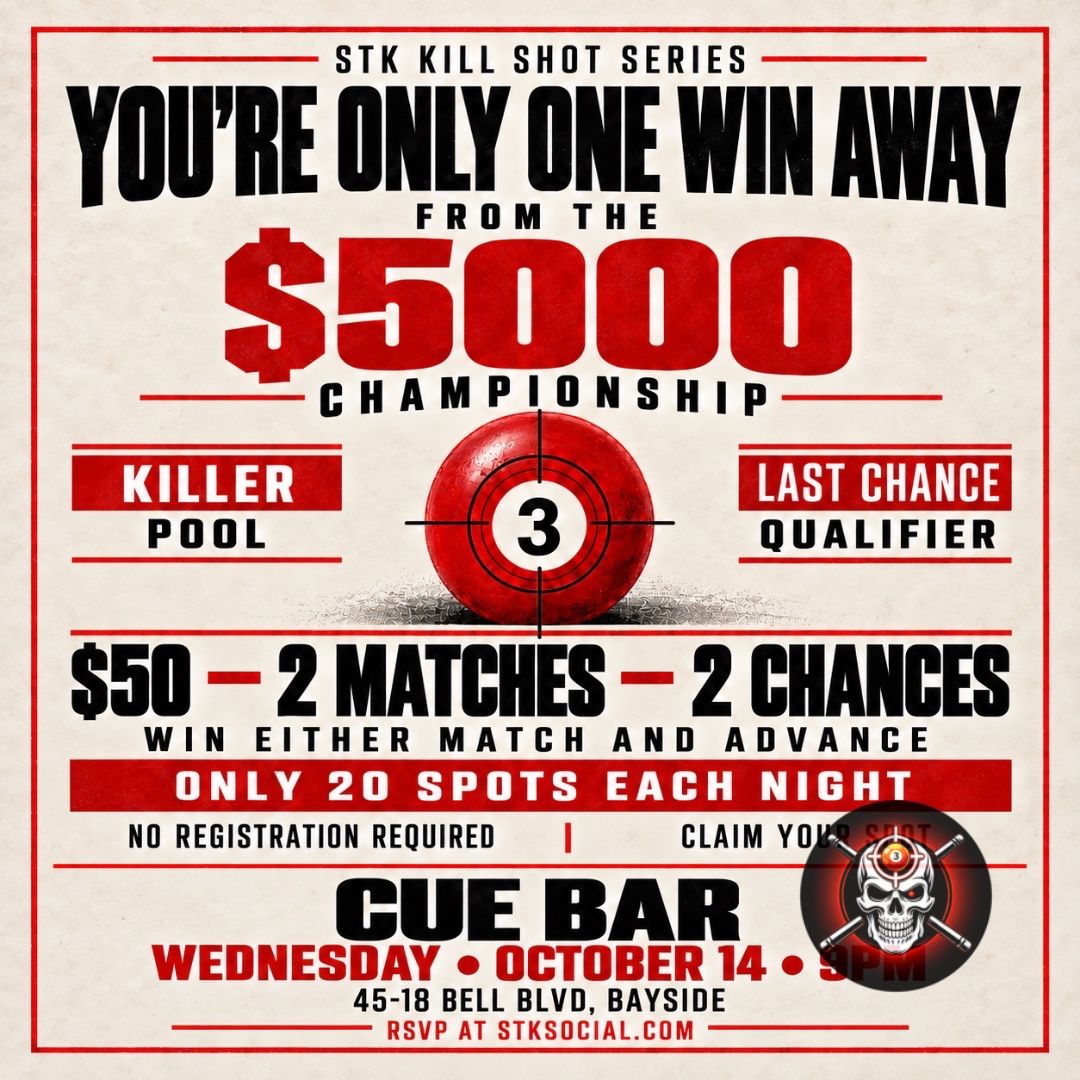
$25 entry fee per match
Player Incentives
Refer new players: earn extra lives to use in any regular series match of your choosing.
Eliminate Neille: earn a bounty extra life.
Eliminate a previous match winner: earn a bounty extra life.
Earn a bonus life for placing two food or beverage orders per match in one night. If there are multiple matches, there are multiple opportunities to earn lives.
Win a regular match: qualify for the $5000 Championship. Win multiple matches, earn Championship lives (max 2 bonus, 5 lives total).
Championship lives can only be earned by winning matches. Referral, purchase, bounty rewards cannot create Championship lives.
Last player standing wins.
Your place in the league
Player profile
Grow the league
Invite friends
Send a private link. Invite friends to THE pool party
AdminTribes & roles0
Tribes
AdminVenues0
Ranked by votes. Pending rooms are ready to activate.
AdminReported messages0
Only reported messages show here — never a full chat.
Admin
Top 8
Controls the Player Top 8 and Venue Top 8 blocks on the feed. Hidden from every player until this is turned on.
Status: Off — hidden from players
Status: Off — hidden from players
Update your details
Edit profile
Profile photo
Before you chalk up
Frequently asked questions
First time here?
Do I have to be good at pool?
No. You get one shot per turn, and any pocketed ball counts—even slop. You’re here to play, meet people, and try to be the last one standing.
How does a match work?
Player order is shuffled before the match. Make a ball and your turn ends. Miss, scratch, or foul and you take a strike. Reach your strike limit and you’re eliminated. The last player standing wins.
How do I find a match and RSVP?
Open Matches, choose your night, and RSVP. RSVPs are for registered players and close one hour before the match starts.
What does it cost?
The current series rules list $25 entry fee per match.
How do I earn extra lives?
Bring a new player who registers, make two food or beverage orders during a match, or collect a bounty. Your profile keeps a record of earned and used regular-match credits.
What does the bounty icon mean?
Every previous Kill Shot winner is a bounty target. Neille is a bounty target too. Eliminate a target while you’re still active to earn an extra life. The next-game bounty board shows attending targets; seeded entries are marked until attendance is confirmed.
How do I qualify for the championship?
Win a regular match. A second win earns one extra championship life; a third earns another. Championship lives are capped at five: three base lives plus two bonus lives.
Can I bring my regular extra-life credits to the championship?
No. Referral, bar-purchase, and bounty credits are for regular series matches. Only qualifying match wins earn championship bonus lives.
Where do photos and match results appear?
Photos you post appear in the feed with an STK watermark. Winner cards celebrate match results, and reward announcements explain who earned an extra life and how.
How do I report a wrong stat or suggest something?
Use the feedback form. For a stats correction, include the player, match, date, and what needs fixing.
Official
October 26, 2026 · 7 min read
Inner Game
The Tennis Book That Explains Why You Miss Easy Shots
Timothy Gallwey's 1974 tennis book and 2001 golf experiments agree: coaching yourself mid-stroke breaks a skill your body already has.
A player named Jack could not keep his racket low on his backhand, no matter what five pros told him. Coach Timothy Gallwey tried something else: he had Jack watch his own swing reflected in a windowpane, without a single correction. Jack was stunned to see how high the racket went, and within ten minutes his stroke changed on its own (Gallwey, 1974). The thesis of Gallwey's book, The Inner Game of Tennis, is this: the voice in your head that tries to fix your stroke is often the thing breaking it. By the end of this article, you will know how to quiet that voice at your own table.
Timothy Gallwey's 1974 book argues that a trained body already knows how to execute a shot, and that conscious, step-by-step self-coaching during the motion breaks it. Controlled experiments on golfers later confirmed part of this: pressure that pushed players to monitor their mechanics step by step made well-practiced putting worse, the kind of conscious control that golf theory says novices still rely on because they have not yet automated the skill.
What Did Gallwey Mean by Self 1 and Self 2?
Gallwey split every player into two selves: Self 1, the conscious mind that gives instructions and judges every shot, and Self 2, the trained body that already knows how to move. Self 1 often overrides Self 2 with doubt and correction, and that override, not a lack of skill, is what ruins the shot (Gallwey, 1974).
Gallwey, a former captain of the Harvard tennis team, wrote that Self 1 treats the body as an unreliable machine that needs constant correcting. His coaching method was to interrupt that loop: give a student one sensory thing to watch, such as the seam of the ball, and let Self 2 execute without a running commentary. At the pool table, the same loop sounds like narrating your own stroke under your breath: elbow down, follow through, don't rush it. Gallwey's claim, built from coaching observation rather than a controlled study of his own, was that the narration is the real source of the miss, not the stroke itself.
Does Science Back Up 'Letting It Happen'?
Yes. A review of fifteen years of motor-learning experiments found that directing attention to the effect of a movement, rather than to the body producing it, consistently improves accuracy and consistency across sports and skill levels (Wulf, 2013). Science confirmed Gallwey's instinct decades after he first wrote it down.
This strategy is called an external focus of attention, and Wulf's review spanned dozens of studies on tasks from basketball free throws to balance beams to golf putts. Across most of them, telling a performer to focus on where the ball should go beat telling them to focus on their wrist, their hips or their stance. The review also found this external-focus advantage held up across different skill levels, from beginners to trained athletes, which means it is not a trick reserved for experts. For a pool player, that means watching the path to the pocket rather than your bridge hand.
Why Does Overthinking Hurt Experienced Players More Than Beginners?
A skilled player's stroke is stored as one smooth procedure, not a checklist, and forcing attention onto that checklist breaks it apart. In a series of controlled golf-putting experiments, well-practiced players putted worse under pressure that pushed them to monitor their own mechanics step by step, a pattern the researchers called choking (Beilock and Carr, 2001).
In one experiment, Beilock and Carr split 48 Michigan State University students into three groups of 16: intercollegiate golf team members, athletes from other sports with no golf background, and non-athlete students with no golf background. With no pressure involved, the golf team members putted far more accurately than either novice group, which did not differ from each other. In separate experiments, 108 students with no golf background practiced putting in the lab until their accuracy leveled off, then putted under a cash-incentive pressure test; their performance worsened compared with a low-pressure test taken just before it, the same pattern Gallwey described as Self 1 overriding Self 2. This was a controlled experiment, not an observational study, so it supports a causal claim about what pressure does to a trained skill. It was tested on one task, golf putting, in a lab setting, so treat it as strong evidence for that task rather than final proof for every sport.
What Should You Focus on Instead of Your Stroke?
Pick one external target, such as the path of the cue ball into the object ball or the sound of a clean hit, and let that be the only thing in your head during the stroke. This single-cue approach is the external-focus strategy Wulf's review found most effective for precision and aiming tasks (Wulf, 2013).
Billiards instructor Dave Alciatore makes the same point for pool specifically on his instructional site, Dr. Dave's Pool Info, writing that players should quiet the mind during the stance and stroke, and get up and restart if the mind will not quiet. His advice splits practice from performance: plan and visualize before the shot, then let the trained stroke run without commentary during it, the same split that Beilock and Carr's data support.
Does This Mean You Should Never Think About Mechanics?
No. Gallwey and the research both separate practice from performance: deliberate, conscious correction belongs in practice, where a skill is still being built, and it should step aside once the skill is trained and the money is on the table. Beilock and Carr's theory holds that novices still depend on this kind of step-by-step attention, because they have not yet automated the skill (Beilock and Carr, 2001).
Think of practice as the time to rebuild a flawed bridge hand or fix a hitch in your stroke, with a coach's or your own conscious attention fully on the mechanics. Match night is the time to trust what that practice built. Switching the two, correcting your grip mid-rack or free-styling a new stroke under pressure, is where players get into trouble.
Try this at your next match
Pick one external cue before you shoot. Choose the pocket, the path of the ball or the sound of contact, not a body part, and settle on it once before you stroke.
Catch Self 1 talking. If you hear yourself narrating your elbow, your bridge or your stance mid-shot, notice that voice without arguing with it.
Watch instead of judging. Gallwey had Jack watch his own swing with no verdict attached. Try watching your own practice stroke the same way, with curiosity instead of correction.
Save mechanical fixes for practice. Work on your grip, stance or bridge in practice sets, never mid-match, since that is when conscious monitoring helps rather than hurts.
Let a miss pass without a story. Step back and reset instead of replaying the mistake. Self 1's commentary on a miss is what carries into the next shot.
Weekly email
Behind the Ball
A free weekly email: a recap of our new articles, tournaments coming up (STK’s and others’) and the pool news we shared.
He captained the Harvard tennis team before becoming a teaching pro, and he wrote The Inner Game of Tennis in 1974 after noticing that students sometimes improved faster when he said nothing at all.
Is Self 2 just muscle memory?
Not exactly. Gallwey described it as the body's full nonverbal learning system, including instinct and feel, not only repeated motion, though it overlaps with what researchers now call a proceduralized or automatized skill.
Does this apply outside tennis and golf?
Yes. Billiards instructor Dave Alciatore recommends Gallwey's book directly to pool players and applies the same quiet-mind approach to the pool stroke on his instructional site.
Can a beginner use this advice too?
Not in the same way. Beilock and Carr's theory holds that players still learning a skill depend on conscious, step-by-step attention because they have not yet automated it. The advice to quiet the mind is for a skill that is already trained.
What if quieting my mind does not calm my nerves?
This article describes performance research, not treatment for anxiety. A player whose nerves interfere with daily life should talk to a doctor or a licensed mental health professional.
Where can I read the original book?
The Inner Game of Tennis was first published by Random House in 1974 and remains in print under its original title.