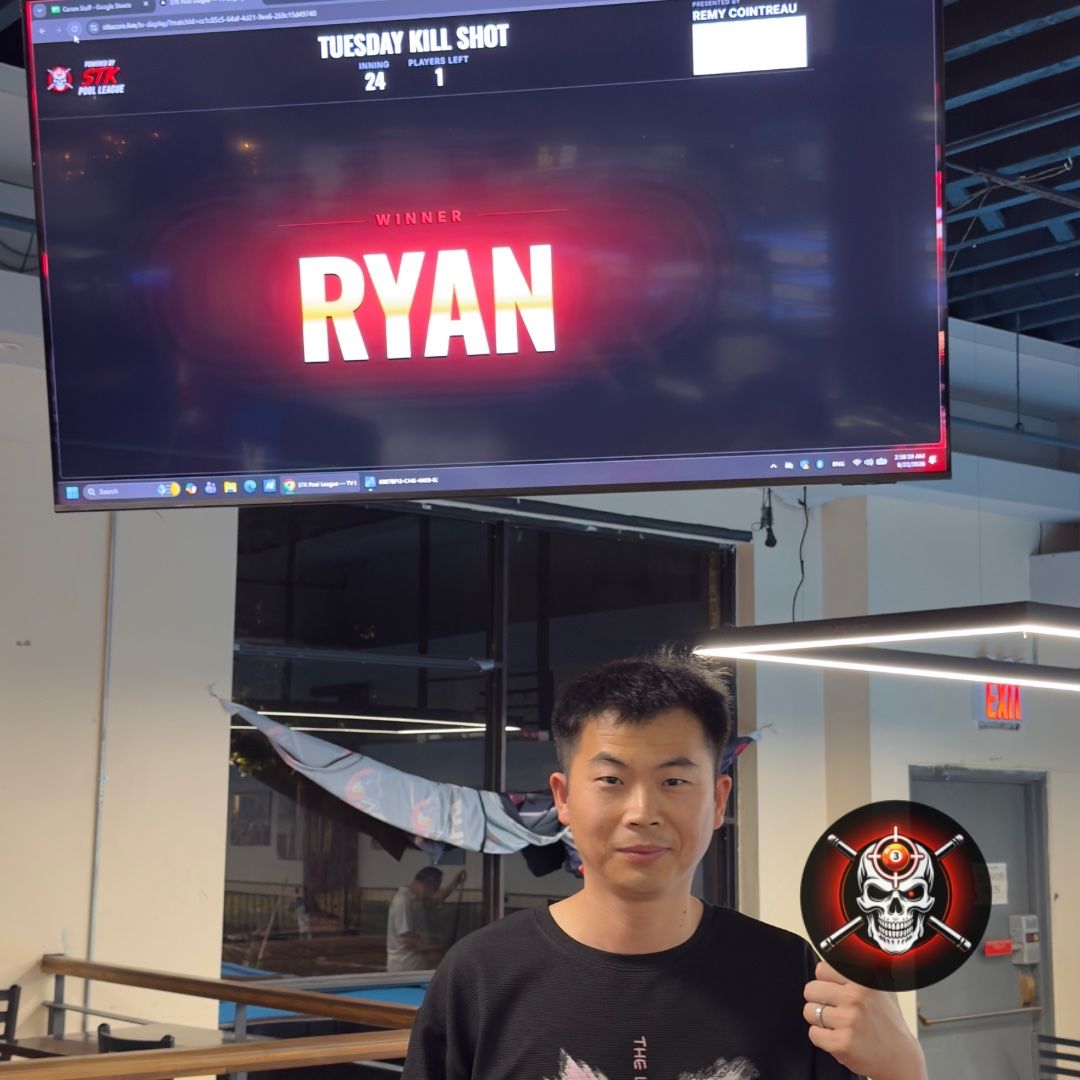
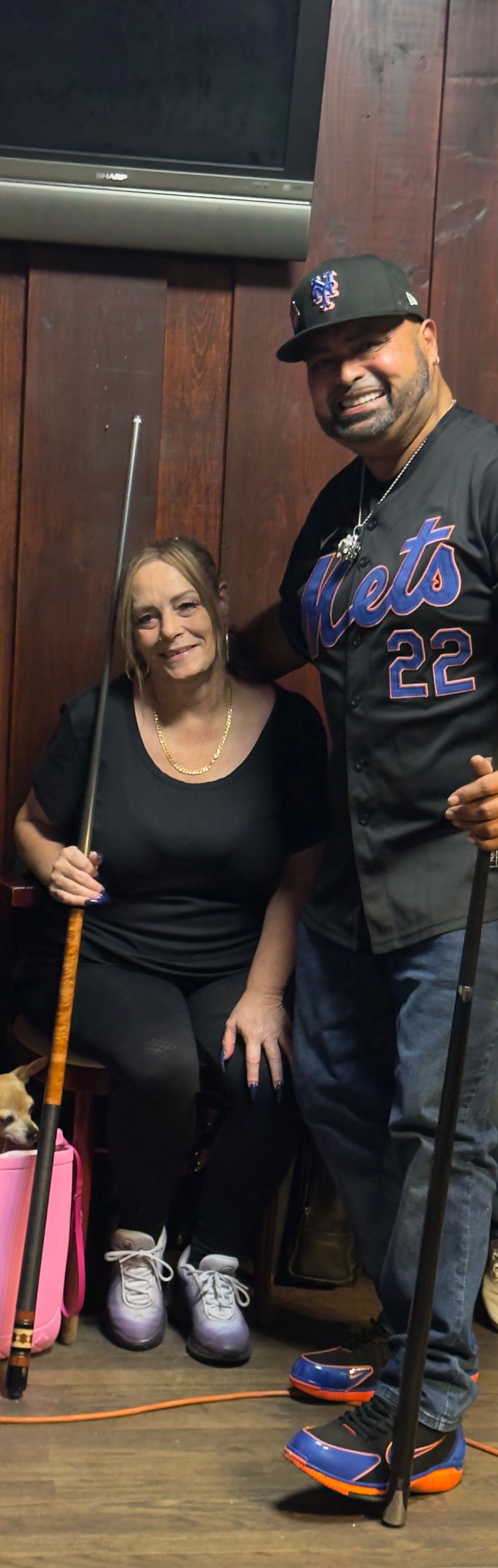
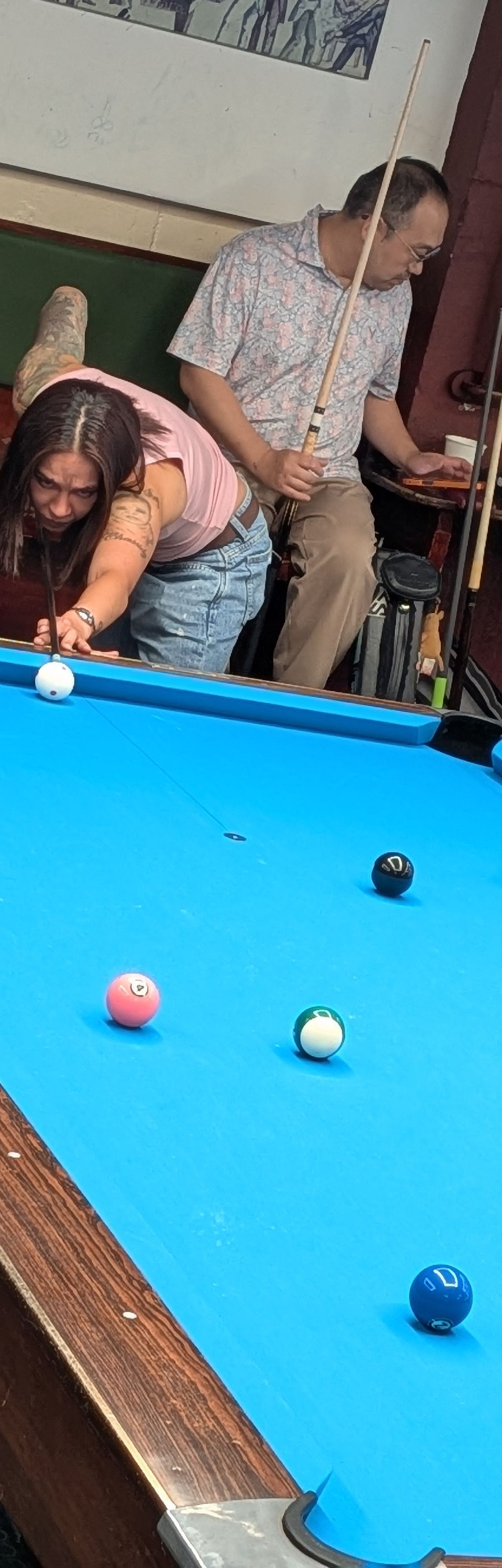
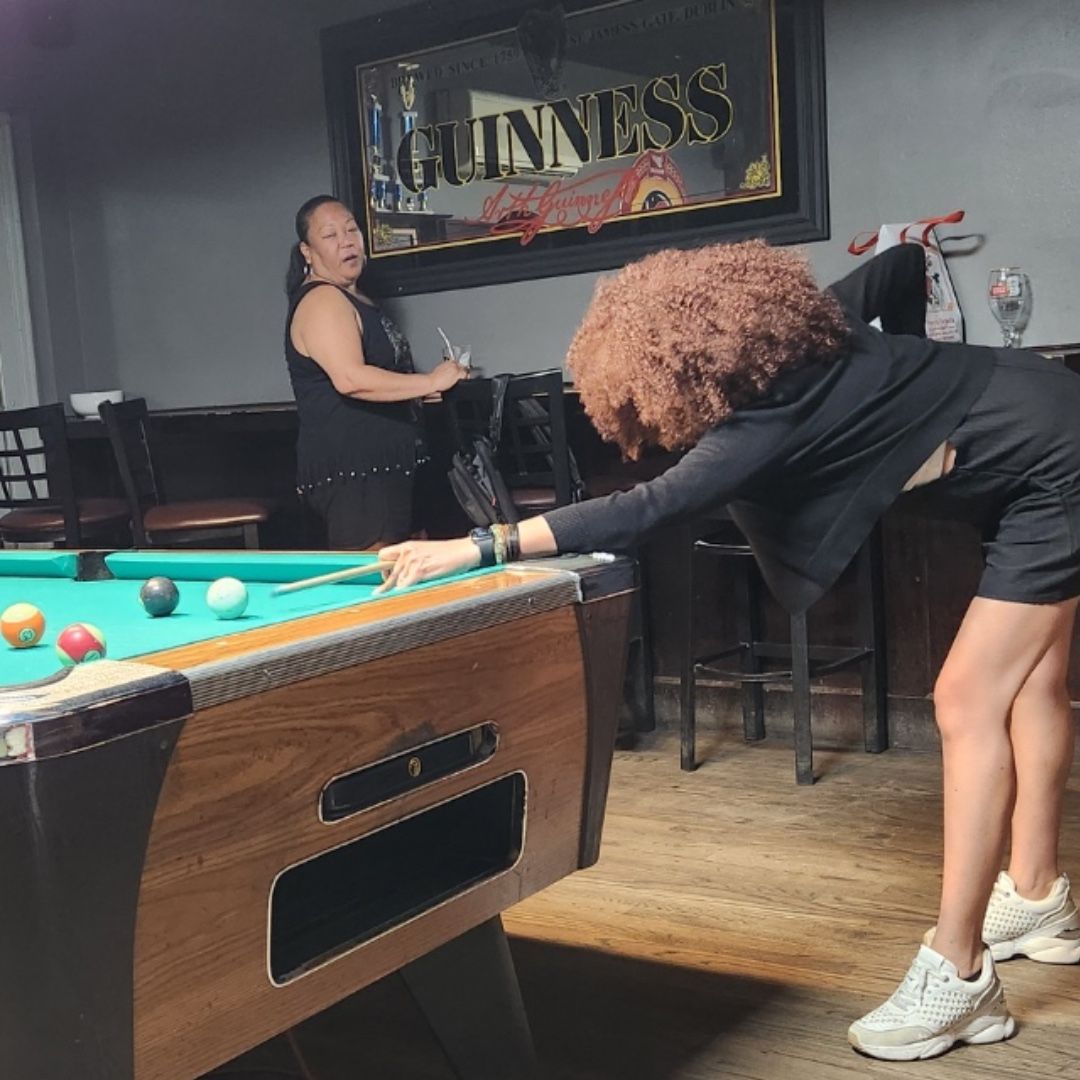
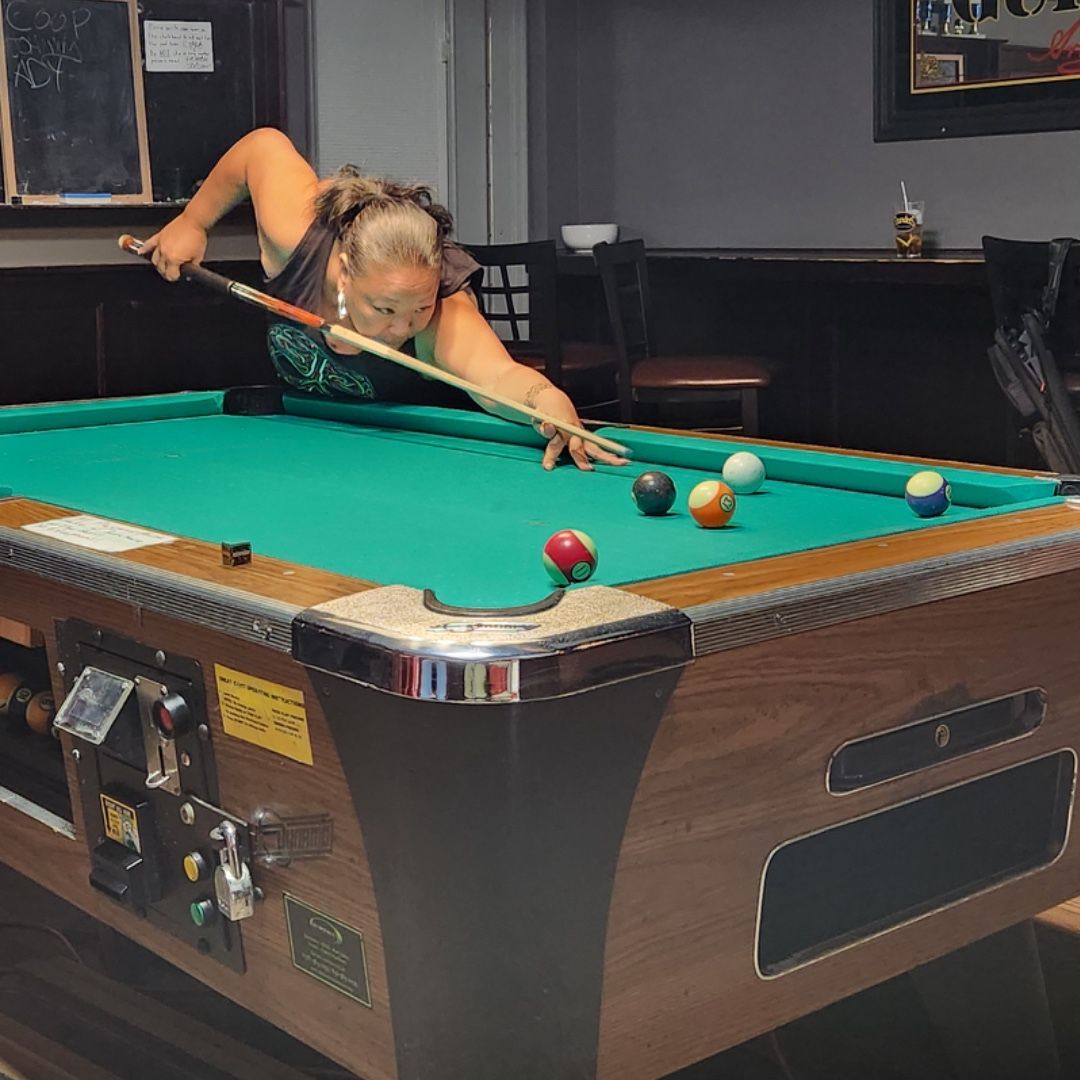
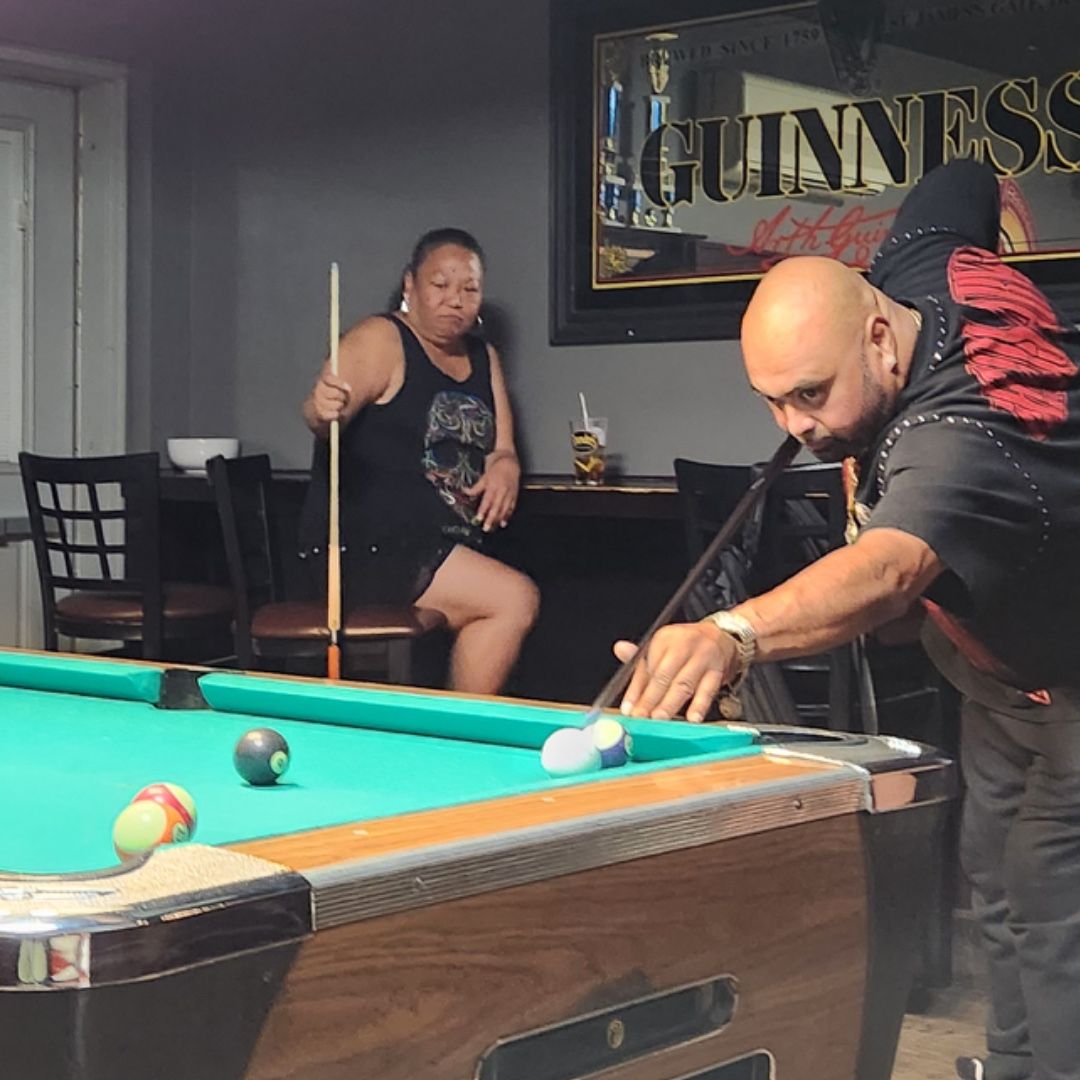
He won on his first try! Congrats on qualifying for the championship, Ryan!
STK
STK
Sep 21
STK Carom Cafe & Billiards Monday Recap
Match complete / Winners circle
ROOM CONQUERED. TICKET PUNCHED.
RYAN
Bounty
Carom Cafe & Billiards
Championship qualifier
W
Bounty bonus
NEIL TOOK OUT DARWIN.
+1 LIFE
Previous winner bounty · +1 regular-match credit
Bounty bonus
RYAN TOOK OUT NEILLE.
+1 LIFE
Host bounty · +1 regular-match credit
Bounty bonus
RYAN TOOK OUT NEIL.
+1 LIFE
Previous winner bounty · +1 regular-match credit
Bounty bonus
RYAN TOOK OUT DUC L.
+1 LIFE
Previous winner bounty · +1 regular-match credit
1 / 5
STK
STK
Sep 20
STK Globe Tavern Sunday Recap
Match complete / Winners circle
ROOM CONQUERED. TICKET PUNCHED.
ED S.
Bounty
The Globe Tavern
Championship qualifier
W
Match complete / Winners circle
ROOM CONQUERED. TICKET PUNCHED.
NEILLE
Bounty
The Globe Tavern
Championship qualifier · +1 Championship life
W
Bounty bonus
ED S. TOOK OUT MILLIE P.
+1 LIFE
Previous winner bounty · +1 regular-match credit
Bounty bonus
ED S. TOOK OUT NEILLE.
+1 LIFE
Host bounty · +1 regular-match credit
Bounty bonus
ED S. TOOK OUT DILLY.
+1 LIFE
Previous winner bounty · +1 regular-match credit
Bounty bonus
NEILLE TOOK OUT ED S.
+1 LIFE
Previous winner bounty · +1 regular-match credit
Bounty bonus
NEILLE TOOK OUT MILLIE P.
+1 LIFE
Previous winner bounty · +1 regular-match credit
Bounty bonus
DEBORAH B. TOOK OUT DILLY.
+1 LIFE
Previous winner bounty · +1 regular-match credit
1 / 10
STK
STK
Sep 17
STK Carom Cafe & Billiards Thursday Recap
Match complete / Winners circle
ROOM CONQUERED. TICKET PUNCHED.
NEIL
Bounty
Carom Cafe & Billiards
Championship qualifier
W
Bounty bonus
NEILLE TOOK OUT DARWIN.
+1 LIFE
Previous winner bounty · +1 regular-match credit
Bounty bonus
DUC L. TOOK OUT MHET V.
+1 LIFE
Previous winner bounty · +1 regular-match credit
Bounty bonus
DUC L. TOOK OUT NEILLE.
+1 LIFE
Host bounty · +1 regular-match credit
Bounty bonus
NEIL TOOK OUT DUC L.
+1 LIFE
Previous winner bounty · +1 regular-match credit
1 / 5
NC
Neille C.
Sep 16, 9:54 AM
Who's coming to play STK at Carom on Thursday?
STK
STK
Sep 14
STK Carom Cafe & Billiards Monday Recap
Winners circle
DUC IS MAXED OUT.
+1 LIFE
Championship: 3 base + 2 bonus = 5 lives · Cap reached
STK
STK
League recap · Win 2
Uh-oh! Duc has an extra life in the championship! Two wins, a couple of matches apart.
Winners circle
UH-OH! DUC DID IT AGAIN.
+1 LIFE
Championship: 3 base + 1 bonus = 4 lives
STK
STK
League recap · Bounty claimed
Neille eliminated Duc between his two wins and earned a bounty bonus.
Bounty bonus
NEILLE TOOK OUT DUC.
+1 LIFE
+1 regular-match credit
M
Michelle
Sep 10, 4:00 AM
Who’s coming to the Globe Tavern on Sunday?
STK
STK
League recap · Win 1
Duc takes his first win and qualifies for the championship.
Winners circle
ROOM CONQUERED. TICKET PUNCHED.
Championship qualified · 3 base lives
STK
STK
Sep 7
STK Monday Recap
Match complete / Winners circle
ROOM CONQUERED. TICKET PUNCHED.
MIKE D.
Bounty
Championship qualifier
W
1 / 5
STK
STK
Sep 6
STK Globe Tavern Sunday Recap
Match complete / Winners circle
ROOM CONQUERED. TICKET PUNCHED.
SUZZIE
Bounty
Championship qualifier
W
Match complete / Winners circle
ROOM CONQUERED. TICKET PUNCHED.
CLAUDIO
Bounty
Championship qualifier
W
1 / 2
STK
STK
Sep 3
STK Carom Cafe & Billiards Thursday Recap
Match complete / Winners circle
ROOM CONQUERED. TICKET PUNCHED.
CARMINE
Bounty
Championship qualifier
W
STK
STK
Aug 30
STK Globe Tavern Sunday Recap
Match complete / Winners circle
ROOM CONQUERED. TICKET PUNCHED.
MILLIE
Bounty
Championship qualifier
W
Match complete / Winners circle
ROOM CONQUERED. TICKET PUNCHED.
MICHELLE
Bounty
Championship qualifier
W
Match complete / Winners circle
ROOM CONQUERED. TICKET PUNCHED.
DILLY
Bounty
Championship qualifier
W
1 / 7
Show up. Shoot your shot.
Find your room
All times New York
Show up. Shoot your shot.
Venues
STK venues
Rooms running STK now.
Pending activation
Hit 15 votes. Getting set up.
Nominated
Sorted by votes, highest first.
Special nights
Events
Add event
The last ones standing
Winners circle
Season prize pool
of the season goal
0%20%40%60%80%100%
Road to the championship
ONE WIN. YOU’RE IN.
Win a match and advance to the championship.
Bounty Eliminate a previous winner to earn an extra life while you’re still active.
D
Duc
Bounty
Thursday Night Kill Shot · Sep 11
10 points
2 wins · 4 championship lives
MD
Mike D.
Bounty
Monday Night Kill Shot · Sep 8
14 points
C
Claudio
Bounty
Sunday Night Kill Shot · Sep 7
20 points
S
Suzzie
Bounty
Sunday Night Kill Shot · Sep 6
19 points
C
Carmine
Bounty
Thursday Night Kill Shot · Sep 4
15 points
D
Duke
Bounty
Friday Night Killer · Sep 1
12 points
D
Dilly
Bounty
Friday Night Killer · Aug 30
9 points
M
Michelle
Bounty
Friday Night Killer · Aug 30
11 points
M
Millie
Bounty
Friday Night Killer · Aug 30
14 points
M
Mhet
Bounty
Friday Night Killer · Aug 28
14 points
N
Neille
Bounty
Friday Night Killer · Aug 24
20 points
D
Dominic
Bounty
Friday Night Killer · Aug 24
16 points
K
Kool-Aid
Bounty
Friday Night Kill Shot · Aug 22
14 points
L
Leon
Bounty
Friday Night Kill Shot · Aug 21
10 points
D
Darwin
Bounty
Thursday Kill Shot · Aug 21
15 points
J
Jesus
Bounty
Friday Night Kill Shot · Aug 20
6 points
Know the game
Rules of the room
Watch: How to get on the STK Roster
STK Kill Shot Rules
Everyone plays at once. Players shoot in order. Player order is shuffled before the match starts. You get one shot per turn. All you have to do is make a ball - slop counts. If you miss, scratch, or foul, you get a strike. Reach your strike limit and you're eliminated.
Everyone starts the game with a 3-strike limit. In this series, you can purchase up to 2 more strikes for $5 each.
Pot a ball — no strike, next player shoots
Miss, scratch, or foul — you take a strike
Once you hit your strike limit, you're eliminated.
Breaks
If you break dry, you may shoot again. If you pot at least one ball on the break, the next player shoots. Any 4 balls must make contact with a rail for the break to be legal.
Shot clock
There is a 60-second shot clock if you need coaching on a shot.
Additional shot clocks for players who repeatedly slow down play: 30 seconds to approach the table, 60 seconds to shoot.
Fouls
Only cue ball fouls are counted as strikes.
An object ball that comes off the table also results in a strike and remains off the table.
Conduct
Banter is welcomed. Rudeness is never tolerated.
Earn Extra Lives
Refer a new player who registers, make two food or beverage orders during a match, or eliminate Neille or any previous Kill Shot winner to earn an extra life. But if you are eliminated before one of the players with a bounty is eliminated, you do not receive an extra life. You must still be active on the scoreboard to receive the extra life bounty.
These lives are added to your player account and may be saved or used during any regular Kill Shot Series match.
Extra lives earned through referrals, purchases, or bounties cannot be used at the Championship. Championship extra lives can only be earned by winning qualifying matches.
Entry Fee
$25 entry fee per match
Player Incentives
Refer new players: earn extra lives to use in any regular series match of your choosing.
Eliminate Neille: earn a bounty extra life.
Eliminate a previous match winner: earn a bounty extra life.
Earn a bonus life for placing two food or beverage orders per match in one night. If there are multiple matches, there are multiple opportunities to earn lives.
Win a regular match: qualify for the $5000 Championship. Win multiple matches, earn Championship lives (max 2 bonus, 5 lives total).
Championship lives can only be earned by winning matches. Referral, purchase, bounty rewards cannot create Championship lives.
Last player standing wins.
Your place in the league
Player profile
Grow the league
Invite friends
Send a private link. Invite friends to THE pool party
AdminTribes & roles0
Tribes
AdminVenues0
Ranked by votes. Pending rooms are ready to activate.
AdminReported messages0
Only reported messages show here — never a full chat.
Admin
Top 8
Controls the Player Top 8 and Venue Top 8 blocks on the feed. Hidden from every player until this is turned on.
Status: Off — hidden from players
Status: Off — hidden from players
Update your details
Edit profile
Profile photo
Before you chalk up
Frequently asked questions
First time here?
Do I have to be good at pool?
No. You get one shot per turn, and any pocketed ball counts—even slop. You’re here to play, meet people, and try to be the last one standing.
How does a match work?
Player order is shuffled before the match. Make a ball and your turn ends. Miss, scratch, or foul and you take a strike. Reach your strike limit and you’re eliminated. The last player standing wins.
How do I find a match and RSVP?
Open Matches, choose your night, and RSVP. RSVPs are for registered players and close one hour before the match starts.
What does it cost?
The current series rules list $25 entry fee per match.
How do I earn extra lives?
Bring a new player who registers, make two food or beverage orders during a match, or collect a bounty. Your profile keeps a record of earned and used regular-match credits.
What does the bounty icon mean?
Every previous Kill Shot winner is a bounty target. Neille is a bounty target too. Eliminate a target while you’re still active to earn an extra life. The next-game bounty board shows attending targets; seeded entries are marked until attendance is confirmed.
How do I qualify for the championship?
Win a regular match. A second win earns one extra championship life; a third earns another. Championship lives are capped at five: three base lives plus two bonus lives.
Can I bring my regular extra-life credits to the championship?
No. Referral, bar-purchase, and bounty credits are for regular series matches. Only qualifying match wins earn championship bonus lives.
Where do photos and match results appear?
Photos you post appear in the feed with an STK watermark. Winner cards celebrate match results, and reward announcements explain who earned an extra life and how.
How do I report a wrong stat or suggest something?
Use the feedback form. For a stats correction, include the player, match, date, and what needs fixing.
Official
November 15, 2026 · 6 min read
Mental Fatigue
Does a Tired Brain Hurt Your Game? What Research Says
Hard thinking before a match may blunt accuracy, but the best evidence is disputed. Here is what the studies found and how to protect your head.
Fourteen experienced soccer players took a shooting test twice. Before one session, they spent 30 minutes on the Stroop task, a drill that makes you name ink colors while ignoring the words. Before the other, they read magazines. Smith and colleagues (Medicine and Science in Sports and Exercise, 2016) found that shot accuracy and shot speed were worse after the mind-draining task.
That result points to one idea: a tired head may cost you accuracy before you reach the table. The idea is plausible, but the evidence is disputed, and this article shows both sides. By the end, you will know what to protect before match night and what to ignore.
The short answer
Possibly. A large 2020 meta-analysis found that hard thinking beforehand modestly lowers later physical performance, including motor tasks. Two later reanalyses found that the effect shrinks to near zero under most methods once selective publication is corrected. Treat mental fatigue as a plausible risk, not a proven law, and guard your head with cheap, low-cost habits.
What is mental fatigue, and what did the early studies find?
Mental fatigue is the heavy feeling after long, demanding thinking. In 2017, Van Cutsem and colleagues reviewed 11 studies in Sports Medicine. Endurance performance usually dropped and effort felt harder, yet heart rate, oxygen use, and maximal strength and power did not change. The authors linked the drop in endurance performance to higher perceived effort.
Six of those 11 studies were rated strong quality and five moderate. The review also found that the length and intensity of the physical task seemed to matter. A league night is not a running test, but it asks you to concentrate for hours, so the effort-feels-harder finding is the part worth watching.
Does a tired mind hurt skills like shooting accuracy?
In one small soccer study, yes. After 30 minutes of the Stroop task, 14 experienced players shot less accurately and less hard, and they collected more penalty time on a passing test. Fourteen players is a small sample, soccer is not pool, and no study we found tested pool players.
The broader evidence points the same way. Brown and colleagues (Sports Medicine, 2020) pooled 73 randomized studies with 2,581 healthy adults. They found a small-to-medium drop in later physical performance (g = -0.38), and a category the authors call motor performance fell by a similar amount as strength tasks (g = -0.57). Maximal anaerobic effort, such as an all-out sprint, showed no meaningful change.
The authors argued that earlier meta-analyses may have underestimated the effect. They also found that the size of the effect depended on study design: studies that compared different people showed larger drops than studies that tested the same people twice. That difference is a reason for caution, not confidence.
Is the effect real, or a product of which studies get published?
It may be partly a product of publication. Holgado and colleagues found signs that studies showing a harm were published more often than studies showing none. Once they corrected for that, the effects shrank to near zero under most methods. The honest summary is that the effect may be real but smaller than the headline numbers, and it is not yet proven.
The details matter. In Journal of Cognition (2020), Holgado, Sanabria, Perales, and Vadillo analyzed 21 endurance studies with 317 participants. The raw effect was about half a standard deviation. After bias correction, it was close to zero and not statistically significant. They concluded that current evidence does not provide conclusive support for a harm.
In Sports Medicine (2023), Holgado, Mesquida, and Román-Caballero reexamined the mental fatigue and exercise research. The raw effect was again moderate (d_z = -0.54). Most correction methods pulled it near zero, though one still found a smaller effect (d_z = -0.36). Median statistical power was only 39 percent, assuming the raw effect was real, which means many studies were too small to detect a real effect reliably.
That 2023 review was about exercise performance, so it says nothing direct about aiming a cue ball. The skill evidence, such as the soccer study above, rests on very few small experiments.
What should a player do with a disputed finding?
Take the cheap precautions and skip the expensive ones. If the risk is real, a calmer hour before the match helps. If it is not, a calmer hour costs you nothing. That logic is our judgment, not a tested result, and no study we found has shown that a pre-match routine prevents mental fatigue in pool players.
The only control condition in the soccer study was reading magazines, an easy task. So the only thing the research compared against a draining task was a light one. We found no test of a rest strategy for pool, so treat the steps below as an experiment you run on yourself. For other ways a tired head shows up, see the Read next articles.
Try this at your next match
Plan your last hour. If you can move your hardest mental work, such as a budget, a tough inbox, or a stressful call, away from the hour before you leave for the match, do it.
Switch to something easy. Before you leave, do something light and undemanding, the kind of thing the research used as its comparison task. Nothing shows this helps pool, so treat it as a test.
Log your focus. After each match, rate your focus from one to five and note what filled the hours before. After several matches, check whether your worst focus follows your hardest days.
Read heavy effort carefully. In the lab, effort felt harder while heart rate and oxygen use did not change. If a frame feels heavier than it should, take a breath and run your usual routine.
Weekly email
Behind the Ball
A free weekly email: a recap of our new articles, tournaments coming up (STK’s and others’) and the pool news we shared.
We do not know. One small soccer study found worse shooting accuracy after a draining mental task, but no study we found tested pool players.
Is the research settled?
No. A 2020 meta-analysis found a modest harm, while two bias-sensitive reanalyses found the effect shrinks to near zero under most methods once selective publication is corrected.
Does it make me weaker or slower?
Unclear. The 2017 review found that maximal strength, power, and anaerobic work were not affected, but Brown and colleagues found that isometric and dynamic resistance performance were impaired. Both found no meaningful change in maximal anaerobic effort.
Does the length of the mental task matter?
Brown and colleagues found negative effects both for cognitive tasks under 30 minutes (g = -0.45) and for tasks of 30 minutes or longer (g = -0.30), so length alone did not settle it.